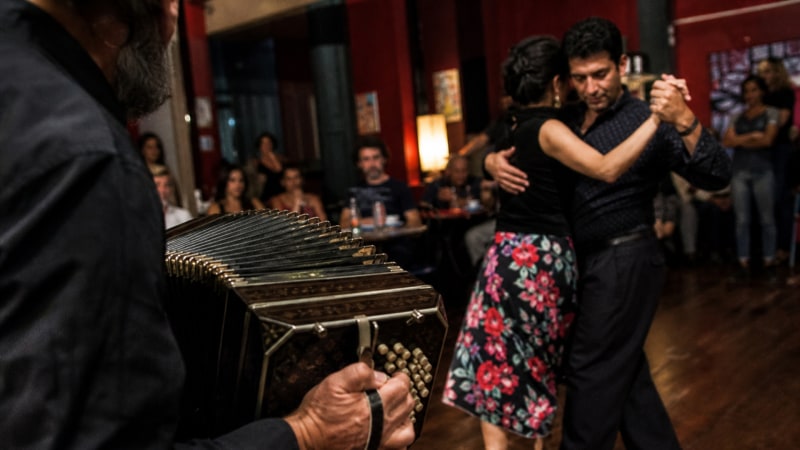
To learn and deepen your own Tango musicality, a structured approach to listening helps. Successful Argentine Tango composers rarely left their pieces in a rigid metronome beat. Instead, they use so-called rubato, an elastic stretching and slowing down of the tempo, which dancers must adapt to. Anyone learning to hear the Tango beat should therefore first pay attention to the bandoneon and the double bass, which define the rhythmic structure.
A practical start is to focus on a single instrument while listening, for example, just the piano or the violins. Try to anticipate the accents and the ends of musical phrases. A piece of music in Tango is structured like a conversation, there are questions and answers between the instrument groups. Anyone who understands these musical dialogues no longer dances stubbornly to the counts, but becomes a part of the orchestra themselves.