Understanding dance instruction5 minutes

Dance improvisation in Düsseldorf: How open-ended tasks work

By Mary De LucaUpdated

In brief
  • You can recognize guided dance improvisation in Düsseldorf by open movement prompts instead of prescribed sequences of steps.
  • Within each task, you decide for yourself how to move, what tempo to use, or which parts of your body to involve.
  • The teacher supports your experiments with clear prompts and feedback on each task.
  • Reflecting together helps you understand which decisions changed your movement and what you discovered along the way.

Moving in your own way in front of others can feel unfamiliar, especially if you usually copy steps. A clear class structure gives you room for that uncertainty without taking every decision out of your hands.

DefinitionMovement parameters

Movement parameters are adjustable characteristics of a movement, such as tempo, direction, size, or use of force. In improvisation classes, they can be the focus of an exercise.

An Open Task Limits the Topic, Not the Solution

If you’re looking for dance improvisation in Düsseldorf, the key teaching element is the task. It opens up a space for movement while also setting a boundary. One possible example is: Let a movement begin at the elbow and travel through the body. The starting point is prescribed, not the finished form.

You can start small, let a curve emerge, or stop the impulse along the way. Another person might respond to the same task with a clear shift of weight. Different results are part of learning here, as long as they relate to the task. Anything goes only when the shared point of reference is lost.

The teacher can then change the framework: The impulse should travel more slowly or end at a different part of the body. This makes it possible to understand which change has which effect. Terms like movement parameters, exploration, and variations gain concrete meaning this way. When looking for classes in Düsseldorf, these descriptions of working methods are more informative than the word creative on its own. If you’re initially missing the general requirements for getting started, the guide to choosing a dance class for beginners in Düsseldorf covers those separately.
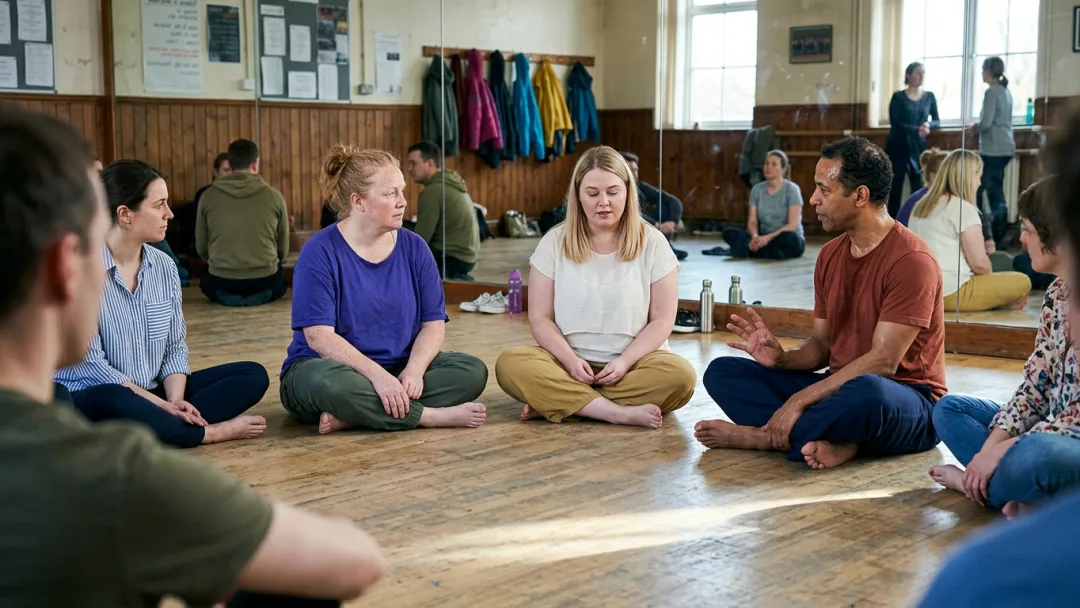
Observing is also part of learning when you can articulate what you're paying attention to.

Guidance allows for choices while staying concrete

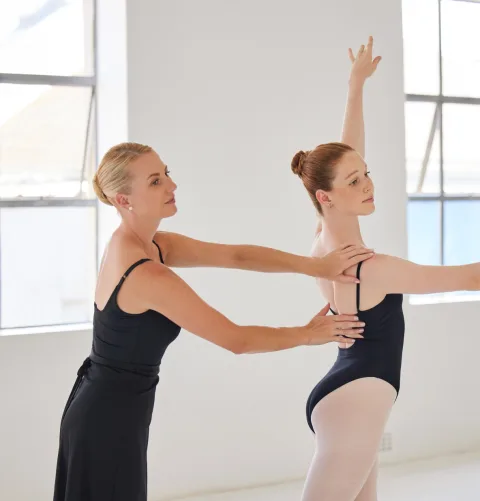
Open-ended tasks are sometimes mistaken for lessons without corrections. In reality, the focus of feedback shifts. The teacher does not have to measure your movement against a single model, but can still observe closely whether you are exploring the agreed theme and moving safely.

For an elbow impulse, feedback might sound like this: The beginning was clearly visible, but after that you moved almost only your hand. From there, you could develop another possibility, such as letting your rib cage respond to the impulse. A general instruction to dance more freely or expressively, on the other hand, offers little guidance.

A demonstrated example can also be helpful. It should remain recognizable as one possible response, rather than quietly becoming the required solution. Otherwise, the group ends up copying the same sequence after all.

The structure of the lesson also includes the shared space. Spacing, pauses and voluntary participation in partner exercises make it possible to concentrate. You can make a movement smaller if your body does not feel comfortable with a larger version. Openness does not mean ignoring physical limits or following every instruction without an alternative.

How to recognize an open class format

Yes, like that

  • Allow different answers to the same task
  • Relate movement attempts to the agreed topic
  • Describe observations using specific movement characteristics
  • Respect personal space and consent during partner exercises

Not like this

  • Measure every response against a model movement
  • Keep asking for new movements without any context
  • Rate contributions only as beautiful or boring
  • Treat touch as an obligation to be taken for granted

Helpful feedback identifies an observable choice instead of judging the whole person or their dancing.

udansa editorial team

Reflection turns an attempt into a learning experience

After a movement phase, a conversation can help you make sense of the experience. You don't need to interpret your personality in depth. Observable differences are helpful: When did a movement become faster? Where did a pause occur? Which decision triggered a change of direction?

First, describe your own perception. Perhaps the slower version felt clearer, even though it was less noticeable from the outside. Observers can add what they saw. The two perspectives may differ, because physical experience and outward effect are not the same.

Shared reflection becomes productive when it makes another attempt possible. For example, noticing an abrupt interruption can lead to the task of making the transition last longer. You don't have to reject the first attempt or consider it a mistake.

This creates a clear connection between the task, exploration and feedback. When you practice on your own later, changing just one quality may be enough. The guide to practicing between two dance classes adds the question of how you can revisit these experiences outside class.

Two perspectives on the same task

Moving

You experience the decision

What a change feels like from the inside

You try out how a slower start or a different way of moving changes things physically. You may notice something that is barely visible from the outside, such as an easier transition or a moment of hesitation.

Observe

You recognize the impact

What becomes visible when something changes

You observe how a movement appears in space and when its quality changes. Your description adds to the dancing person's experience without dictating what they should feel or which solution is better.

Frequently Asked Questions

  1. You don't necessarily need dance experience for an improvisation class specifically designed for beginners. Simple exercises can start with walking, shifting your weight or making small gestures. However, open-ended exercises alone don't indicate the level, because experienced dancers also work with them.

Dance improvisation classes in Düsseldorf

On udansa, you can search for classes in Düsseldorf that combine open movement tasks with guided exploration.

Find space for your decisions

On udansa, you'll find listings for dance classes in Düsseldorf. Search for dance improvisation if you'd like to develop your own movement responses and get specific feedback on them.

Find space for your decisions