Children and teenagers need different kinds of space
At children's dance classes in Düsseldorf, age is a first point of reference, but it doesn't tell the whole story. A child who enjoys listening to music may not yet be able to remember a longer sequence of movements. That's why movement games often combine short tasks with images: grow tall, get small, stop when you hear a signal. These activities let children explore rhythm, spatial awareness, and how to interact with one another.
Düsseldorf also has documented connections between young audiences and dance culture: tanzhaus nrw moved into a former tram depot in 1998, and its documented work brought together a stage, an academy, and the young tanzhaus. Documented carnival traditions also included children's dance teams. These connections show different ways of encountering dance, but they don't confirm that a children's program is currently available to book. You'll find broader context on the page about dance classes and performance in Düsseldorf.
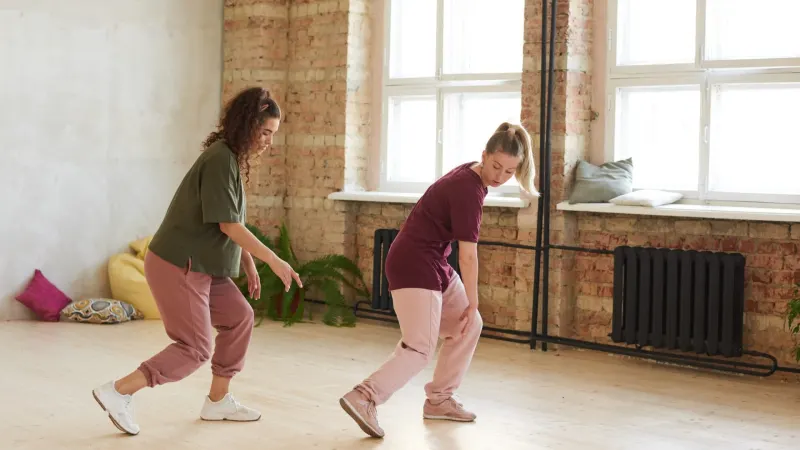
For teenagers, the focus shifts: personal music preferences, relationships within the group, and comfort with physical closeness become more important. An age group should provide guidance, not treat all participants the same. A teen class can offer a regular structure while still leaving room to make a movement smaller, choose a role for yourself, or, at first, avoid dancing alone in front of others.