Dance partnership6 minutes

Queer dance partner search in Karlsruhe: Clarify expectations

By Bernhard De LucaUpdated

In short
  • When looking for a queer dance partner in Karlsruhe, you can agree on role preferences, physical contact and how visible you want to be, independently of one another.
  • Gender, appearance and sexual orientation do not determine who leads or follows when dancing.
  • Agreeing to dance together does not mean agreeing to any kind of touch, photos or sharing personal information.
  • Through udansa or personal contacts, you can state your preferences without having to explain or justify your identity.

Even a casual introduction can reveal more about you than you'd like. A suitable dance partnership therefore makes room for different wishes, even if you get along well on the dance floor.

DefinitionLead and Follow

Lead and Follow describe the leading and following roles in partner dancing: one person offers movement cues, while the other responds to them and shapes the movement together.

A dance role says nothing about your identity

If you’re looking for a queer dance partner in Karlsruhe, shared experiences can make conversation easier. But they don’t replace agreeing on dance roles. Someone may enjoy leading, prefer following, or want to learn both. Two women, two men, or non-binary people don’t have to switch roles automatically either.

Leading means communicating direction, timing, and movement suggestions clearly. Following means noticing this information and responding through dance. Both roles require attentiveness and independent decisions. The leading partner does not control the other person’s body, and the following partner does not have to perform a movement they’re uncomfortable with.

A sentence like “I enjoy following and want to keep this role for now” describes a preference, not a characteristic of your gender. “I’d like to try leading, but I’m still unsure about it” expresses a different starting point. Experience with roles can also be unevenly distributed: someone who has followed for a long time is not automatically just as confident when leading for the first time. For this distinction, it can also help to understand different experience levels within a dance partnership. What matters is the experience relevant to the agreed role, not the label you use overall to describe your skills.
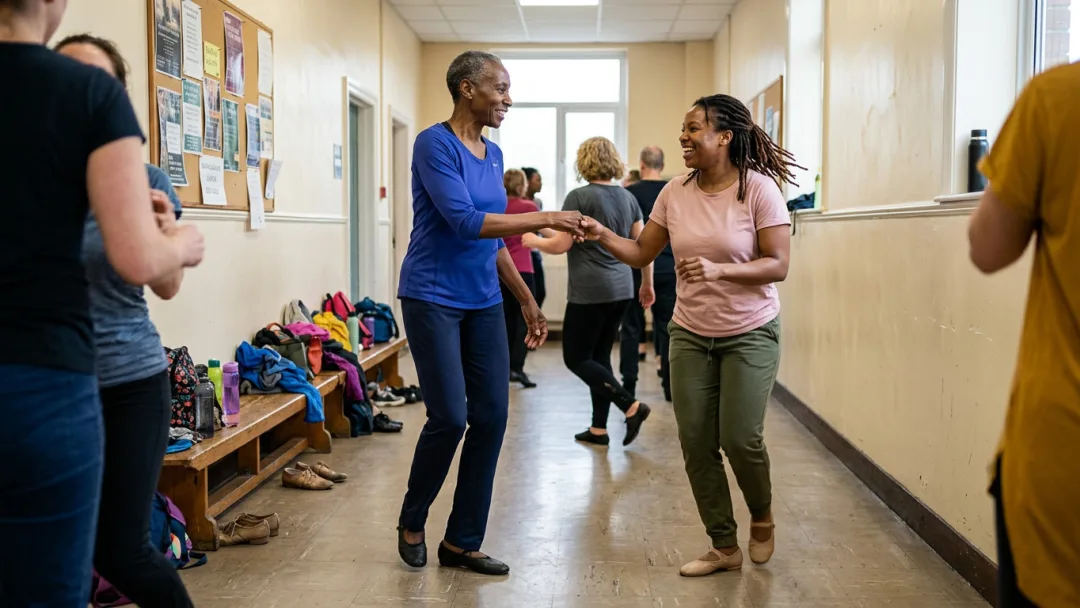
Even off the dance floor, a connection can simply remain a dance connection.

Dancing together is not blanket consent

A friendly dance connection, similar identities and a lead that works well can foster trust. That does not mean permission for every kind of closeness. Hand contact, a hand on your back and a close body position are different kinds of touch. Even within the same dance hold, different levels of pressure and distance can feel comfortable.

You can say: “Hand contact is fine with me, but I don’t want to dance in a close hold.” That is a complete boundary, even if it does not fit the other person’s usual way of dancing. If a move cannot be performed meaningfully without that contact, it can be left out. A move is optional, a boundary is not. Switching roles does not remove that boundary either.

Likewise, looking for a dance partner does not automatically mean you are interested in flirting or a relationship. “I’m only looking for someone to dance with” helps distinguish different expectations. This applies just as much to a message on udansa as to a conversation with mutual acquaintances. An organizational commitment is about something else: the participation guarantee for a singles dance course does not describe personal compatibility. Neither a booking nor an introduction can replace mutual consent. You can also change your mind later, even if the initial arrangement felt right to you.

Agreements, not assumptions

Yes, like this

  • Take on the role the other person prefers
  • Accept a no to being touched without asking for an explanation
  • Get consent before sharing a photo
  • Use the agreed names and terms when introducing someone

Not like this

  • Inferring someone's role from their size or gender
  • Getting around a no by offering an easier variation
  • Sharing a photo of you together without asking
  • Mentioning someone's queer identity without asking when introducing them

Clear communication leaves room for dancing, because no one has to guess which role, touch, or expectation is welcome at the moment.

udansa editorial team

Visibility can be agreed on for every situation

Being open is not just a matter of whether you describe yourself as queer. It also concerns who may know and in what context. You can be open in a personal conversation without wanting to appear in a photo or be introduced that way to mutual acquaintances. Different wishes do not contradict each other.

For finding a queer dance partner in Karlsruhe, you can make this concrete: “You can introduce me as your dance partner. I’d like to talk about my orientation myself.” Or: “I’m okay with a photo of us together, but not with it being published.” Agreeing to have a photo taken and agreeing to its publication are separate decisions. Even sharing it privately can spread information you may want to keep to yourself.

With personal contacts, there’s also the possibility that acquaintances may unintentionally pass information on. Names, contact details, and personal labels should therefore only be shared to the extent agreed upon. A message on udansa doesn’t need your whole life story either. Describe what matters for working together, without having to prove your identity.

These agreements concern how you treat each other. They don’t automatically make a place a safe or queer-friendly meeting spot. We can’t make that kind of guarantee about Karlsruhe here; mutual respect is shown by how the other person responds to the wishes you’ve clearly expressed.

Two ways to deal with visibility

Open

Naming queerness explicitly

Visibility can be a shared intention

You may want your queer dance partnership to be visible in conversations with others as well. This makes it easier to introduce yourselves clearly, if you both want that. Still, each person decides which details about them may be shared.

Private

Keep personal details private

Being reserved needs no justification

You can dance openly together and still prefer not to share any details about your identity. That's entirely compatible with a reliable dance partnership. You can simply introduce yourselves as dance partners and keep personal background details for a private conversation.

Frequently Asked Questions

  1. No, you decide for yourself whether and when to name your queer identity. To arrange a dance, your preferences about roles, contact, and how you treat each other are enough to start with. If you specifically want a queer dance partner, you can say so without sharing any other personal details.

Partner dance classes in Karlsruhe

Here you'll find classes in Karlsruhe for dancing with a partner, but this does not guarantee that they offer queer-inclusive conditions.

Dance together, on your own terms

On udansa, you can find people to dance with in Karlsruhe and discuss what you’re looking for in a dance partnership. You decide which personal information you share.

Dance together, on your own terms