Dance in your preferred Role
On udansa, you can search for dance connections in Rome and describe who you’d like to practice with and which role you’d like to dance. This gives others a clear idea of how to respond to your wishes.

By Bernhard De LucaUpdated
On udansa, you can search for dance connections in Rome and describe who you’d like to practice with and which role you’d like to dance. This gives others a clear idea of how to respond to your wishes.
Maybe you want to finally lead without anyone seeing it as a statement about your gender. Maybe you’re looking for a same-sex dance partnership but don’t want to be publicly labeled. Both can have a place in your search.
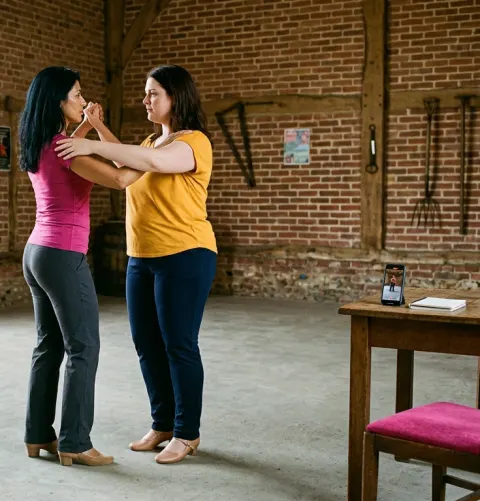
Partner pairing refers to the makeup of a dance couple, for example, two women, two men, or a couple including a non-binary person. It does not automatically describe the dance roles or sexual orientation of those involved.
If you're looking for a queer dance partner on udansa in Rome, that can mean different things: You want to dance with someone of the same gender, are looking for a partner with similar experiences, or want to practise without gender-based role expectations. These wishes can go together, but they don't have to. The word queer alone doesn't explain what kind of dance partnership you're looking for.
For example, a same-gender partnership doesn't tell you whether both people are queer. Conversely, queer people can dance in different kinds of partnerships. So it's best to describe what you're looking for, rather than making assumptions based on how your potential partner looks or identifies.
One possible way to put it is: I'm a woman looking for a female dance partner, and I'm open to different role assignments. Another: I'm looking for a dance partner regardless of gender, and I want them to be comfortable with my non-binary identity. Both statements give a sense of what you're looking for without asking you to share your private life story.
The guide to the dance partner profile for Rome explains how to organize the other details. For your queer search, what's important is which information a potential partner really needs and what you'd rather keep private.
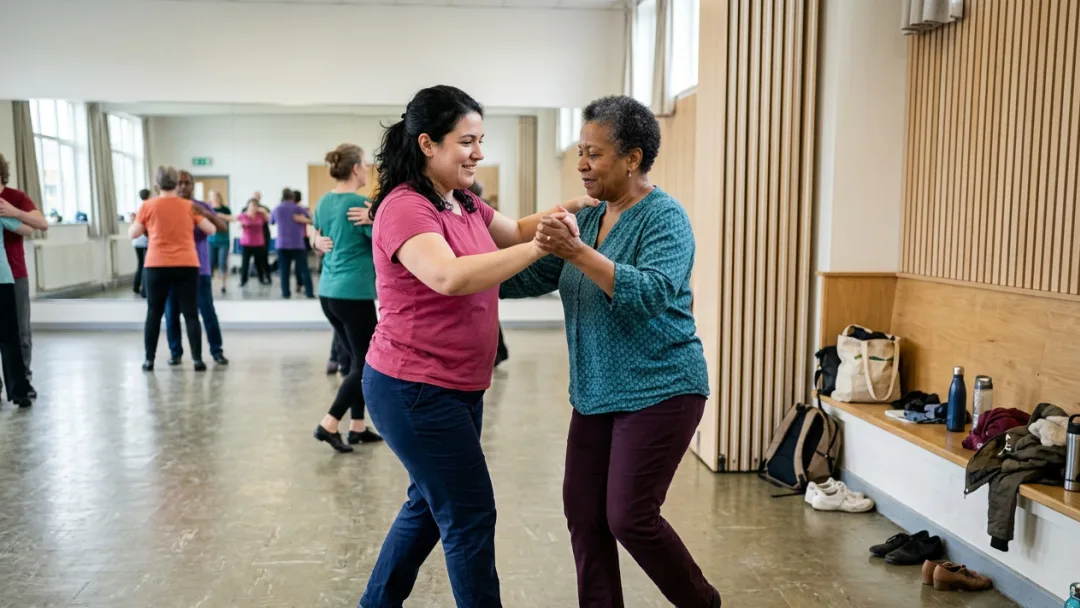
In lead-and-follow partner dancing, the leading partner gives movement cues, for example for a change of direction or a turn. The following partner senses these cues and responds with their own balance and timing. Following does not mean letting yourself be moved passively. Both partners are responsible for making the shared movement work.
Gender, age, height, or build do not determine who takes which role. Even in a same-gender couple, the role should not automatically fall to the taller or more experienced partner. Experience can also be role-specific: someone who has followed for a long time may start with simple movements when leading.
Saying I dance both roles does not necessarily mean switching roles in the middle of a song. It can mean that you take on one role or the other depending on the dance, your practice goal, or your partner. This distinction matters when searching: I mostly want to follow is different from I want to practice both roles in turn.
When you switch roles, your perception and task change, not your identity. Stating your role precisely makes clear what kind of partnership you are looking for. It also prevents your partner from interpreting your openness as an invitation to decide the roles on their own.
Do this
Not like this
In the course filter, you'll find the latest classes and dates in Rome, matched to the dance you want to practice together.
A desire for a particular dance role does not need to be justified by gender, body type, or personal life story.
Personal boundaries in dancing are about more than the distance between two bodies. They can also define how you would like to be addressed, which terms you use for yourself, or whether you want unsolicited corrections about your body. These details describe how you want to interact with each other, without needing to explain your character.
Specific sentences are clearer than a general request for respect: Please use these pronouns. I would like to receive corrections verbally first. I don't want people to draw conclusions about my gender based on my dance role. You don't have to list all your boundaries publicly; a search text can mention the ones that matter most to you.
Agreeing to a movement does not mean giving blanket consent to further touch. Even a dance hold that felt comfortable before may later feel wrong. That's a change in how you feel, not a contradiction you have to justify.
The word queer does not replace these agreements or guarantee a discrimination-free space. What matters is whether the other person actually takes what you say into account. For the transition from what you're looking for to personal contact, see the guide to messaging a dance partner in Rome. Your boundary remains a statement about how you want to interact, not an invitation to debate your identity.
The makeup of the pair matters to you
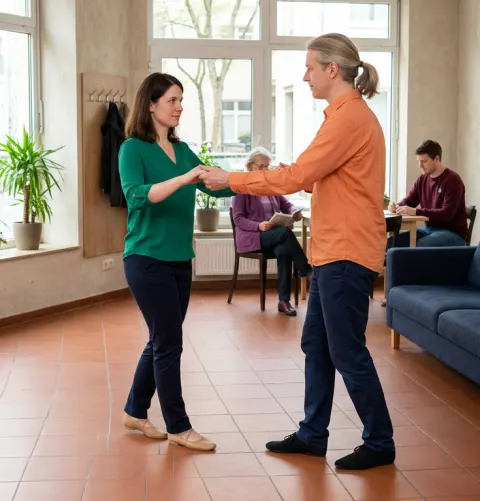
For example, you might want to dance with a woman as a woman, while being open about who takes which role. Your search describes this arrangement and leaves leading or following as a joint decision. You don't have to justify this preference based on your orientation.
Your dance role takes center stage
For example, you may be a non-binary person who wants to lead and is open to dancing with people of any gender. Your search therefore starts by naming the role you want. You can add that it’s important to you that others respectfully use the terms you choose for yourself, without sharing any other personal details.
No, you don't have to state your sexual orientation when looking for a dance partner. You can describe the kind of partnership you're looking for without adding personal labels, for example: I want to dance with a man as a man. You decide whether an additional self-description would be helpful for your search.
You can say it directly: I am a woman and I want to lead when we practice together. If you like, add whether you already know this role or are learning it now. This describes a dance role without treating it as an exception or justifying it through qualities such as strength.
Yes, you can explicitly say that you're open to both dance roles. For example: I want to learn leading and following, and I'm looking for someone who'd like to try both with me. This makes being open a specific learning goal, rather than leaving your partner to decide your role for you on an ongoing basis.
You can write: I'd like to start by dancing at a distance and in an open hold. Which figures are possible depends on the dance style. This boundary still applies if you later try a closer hold, because agreeing to it once doesn't mean you have to be closer again.