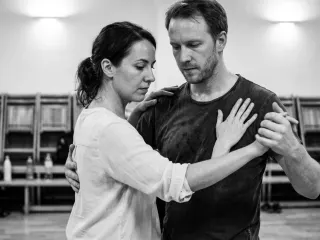
Practice6 minutes

Dance regularly with a partner in Zurich: How to keep it up

By Bernhard De LucaUpdated

In short
  • Agree on a recurring schedule with your dance partner in Zurich that works even during busy weeks.
  • Set a door-to-door travel time limit for each of you and choose an area that works for both of you.
  • Agree on a start time, duration and specific practice goal for your sessions.
  • Set a cancellation notice period, a direct way to message each other and a rule for rescheduling.

It’s easy to say yes when saying goodbye, but that doesn’t mean it’s in the calendar. A workable practice agreement makes room for tiring workdays and missed connections, without you having to renegotiate every meeting.

What you need for your agreement

  • Your calendars with work, free time, and fixed commitments
  • A dance you choose together and familiar basic steps
  • Your respective manageable door-to-door travel times
  • A direct messaging channel for arranging times
  • A shared note for your goal and agreements

The Right Practice Session Starts with the Learning Goal

For your practice sessions in Zurich, what you want to review is key. Dancing a familiar sequence confidently to the music calls for a different approach than improving the timing of a lead. The first goal benefits from an uninterrupted run-through. The second calls for short attempts with a pause for feedback. Plan the duration around the task, not the number of figures.

As a freely chosen example, half an hour may be enough: start with familiar steps to warm up, then work on a challenging connection, and finish with a run-through to the music. This is not a fixed training standard. If travel, changing clothes and the return trip take longer than the practice itself, meeting less often for a little longer may fit your daily routine better.

Choose an outcome you can both notice: you stay on the beat, continue without an extra step, or understand when the movement begins. For a specific timing goal, the guide to Leading and Following in Rumba shows what to focus on. This kind of focus keeps your time together from disappearing into endless corrections. Instead of guessing about unfamiliar figures, stick to what you have already learned.

The return trip is part of the time budget, even if it doesn't include a single practice step.

Seven steps to a consistent practice routine

  1. Narrowing down the shared goal

    Together, come up with a sentence such as “We link our familiar sequence without restarting.” Also name how you can tell, for example by keeping a steady beat throughout. This makes it clear which repetition is useful and which new move doesn’t belong yet.

  2. Choose a sustainable rhythm

    Put your calendars side by side and take into account ordinary weeks as well as recurring busy periods. For example, choose weekly or every two weeks, explicitly as your own agreement. The rhythm works if neither of you regularly has to sacrifice rest, work, or other fixed commitments for it.

  3. Define the reachable area

    Each person names a maximum travel time, including walking, transfers and waiting. Set a shared area in Zurich that stays within both limits. The geographical midpoint is not suitable if getting there is much more complicated for one person.

  4. Set a firm start and end time

    Enter a specific start and end time, including time to arrive and change outside the actual practice. Agree whether you’ll still finish on time if someone is late. This step is complete when you both have the same time period in your calendars.

  5. Set rules for cancellations and alternative dates

    Set a cancellation deadline, for example by the evening before, and use your direct messaging channel for this. Acute illness is an exception. Also agree that the person canceling suggests an alternative date, or the meeting is canceled and the next regular date stays as planned.

  6. Keep the first session limited

    Start with familiar movements and then work on your agreed goal. Give feedback between attempts, not in the middle of a step. End the session at the agreed time, even if one connection still doesn’t feel secure: it becomes the next practice task.

  7. Adjust the plan after the first few meetings

    After a few meetings, briefly discuss whether the travel, duration and frequency were actually manageable. Address the cause of repeated cancellations instead of piling on extra sessions. Record the new agreement together and add it to your calendars starting with the next session.

When everyday life gets in the way

This way

  • If you're running late, send a realistic arrival time
  • If you're tired, calmly repeat a familiar sequence
  • Phrase feedback in terms of your own experience
  • After a break, start from the last point you both felt comfortable with

Don't do this

  • Only say “I'm on my way” and leave your arrival time open
  • Increase the pace and number of figures when you're exhausted
  • Take every mistake personally and judge your partner for it
  • Catch up on all missed tasks after a break

You can check that off as you go

Before Your First Practice

Planning

After the First Session

Review

After several meetings

Adjustment

Frequently Asked Questions

  1. Practice for as long as you can stay focused on the goal you agreed on. Half an hour is one possible starting point, not a minimum. Make time for settling in and sharing feedback. Once you’re just repeating mistakes in a rush or no longer responding to each other, stop the challenging exercise and wrap up calmly.

Partner dance classes in Zurich

In udansa's course filter, you can find classes and dates in Zurich if you want to supplement your own practice routine with lessons.

Your next step is taken together

On udansa, you can find partner dance classes in Zurich when you need lessons again to work toward your practice goals. Your regular commitment helps you make time for it together.

Your next step is taken together