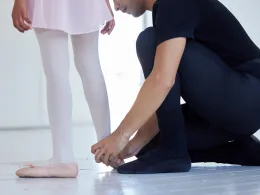
Ballet5 minutes

Ballet classes in Dortmund: Getting started as an adult

By Mary De LucaUpdated

In short
  • Ballet classes in Dortmund can give adults a way to get started without any previous dance experience.
  • A beginner course first teaches posture, basic positions, footwork, and simple movement combinations.
  • Progress comes from repeated practice, not from already being flexible or trained.
  • Before signing up, check whether the level, class format, and physical demands are right for you.
DefinitionPlié

Plié is a fundamental ballet movement in which the knees are bent and straightened in a controlled manner. Among other things, it trains the alignment of the legs and feet.

Adult classes start with the basics, not pointe shoes

A ballet class for adult beginners usually starts with the building blocks that will support every combination later on: posture, foot and arm positions, weight shifts, and simple steps. Practice often begins at the barre. It provides support as you learn to lift your upper body and move your legs with control. Exercises in the center of the room may follow.

In Dortmund, it's worth checking the target group carefully in the course description. A class for adults isn't automatically intended for beginners. Look for details such as “no previous experience required,” or ask whether basic positions are explained. For an overview of different types of classes and current offerings, visit the page for dance classes in Dortmund.

You don't need a particular body type or any previous experience for your first class. It's a good idea to wear clothing that lets the teacher see your alignment. If you feel pain or uncertainty, let them know and try a smaller variation.

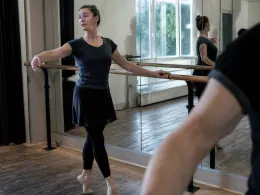
Two young ballet dancers practicing at the barre in the studio
At the barre, you can see how a small correction to the knee alignment makes the entire movement safer.

Progress means control, not maximum flexibility

Many adults compare their first steps with the image of professional ballet on stage. That sets the wrong standard: in class, you first learn to perform movements consciously and with control. A correct plié, a sure change of step, or a held balance are worthwhile learning goals, even if they seem small.

The fundamentals build on one another. When you can shift your weight confidently, it becomes easier to connect steps while maintaining your posture. The teacher may have you repeat or simplify movements so you can understand the sequences. That isn't a step backward, but part of learning. Progress often shows in how precisely you perceive a movement and how much less you compensate.

Ballet performances can also give you an impression of how technique and expression come together on stage. In Dortmund, for example, the International Ballet Galas at the Opera House showcase the stage side of ballet. Beginner classes, however, serve a different purpose: building movement fundamentals at your own pace.

How to find the right place to start

That's right

  • The instructor explains basic positions and their alignment
  • You can perform movements within your own range
  • Exercises are gradually combined and repeated
  • You ask about prior experience and physical abilities

Not like this

  • The group simply assumes everyone knows the positions
  • Everyone is expected to go equally low, regardless of their mobility
  • New combinations follow one another without explanation
  • You sign up without clarifying the level and physical demands

A small, clean movement is more helpful at the beginning than a big position you can't control.

Ballet teacher for adult classes

Before signing up, consider the level, guidance, and physical demands

When comparing a ballet class in Dortmund, first check whether it is specifically intended for adult beginners. A description such as “open to everyone” alone does not tell you whether the group starts with the basics. Ask about a trial class or what topics are covered in the first sessions. This will help you judge whether the instruction suits your experience.

Also find out how the teacher accommodates different levels of flexibility and fitness. Good beginner guidance does not mean that everyone has to reach the same depth or height. What matters is that corrections are easy to understand and that you are given alternatives if a position feels uncomfortable. If you have any health restrictions, ask whether you can discuss them in advance.

Finally, consider whether the class format suits you: would you like to learn regularly in a group, or would you prefer a quieter setting to start with? For general guidance on choosing, see the article on choosing a dance school in Dortmund. Ultimately, the most important factors in making your decision are the class level, teaching style, and feeling comfortable in your body during class.

Two learning paths in ballet class

Barre

First find support and alignment

The barre provides guidance for new movement patterns.

At the barre, you can first explore positions and weight shifts with extra support. This helps you focus on foot placement and knee alignment before trying the same movements freely in the room.

Space

Connect movements freely

Without the barre, balance and direction come into play.

In the middle of the room, you combine steps, arm movements and balance. This requires more coordination, but also gives you a sense of how individual fundamentals come together to form a dance sequence.

Frequently Asked Questions

  1. No, special flexibility is not a requirement for a beginner's class. Flexibility develops individually with regular, careful training. The important thing is to be aware of your limits and not force a stretch.

Ballet classes for adults in Dortmund

Compare current classes and schedules in Dortmund, and check whether the lessons are explicitly intended for adult beginners.

Your first ballet step starts with the right fit

On udansa, you can find ballet classes for adults in Dortmund and compare upcoming class dates with your preferred starting level. That way, you can search for a class that fits your everyday life.

Your first ballet step starts with the right fit