Dance lessons5 minutes

Dance classes for children in Dortmund: How children and teenagers learn

By Bernhard De LucaUpdated

In a nutshell
  • Children's dance classes in Dortmund can include free movement, specific dance styles, or a combination of both, depending on the course.
  • For children, playful discovery and basic movement patterns are the focus, while teenagers often want more technique and room for self-expression.
  • When choosing a course, look for an age-appropriate group, clear instruction, and an atmosphere where your child can try things out.

For children, dancing is often first a game with music, space and movement. As they get older, this can develop into focused practice, without every class having to lead to a performance or an athletic goal.

DefinitionCreative Dance for Children

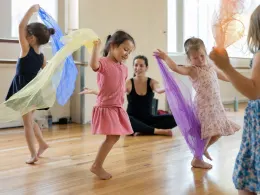
Creative dance for children brings together music, movement and their own ideas, rather than focusing on a fixed sequence of steps. Children explore different movement qualities and create short routines.

Children's Dance Can Combine Play, Style-Based Instruction, and Technique

Children's dance in Dortmund is not a single type of class. Some classes focus on creative movement: children respond to music, images, or prompts and develop their own movements. Others teach a dance style through recurring basic steps and clear sequences. In between are classes that combine both.

The difference matters because one child does not automatically want the same kind of instruction as another. Children who enjoy making things up and trying new things may feel at home in an open movement class. Those who want to copy and practise specific steps may find a style-based class a better fit. For teenagers, it may also matter whether they can contribute their own ideas to a choreography.

Dortmund also offers professional dance: Ballet Dortmund is based at the opera house. However, a professional stage is not the same as a children's class or youth training program. When searching, the overview of dance classes in Dortmund can help you first distinguish between the different types of instruction.

When children are free to explore movement ideas, it creates space for expression without requiring every child to dance the same way.

Good teaching adapts the task and pace to the group

With younger children, a movement often works better as a short task than as a long explanation. A teacher might offer a prompt, demonstrate a movement, and then let the children come up with variations. This helps them learn to listen to music, coordinate their bodies in space, and change movements, without making perfect execution the only goal.

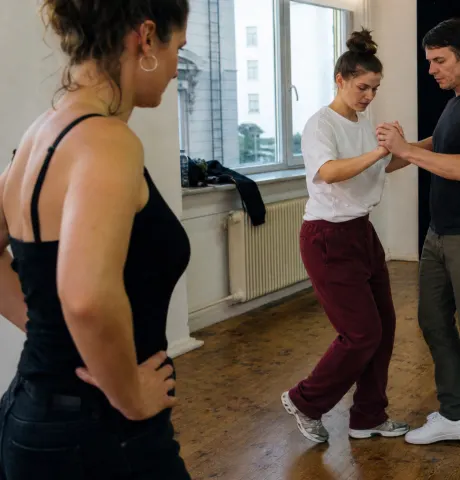
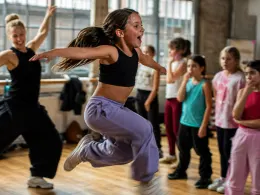
With older children and teenagers, steps can be broken down in more detail and longer sequences practiced. Even then, the instructions should remain clear: a new movement is demonstrated, divided into manageable parts, and only then combined with music. It is important that the group does not just copy a choreography, but also gets feedback that helps them on their next attempt.

The ballet scene in Dortmund can spark an interest in the performing arts, but a dance class does not have to prepare students for the stage. Ask whether performances are part of the course and how important they are. For some children, working toward a shared goal is motivating; others would rather dance without the pressure of performing. Both can be part of a suitable course.

What age-appropriate teaching looks like

That's right

  • The instructor explains movements in short, easy-to-understand steps
  • Children can try a movement in their own way
  • Attention and breaks alternate to suit the group
  • Feedback focuses on specific movements

Not like this

  • Long explanations assume that children will wait quietly
  • Everyone has to perform a movement in exactly the same way
  • A class consists almost entirely of repetitions without any variation
  • Praise and criticism are vague or compare children

When a child performs a movement differently than planned, I first ask what they discovered in the process.

Dance educator for children’s and youth dance

Age, interest and the feel of the class matter when choosing a course

A course name does not always tell you exactly what a class is like. “Children’s dance” can mean free movement or a more set choreography, while a youth class may combine different styles and levels. So read the description and ask what music, movement activities and learning goals are actually included.

Helpful questions to ask the provider include: What age group is the class for? Is there a trial class? How are beginners welcomed? How does the teacher respond if a child does not join in with a movement yet? Are there regular performances, and are they voluntary? The answers give you a clearer picture than a style name alone.

During a trial class, you can observe whether your child understands the instructions, has room to move and can rejoin after making a mistake. The mood after class matters too: Do they tell you about a movement they would like to repeat, or do they seem under pressure all the time? For more selection criteria, see the guide to finding a suitable dance school in Dortmund. What matters is that the class and your child are a good fit, not that the course title sounds as ambitious as possible.

Two approaches to dance classes

Play

Discover movement freely

Ideas emerge from music, images and prompts.

Children experiment with how a movement can be changed and develop their own responses to music. This approach is especially suitable when the joy of exploration matters more than a set sequence of steps.

Technique

Learn steps with a clear focus

Clear sequences provide guidance and practice.

In style-specific courses, movements are explained, repeated, and gradually linked together. This appeals to children or teenagers who enjoy working on specific steps and noticing their progress on a concrete task.

Frequently Asked Questions

  1. No, many introductory classes don't require any prior experience. What matters is whether the class is specifically intended for beginners or the appropriate age group. Ask how the instructor introduces new movements and whether children can join at any time.

Dance classes for children in Dortmund

Compare options for children and teens, and see which course format suits their age and interests.

The right class starts with Curiosity

On udansa, you can compare dance classes and programs for children and teens in Dortmund. This helps you find class formats that suit your child's interests and age.

The right class starts with Curiosity