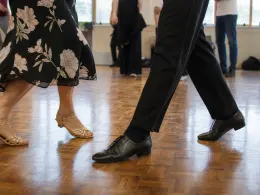
Movement 60+5 minutes

Dance for seniors in Dortmund: Move at your own pace

By Bernhard De LucaUpdated

In brief
  • Senior dance classes in Dortmund combine music, manageable step sequences, and practicing together in a group.
  • Some classes dance without fixed partners, while others practice partner dancing or switch between different formats.
  • Tempo, breaks, and possible step variations differ from class to class and should be checked in advance.
  • A class for older adults is movement instruction, but not a medical rehabilitation program.

For many people, what matters isn't learning the most complicated moves, but moving confidently around the floor and experiencing music together. The right course format depends on how you like to dance.

DefinitionDance for Seniors

Dance for seniors is a general term for dance activities aimed at older adults that combine movement with music. These can include group formations, simple choreography or partner dancing.

Senior Dance Is a Format, Not a Single Dance Style

If you search for senior dance, you won’t automatically find the same kind of class everywhere. One class may guide a group through set sequences danced without partners. Another may incorporate familiar partner dance moves or combine both. A general movement class for ages 60 and over may also use music and rhythmic steps without following a specific dance program.

For Dortmund, that means reading the class description carefully and asking what a typical session looks like. Are group dances, partner dancing, or movement exercises the main focus? Does everyone repeat a sequence together, or do the music and activities change often? On the overview of dance classes in Dortmund, you can compare suitable options as a starting point.

The word “seniors” also doesn’t set a uniform age limit. Some classes say 50+, while others are explicitly aimed at older adults. More important than the label is whether the pace, explanations, and class content sound right for you. A dance circle may mean a regular group format, but it isn’t automatically calmer or easier than another class.
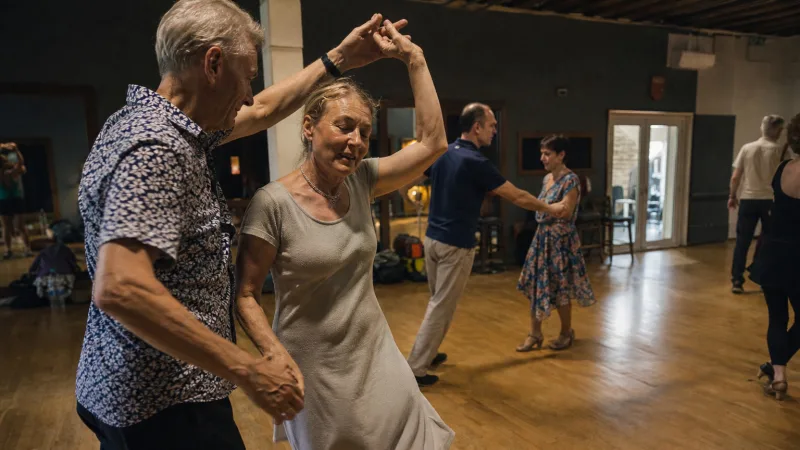
Trying steps at your own pace builds confidence, without everyone needing to move through the same range.

Learning pace shows in the small adjustments

An age-appropriate offering is not about everyone dancing at the same level or at the same speed. Clear instructions, repetitions and different step sizes can help you follow a sequence within your own range of movement. Some groups leave out turns or practice them individually at first; others work with longer choreographies. These options are not guaranteed, but depend on the instructor and the specific program.

So ask specifically whether breaks are planned, whether movements can be simplified and how large the group is. If you would rather try a particular movement carefully, say so before class. You do not have to disclose a diagnosis, but you can state your practical needs. Medical rehabilitation with a prescription is a different service and is not what is meant here by dance or movement classes.

“Beginner” can also mean different things: having no dance experience at all or being new to a particular dance style. If you want to better assess your previous experience, the overview on assessing your own dance level can help. When you get in touch, feel free to say whether you have danced before and what you hope to get from the class.

How to tell which course format is right for you

This is how

  • Ask about the pace and breaks before signing up
  • Ask about step variations for different levels of mobility
  • Clarify whether fixed partners or group formations are planned
  • Take advantage of a trial class if the provider offers one

Not like this

  • Inferring the course pace from the title alone
  • Assuming everyone has to follow every step exactly as taught
  • Assuming a partner is required without asking
  • Booking long term right away without checking the schedule and getting a feel for the space

A good step sequence remains understandable, even if someone dances it smaller or initially without turning.

Senior Dance Instructor

Choosing the Right Course Starts with Knowing What You Expect

First, think about what matters to you when dancing: do you want to remember steps, move to the music, dance in a formation with others, or try partner dancing? Your answer will help you make sense of course descriptions. A movement class may focus less on set figures, while a dance group might practise a shared choreography. The names alone do not reliably reveal the focus.

Before signing up, you can ask about three things: How does a typical class begin? Are steps repeated and explained? Can you make the movements smaller or take a break now and then? If a trial class is offered, do not focus only on whether you can do every step right away. Also notice whether the instructions are easy to understand and whether you can take part without feeling pressured.

For current courses and dates in Dortmund, use the course filter on the page. Compare not only the times, but also the format and description. A good sign for you is if you can imagine coming back after class, even if you have not quite mastered a sequence yet. That is what sets a suitable learning group apart from an offering that only sounds right on paper.

Two ways to experience music together

Group

Dance in Formation Together

Follow the steps without bringing a regular dance partner

In group classes, everyone moves in a circle or in lines and learns the same sequence of steps. This can be a good fit if you enjoy practicing with others but don't have a regular dance partner.

Partner

Connecting steps as a pair

Leading and following in a shared movement

Partner dancing combines steps and weight changes with another person. Some people enjoy the direct contact and responding together, while others prefer a formation without fixed partner roles.

Frequently Asked Questions

  1. Many group classes do not require a regular dance partner. Partner dance classes may require you to bring someone, or partners may switch during class. Before signing up, ask which format is actually offered and whether you can attend on your own.

Senior Dance Classes in Dortmund

Compare current senior dance and movement classes in Dortmund and see which format suits you.

Find your dance rhythm in Dortmund

On udansa, you can compare senior dance and movement classes in Dortmund. See which class format suits your everyday life and the way you like to dance.

Find your dance rhythm in Dortmund

Read more