Dancing together keeps you young
Find active dance groups, like-minded people in your age group, and special courses on udansa that combine modern senior dance with modern ergonomics.

By Mary De LucaUpdated
Find active dance groups, like-minded people in your age group, and special courses on udansa that combine modern senior dance with modern ergonomics.
Dancing in your later years is reinventing itself. Innovative tools and modern training concepts ensure that you protect your joints optimally while still gliding across the dance floor with full energy.
Dance trends for older adults do not emerge overnight through viral social media challenges. While the younger generation consumes trends in videos lasting only seconds, innovations in senior dance develop much more sustainably. They establish themselves step by step directly in dance schools, at organized tea dances, and through the word of mouth of active communities. A new trend only takes hold when it proves to be safe, community-building, and physically beneficial in practice. The most important driving force for these developments is the desire to fully enjoy the joy of movement despite minor physical limitations.
Modern dance pedagogy has recognized that rigid step sequences often miss the needs of older bodies. Therefore, concepts that combine the fun of partner dancing with health prevention are increasingly becoming established. If you are looking for a suitable group that shares this modern spirit, a dance group for over 50s against loneliness offers the ideal entry point to meet like-minded people without any pressure to perform.
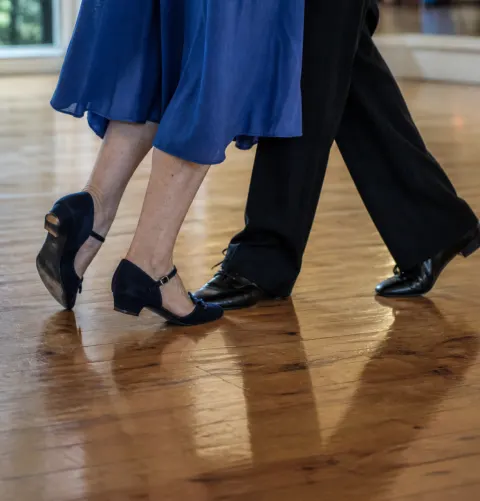
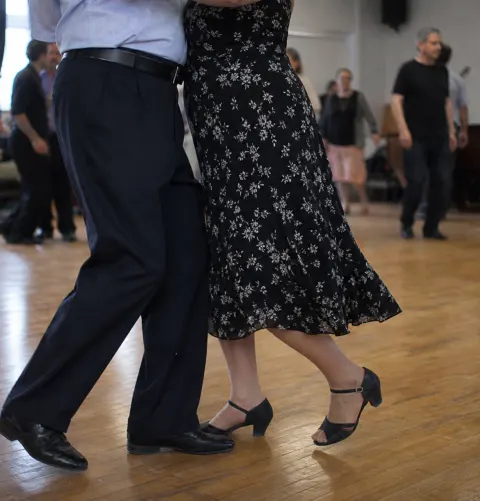
This trend focuses on special shoes with integrated cushioning pads in the heel area and highly flexible soles. They absorb shocks with every step and prevent the painful locking of knee joints during turns on non-slip floors.
In this approach, classic figures are modified to avoid extreme stretching and unnatural postures. Dance partners maintain a stabilizing, yet relaxed connection that protects the back and facilitates balance.
This modern concept combines gentle warm-ups, coordination exercises, and dance elements without overexertion. It trains balance and strengthens deep muscles to effectively prevent falls in everyday life.
Find the right course for a lively and safe start on the dance floor.
Student DanceBurgstädt · Germany
Aufbaukurs Burgstädt Montag Schuljahr 2026/27Monday · 13:30 · Nov 9, 2026 - Jan 25, 2027
Burgstädt
BallroomMeissen · Germany
Fortgeschrittenen-Kurs | ADVANCEDTuesday · 18:30 · Nov 10, 2026 - Jan 19, 2027
“Ein Haus für Vieles” - Saal Tanzkurse
Student DancePenig · Germany
Aufbaukurs Penig Schuljahr 2026/27Monday · 14:30 · Nov 9, 2026 - Jan 25, 2027
Penig
The current impulses in senior dance come significantly from sports science and modern occupational therapy. They are moving away from pure formation dance towards health-oriented movement concepts. Today, the focus is clearly on relieving the spine and protecting the knee joints. Torques are defused, leverage effects within the couple are reduced, and step sizes are adapted to individual anatomy.
This change is also reflected in the altered perception of aids. Ergonomics in dancing is no longer a taboo subject, but a sign of professionalism and self-care. Those who take care of themselves dance longer. Modern trends naturally integrate joint-friendly dance shoes and soft cushioning systems into everyday dance life. This turns the dance floor into a safe place where one's own health and dance expression go hand in hand. An upright, proud posture also protects the neck, as you can also read in the guide on improving head posture when dancing.
The right equipment and small adjustments to your dance posture determine whether you are doing something good for your body or overstraining it.
Correct
Wrong
Dance shoes that are gentle on the joints are characterized by integrated arch support, soft inner padding, and a flexible chrome leather sole. This sole allows for controlled gliding without abrupt stops, which noticeably relieves the knees.
Yes, ergonomic dancing can be implemented in almost every style. By adjusting step size, avoiding extreme hip rotations, and using soft knee work, any dance immediately becomes gentler on the joints.
Gentle dance training for older adults should begin with joint mobilization and avoid extreme rotations as well as jerky stops. The focus is on continuous, fluid movement sequences.
 Dance for Seniors: Stay active and gentle on your joints
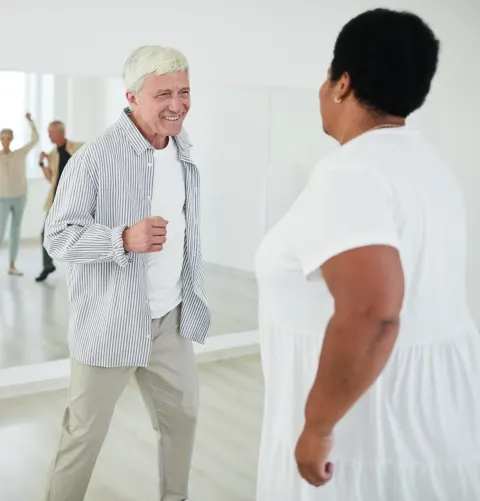 Senior Dance Health Checklist: Training Safely Over 50
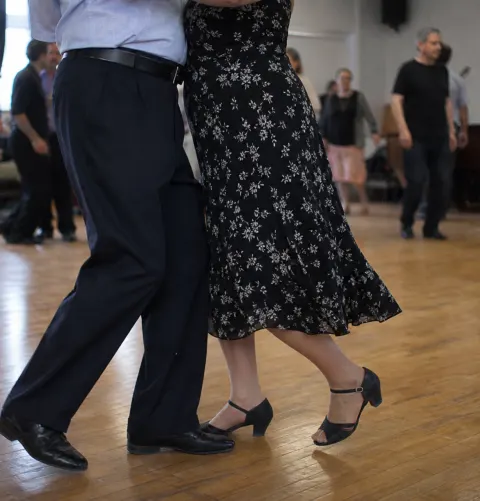 Senior dance with back pain: Protecting your spine
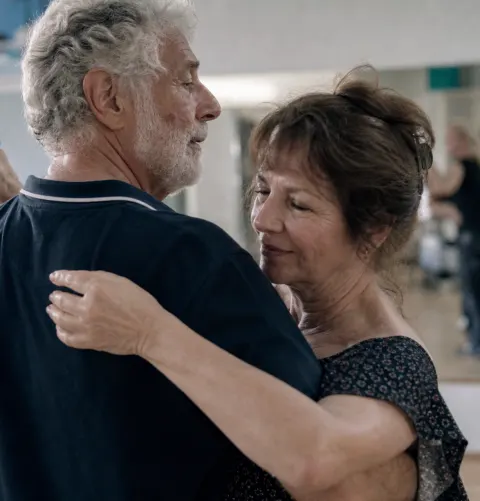 Senior dance: Regulate your pulse and protect your heart
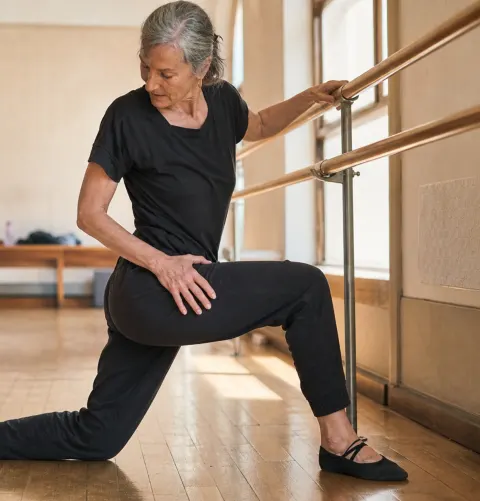 Stay flexible: Senior dance mobility & stretching exercises
 Dancing gently on your joints: Tips for healthy knees and hips
 Hit the dance floor safely: The best warm-up routine for dancers over 50