It is simply better to dance together
On udansa connect, you meet like-minded people in your area who share your passion. Find the perfect partner for your next dance course or a relaxed social now.

By Bernhard De LucaUpdated
On udansa connect, you meet like-minded people in your area who share your passion. Find the perfect partner for your next dance course or a relaxed social now.
Good posture is not a question of age, but of technique. Anyone who recognizes typical compensatory movements in the upper body will dance more stably, elegantly, and above all, completely pain-free immediately.
Age-appropriate relevance
All analyzed posture errors specifically relate to the biomechanics and anatomy of dancers aged 50 and over.
Practical feasibility
The described corrections can be implemented immediately without any acrobatic prior knowledge or extreme flexibility.
Health benefits
These tips aim to protect your joints and actively avoid common complaints, such as knee pain.
Free from sponsorship
This selection was created independently and without financial support from dance schools or associations.
Mistake 1: The turtle neck
If you stretch your head forward, you put heavy strain on your cervical spine and quickly lose your orientation during turns. The correction: Imagine the back of your head gently pushing upwards and backwards to lengthen your cervical spine.
Mistake 2: Shrugging your shoulders
Shrugging your shoulders blocks your dance frame and quickly leads to painful tension in the neck area. The correction: Exhale deeply and let your shoulder blades slide down your back into your trouser pockets like soap.
Mistake 3: The uncontrolled swayback
An extreme swayback compresses the lumbar vertebrae and quickly causes sharp back pain while dancing. The correction: Tilt your pelvis slightly backward by pulling your pubic bone gently towards your navel and activating your core.
Mistake 4: Straightened legs
If you lock your knees completely, you stand stiffly on the floor and can no longer absorb shocks elastically, which puts strain on your joints. The correction: Always keep your knees slightly unlocked and soft so you can react smoothly at any time.
Mistake 5: Standing on your heels
Placing your weight on your heels blocks your dynamics and makes quick turns or changes of direction almost impossible. The correction: Shift your center of gravity slightly forward onto the balls of your feet, so that your heels only lightly touch the floor.
Find the right course to improve your posture under professional guidance.
Student DanceBurgstädt · Germany
Aufbaukurs Burgstädt Montag Schuljahr 2026/27Monday · 13:30 · Nov 9, 2026 - Jan 25, 2027
Burgstädt
BallroomMeissen · Germany
Fortgeschrittenen-Kurs | ADVANCEDTuesday · 18:30 · Nov 10, 2026 - Jan 19, 2027
“Ein Haus für Vieles” - Saal Tanzkurse
Student DancePenig · Germany
Aufbaukurs Penig Schuljahr 2026/27Monday · 14:30 · Nov 9, 2026 - Jan 25, 2027
Penig
If you want to glide across the dance floor pain-free and elegantly, even in the second half of your life, you should take a critical look at your posture. Over the years, everyday habits often creep in that lead to blockages when dancing. A rounded back or stiff hips block the natural flow of movement and make harmonious turns difficult. As soon as you learn to consciously lengthen your spine and let your shoulders drop in a relaxed way, your entire body awareness changes. To build your ballroom dance posture, you do not need peak athletic performance, but rather mindfulness for your own axis.
Especially when turning together, the importance of a stable center becomes clear. If your head rests stably over your spine and your pelvis remains slightly upright, you will not lose your balance even during quick changes of direction. This conscious body work not only protects your spinal discs, but also gives your steps a whole new lightness. Anyone who internalizes these basics prevents injuries and can enjoy their hobby carefree well into old age.
Poor dance posture from age 50 often leads to strain on the lumbar spine and knee joints. In addition, a rounded back blocks the shoulder joints, which makes leading and following in a pair significantly more difficult.
Stand barefoot and shift your weight slightly onto the balls of your feet while your spine stretches long upwards. Gently pulling in your belly button stabilizes the pelvis and prevents a hollow back.
Yes, absolutely. Anyone who stands upright and cushions movement elastically from the knees relieves the intervertebral discs. Dancing strengthens the deep core muscles and can noticeably alleviate chronic tension in the back.
 Dance for Seniors: Stay active and gentle on your joints
 Steady on your feet: How dancing prevents falls
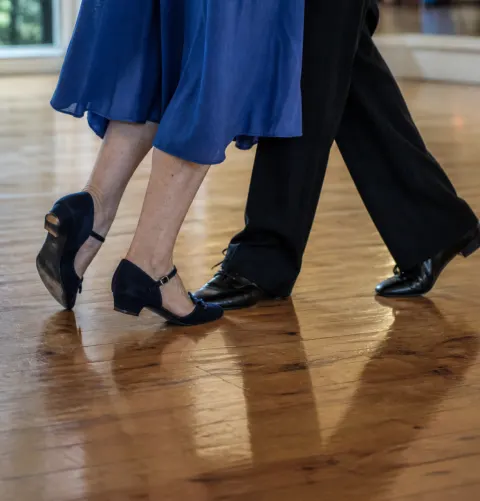 Dancing safely with a joint replacement: Your comeback
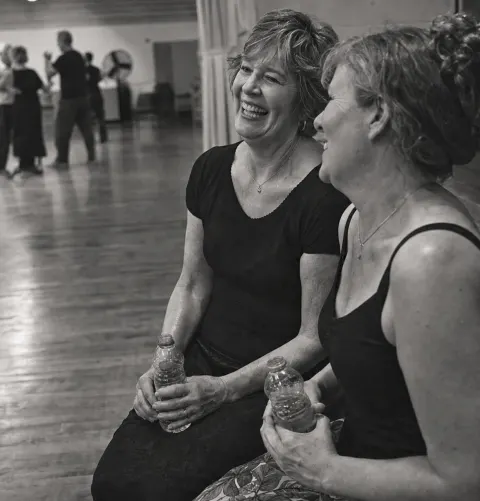 Recovery after dance class: How your body regenerates after 50
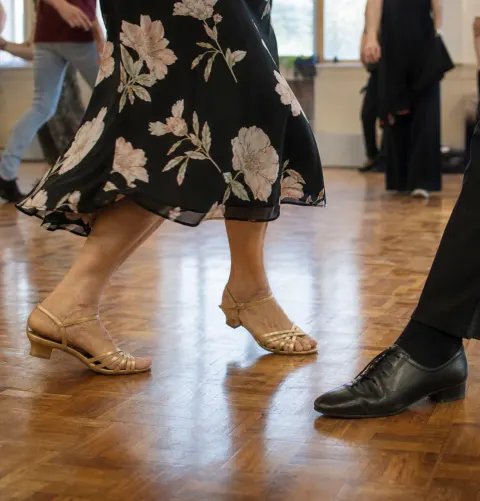 Senior Dance Trends & Health: Stay Active
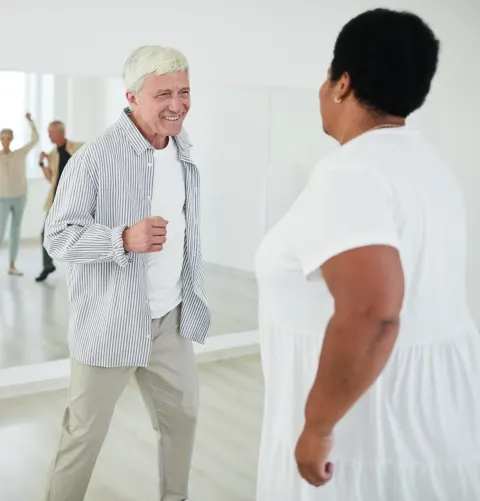 Senior Dance Health Checklist: Training Safely Over 50
 Senior dance with back pain: Protecting your spine