Ballroom dance4 minutes

Ballroom Latin party in Dresden: free dancing for couples

By Mary De LucaUpdated

In a nutshell
  • Ballroom and Latin parties offer couples the opportunity to freely try out the figures they have learned, without the pressure of a class.
  • A balanced mix of classic ballroom dances, rhythmic Latin dances, and Discofox is played.
  • The dance floor is divided dynamically: lively dances use the outer lane in a counter-clockwise direction, while stationary dances remain in the center.
  • Smart casual attire and clean dance shoes with soles that allow for easy turning are part of the basic etiquette.

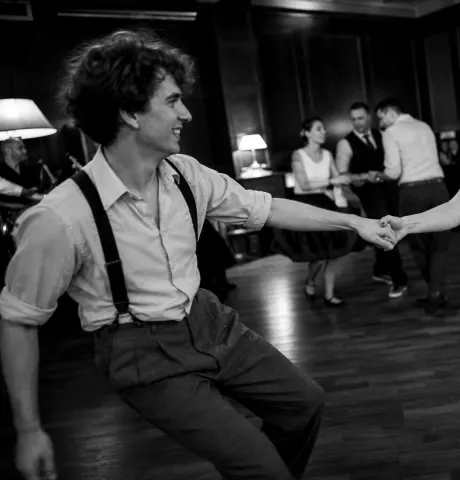
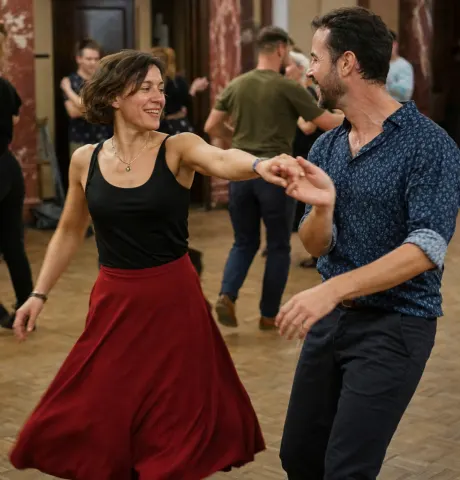
Open dance parties bridge the gap between the classroom and the festive ballroom. They give couples the space to try out steps, develop a feel for the music, and deepen the joy of moving together.

DefinitionLine of dance

The line of dance refers to the mandatory direction of movement in partner dancing, which always runs counter-clockwise along the outer edge of the dance floor for dances that cover space.

Free dancing as the ideal complement to a dance course

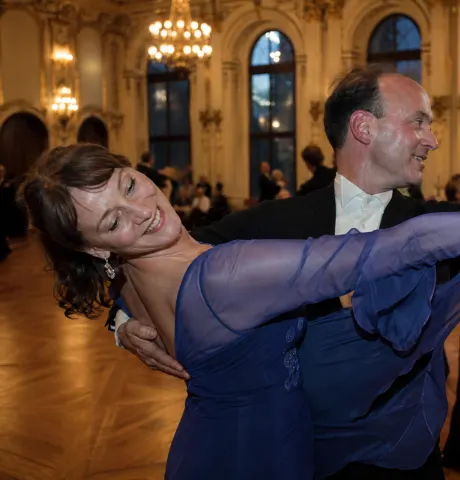
If you want to apply the figures you learned in a dance course in Dresden, you should look specifically for free dance evenings. An open Ballroom Latin party in Dresden differs fundamentally from regular lessons: here, there are no step instructions from teachers, but rather a free practice floor with changing songs. The classic world dance program mix is played, which ranges from slow waltzes and lively Quickstep to fiery Rumba and Cha-Cha. Dresden combines a vibrant dance culture, which includes historical balls as well as the legendary Ballhaus Watzke in Dresden, with a constant demand for uncomplicated dance meetups.

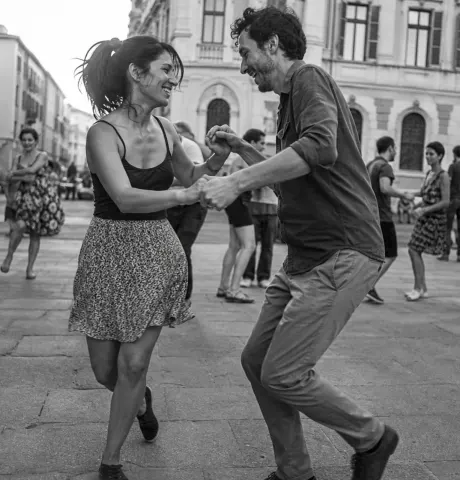
For beginners and advanced dancers alike, such dance parties offer the perfect space to consolidate your own repertoire without the pressure of an exam. Instead of fixed choreographies, the focus is on situational leading. Because the space is shared with other couples, you automatically train your orientation on the floor and learn to react spontaneously to changes in tempo.

On a crowded dance floor, looking in the direction of travel prevents collisions and ensures a smooth flow.

Reading the dance floor correctly and avoiding collisions

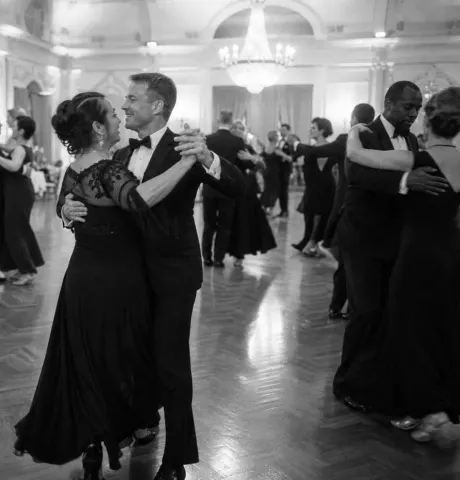
At a ballroom and Latin dance party, couples with completely different levels of experience share the same space. To ensure that everything runs smoothly, a proven room layout regulates the activity: expansive ballroom dances like Wiener Walzer, Slowfox, or Tango move along the outer dance line in a counter-clockwise direction. Anyone dancing quick change steps or wide poses stays strictly in this outer lane.

The center of the dance floor, on the other hand, belongs to stationary dances. This is where Latin dances like Rumba, Jive, or Cha-Cha find their place, as well as Discofox, where couples largely operate on the spot. If a ballroom couple falters or wants to test out a figure, they also briefly move into the center. Anyone who internalizes this flow avoids collisions and can enjoy the dance evening in a completely relaxed way.

Etiquette on the dance floor

Dance party etiquette

  • Move with the flow counter-clockwise on the outer lane
  • Dance stationary figures in the center of the floor
  • Wear clean dance shoes with smooth soles
  • Give a quick nod or smile if things get tight

Common mistakes

  • Suddenly stopping in the middle of the outer lane
  • Moving across the center with wide, sweeping steps
  • Entering the dance floor with wet street shoes
  • Harping on the dance partner's missteps

Free dancing only shows how well leading and following really works when there are no counts from the sidelines to dictate the way.

Dance instructor for Ballroom and Latin

Preparation and etiquette on the social dance floor

A successful evening of dancing depends on the right preparation. At social dance parties, a neat but not overly formal dress code is the general rule: clean clothing that allows freedom of movement is standard, while festive evening wear is reserved for grand galas. The most important thing is your footwear. Street shoes bring dirt onto the dance floor and hinder smooth turns, which is why dance shoes with chrome leather soles, or at least shoes with smooth, clean soles, should be worn.

Open evenings also thrive on the willingness to engage with the dance community. An invitation to dance can be accepted or politely declined at any time. Dancers appreciate a considerate atmosphere where the shared experience of the music takes precedence over technical perfection. Anyone who regularly attends open evenings will quickly lose their shyness in crowded rooms and develop a fine sense for leading and rhythm.

The two zones on the dance floor

Outer lane

Momentum in the flow of the dance line

Spacious ballroom dances

The outer lane belongs to progressive dances like Waltz, Quickstep and Tango. Here, couples circulate swiftly counter-clockwise across the dance floor and maintain the flow of movement.

Center

Rhythm in a fixed space

Stationary Latin and ballroom dances

In the center of the floor, couples dance Rumba, Cha-Cha, Jive, or Discofox. Stationary figures and turns in a confined space do not disturb anyone's flow of movement here.

Frequently Asked Questions

  1. Comfortable, neat clothing with sufficient freedom of movement is ideal. Fabrics that are too warm are impractical, while special dance shoes or at least clean shoes with smooth soles make turning easier and protect the dance floor.

Ballroom and Latin in Dresden

Find suitable courses and offers for ballroom dancing in your area.

Glide across the dance floor together

Find like-minded people on udansa for your next social dance in Dresden and compare suitable dance opportunities.

Glide across the dance floor together

Read more