
Find your perfect dance partner
On udansa connect, you will meet dance enthusiasts from your area who share your passion. Find someone now who moves to the same beat as you.


By Mary De LucaUpdated
On udansa connect, you will meet dance enthusiasts from your area who share your passion. Find someone now who moves to the same beat as you.
A sense of rhythm is not magic, it is the connection between hearing and moving. With this self-test, you will find out where your rhythmic strengths lie and how you can specifically improve your timing.
Many people believe that a good sense of rhythm is innate: Either you have it, or you don't. In dance practice, however, a completely different picture emerges. A dance rhythm test quickly proves that hearing and motor implementation can be trained. Dancing is not about a medical diagnosis, but about the ability to isolate the underlying beats of the music and move your own body in sync with them. If you want to know how your rhythmic confidence stands, this structured self-test will help you.
To test your musical ear for dancing, you can start with three simple steps in everyday life. First: Listen to an unknown song and try to clap along out loud immediately. Do you hit the beat consistently, or do you unconsciously get faster? Second: Walk through the room to the beat of the music. Each step must land exactly on the heavy beat. Third: Use visual control. Dance in front of the mirror to a song with a strong bass and pay attention to whether your movement merges with the impact of the beat in the room. If you master these exercises, you are on an excellent path to rhythmic accuracy.
Intuitive grasp of the beat
You hear the beat immediately, can identify the one in the rhythm effortlessly, and place your steps intuitively to match the music. Your focus is on musical expression and playing with the rhythm.
Focus on physical coordination
You understand the theory of the beat, but you have to concentrate hard to synchronize your body's movement with the signal you hear. Your training focuses on motor implementation.
| Feature | Rhythmic beginner | Rhythm-secure dancer | Rhythm professional |
|---|---|---|---|
| Clapping to the beat | Often unconsciously speeds up or slows down | Keeps the tempo constant throughout the entire song | Playfully varies rhythms without losing tempo |
| Steps to the music | Steps often land between the beats | Reliably hits the heavy beats (the one) | Dances syncopated steps and pauses precisely |
| Hearing instruments | Mostly follows only the vocals or the melody | Isolates bass and drums in the background | Instantly recognizes complex rhythmic structures |
| Error correction | Only notices off-beat dancing through the partner | Corrects the step error after a few bars | Immediately balances rhythm changes in the music while flowing |
This self-test serves as an orientation in dance and does not replace a medical examination.
Once you have identified your type in the comparison table, it is time to put it into practice. If you find that you have weaknesses in pure listening, you will benefit from passive music listening in everyday life: when driving or cooking, focus specifically on the bass line or the drums instead of just following the melody. If the problem lies more in motor implementation, so-called "dry training" helps. Practice your basic steps completely without music, just counting out loud, until the movement sequence is automated. Only then should you turn on the music.
Another important step is choosing the right dance partner. If you are still looking for the right companion, take a look at our guide Looking for a dance partner: The complete guide. It is easier to learn together, as you can give each other feedback on timing. On the dance floor, it quickly becomes clear whether your movements harmonize. Do not worry if not every step is perfect right away: a sense of rhythm is like a muscle that grows steadily through regular training in class and at social dance.
An irregular tempo while clapping indicates that you are orienting yourself more towards the fleeting melody than the constant basic beat. When listening, focus specifically on the low frequencies like the bass and drums.
Yes, a sense of rhythm can be trained excellently. Through targeted listening exercises, rhythmic speaking, and isolating instruments, the brain quickly learns to precisely decode the beat in partner dance.
Close your eyes and try to perceive only the deep bass or the drum. When you feel the beat in your body, tap along with your index finger: This simplifies the rhythmic assignment enormously.
Find the right course to test and strengthen your sense of rhythm directly on the dance floor.
Couple danceLimbach-Oberfrohna · Germany
PaartanzkreisMonday · 19:30 · Oct 12
Limbach-Oberfrohna
BallroomMeißen · Germany
Tanzkreis | PROFESSIONALTuesday · 20:15 · Oct 27, 2026 - Jan 5, 2027
“Ein Haus für Vieles” - Saal Tanzkurse
Couple danceLimbach-Oberfrohna · Germany
PaartanzkreisFriday · 18:15 · Oct 23
Limbach-Oberfrohna
 Recognizing the beat in dance music: How to hit every rhythmA sense of rhythm is not a secret, it is a matter of practice. Learn how to pick out the beat in dance music and move confidently in rhythm.
 Recognizing the Waltz beat: How to hear the three-quarter timeThe three-quarter time of the Waltz is a challenge for many dancers. With this guide, you will learn to effortlessly hear the one in the beat for both Viennese and Slow Waltz.
 Hearing the Salsa beat: A guide to the Clave rhythmLearn how to decode the fascinating Clave rhythm of Salsa and land your basic step precisely on the beat. The practical guide for a better sense of rhythm.
 Losing the beat while dancing: The 7 most common mistakesLosing the beat is part of learning to dance. Find out which seven typical rhythm mistakes lurk in partner dance and how you can easily correct them.
 Counting the Kizomba rhythm: Understanding the African beatGet to know the rhythmic structure of Kizomba music and learn how to use the batida for your syncopated steps.
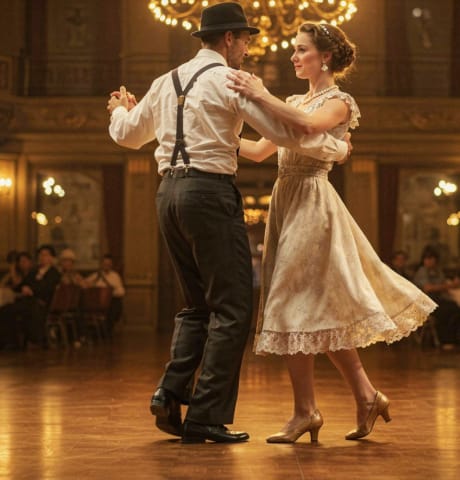 Modern dance music rhythms: Pop hits for partner dancingModern pop and chart hits are taking over the dance floor. In our trend report, learn how to perfectly analyze and dance to current beats in partner dancing.
 Counting the Discofox beat: comparing step systemsThe Discofox beat is a challenge for many dancers. This case study shows how the classic tap-step system differs from the modern three-step system when dancing to fast beats.