Sense of rhythm4 minutes

Losing the beat while dancing: The 7 most common mistakes

In a nutshell
  • Timing errors in partner dance usually arise from focusing too much on the steps instead of the music.
  • Ignoring the strong first beat (the one) almost always leads to rhythmic chaos.
  • Relying blindly on your partner without listening yourself prevents stable, shared timing.
  • When stressed, the only thing that helps is reducing your movement to the basic step to find the beat again.

Timing errors in partner dance happen even to professionals. If you know the typical pitfalls when listening and moving, you will find your way back into the shared rhythm much faster.

How we selected the typical timing errors

  • Practical relevance in partner dance

    The listed rhythm errors are based on the typical observations of experienced dance instructors in everyday partner dance.

  • Focus on rhythm and timing

    Only actual timing and listening errors are addressed, not general posture or step errors.

  • Direct approach

    For every identified error, a directly implementable correction for the dance floor is provided.

  • Independent selection

    This list was created independently and without paid placements or sponsorship.

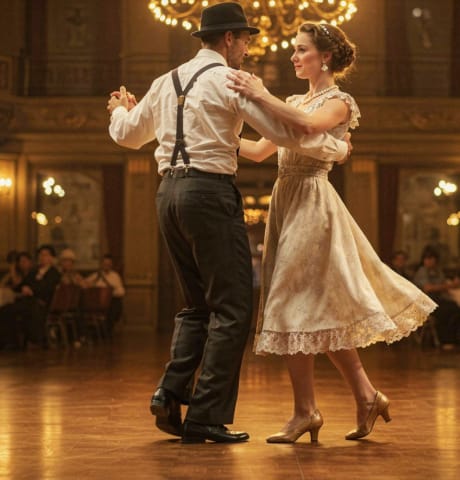
In harmony together: Anyone who actively listens to the music catches timing errors in the couple effortlessly.

The 7 most common rhythm mistakes in partner dance

  1. 01

    The cold start without counting in

    Mistake 1: Rushing in without connecting to the music

    • False start
    • entry
    • listening

    Many dancers start moving immediately without letting the song sink in for a moment first. If you do not actively listen to the first few bars, you will miss the entry on the one and dance off-beat from the very beginning.

  2. 02

    Die fehlende Orientierung am Hauptschlag

    Fehler 2: Die Eins im Takt ignorieren

    • Betonung
    • Musikstruktur
    • Eins

    Die Eins ist im Standard- und Lateintanz meist der am stärksten betonte Schlag im Takt. Wer diese Betonung überhört, verliert die Orientierung im Raum und erschwert dem Partner das synchrone Mitgehen massiv.

  3. 03

    Blind trust without listening for yourself

    Mistake 3: Passively relying on your partner

    • Personal responsibility
    • listening
    • couple dynamics

    If you only rely on your partner when identifying the beat in dance music, you will become sluggish. If both dancers do not listen to the music independently, minimal delays quickly escalate into tangible timing errors.

  4. 04

    Anticipating the actual beat

    Mistake 4: Moving too fast before the beat

    • Hectic
    • timing
    • stress

    Under stress, leaders in particular tend to take steps faster and faster. This anticipation of the beats destroys the dance tension and causes the couple to be permanently ahead of the music.

  5. 05

    Getting caught up in the melody lines

    Error 5: Confusion due to melodic flourishes

    • Distraction
    • melody
    • rhythm

    Modern songs often contain hidden complex rhythmic structures or vocal lines that distract from the actual basic beat. If you let yourself be confused by the melodic arcs, you easily lose sight of the stable bass beat.

  6. 06

    Concentrating on steps blocks your hearing

    Mistake 6: Mental overload from chasing figures

    • Mental block
    • blockage
    • step sequences

    If you want to dance complex figures, you often concentrate so hard on your footwork that your hearing switches off completely. As soon as your head blocks, the connection to the music breaks and you lose the beat.

  7. 07

    Die rein mechanische Bewegung ohne Flow

    Fehler 7: Fehlende körperliche Federung des Beats

    • Körperspannung
    • Elastizität
    • Bewegung

    Ein steifer Körper kann den Rhythmus nicht elastisch abfedern. Wer die Knie und Hüften blockiert, wirkt im Timing oft abgehackt und schafft es physikalisch kaum, schnelle Tempowechsel oder Synkopen sauber auszutanzen.

Wie du den Rhythmus auf der Tanzfläche rettest

Wenn du merkst, dass du auf der Tanzfläche den Rhythmus verlierst, ist das kein Grund zur Panik, sondern eine Frage der Aufmerksamkeit. Der häufigste Auslöser für Taktfehler im Paartanz ist eine mentale Überlastung: Wer krampfhaft an die nächste Figur denkt, schaltet das Gehör unbewusst ab. Um den Rhythmus wiederzufinden, hilft eine sofortige Reduktion auf das Wesentliche. Gehe zurück in den einfachen Grundschritt und konzentriere dich ausschließlich auf den Bass oder das dominierende Schlaginstrument der tanzbaren Musik. Sobald du die schwere Eins im Takt wieder spürst, nimmst du die Bewegung wieder auf.

Die Rolle der Kommunikation im Paar

Beim Lead & Follow im Paartanz tragen beide Partner die Verantwortung für das gemeinsame Timing. Führende neigen bei Stress dazu, Schritte zu überstürzen, während Folgende manchmal aus Vorahnung zu früh loslaufen. Ein kurzes, bewusstes Verlangsamen der Bewegung oder ein sanfter Zwischenschritt am Platz wirkt oft Wunder, um sich ohne Worte neu zu synchronisieren. Nutze ruhige Momente im Lied, um dich ganz auf die Verbindung zu deinem Partner zu fokussieren, statt komplizierte Choreografien erzwingen zu wollen. Die beste Technik nützt nichts, wenn die Bewegung nicht mit der Musik atmet.

Numbers for rhythmic dancing

Typische Rhythmusfehler im Fokus
7
Seconds of rest before the start help
4-8
Focus on the one in the beat
100%

Häufige Fragen

  1. Der sicherste Weg ist das Reduzieren der Bewegung auf den einfachen Grundschritt am Platz. Konzentriere dich ganz auf den schweren Bassschlag der Musik, atme tief aus und setze den nächsten Schritt bewusst auf die Eins.

Find dance courses near you

Learn in class how to hear the music correctly and place every step on the beat.

View all matching courses
udansa community

Finde deinen Taktpartner auf udansa

Auf udansa findest du Tanzbegeisterte in deiner Region, die genau wie du an ihrem Taktgefühl arbeiten und die Tanzfläche erobern wollen. Knüpfe unkompliziert Kontakte für den nächsten Tanzkurs oder die kommende Party.

Sources

Insights and observations from the daily practice of German dance schools as well as proven methods of rhythm training in partner dance, as of August 2026.