
Find your dance partner for Kizomba
On udansa you can find like-minded people who share your passion, and discover suitable courses in your area to perfectly match your steps to the beat.


By Mary De LucaUpdated
On udansa you can find like-minded people who share your passion, and discover suitable courses in your area to perfectly match your steps to the beat.
Kizomba fascinates with its earthy connection and deep, pulsating music. Once you understand the African emphasis, you no longer just dance steps, but merge directly with the heartbeat of the drum.
The Batida refers to the characteristic, heavily emphasized drum beat in Kizomba music, which is based on Angolan rhythms. It forms the rhythmic framework and the unmistakable pulse that dancers move to.
If you want to dance Kizomba, you first have to understand the music. Unlike many classic partner dances that are based on a rigid left-to-right pattern, Kizomba thrives on movement in space. The basis for this is the Batida, the characteristic, heavy drum beat of African origin. To count the Kizomba rhythm, we focus on a classic four-four time signature, where each beat has its own dynamic. When you learn to recognize the beat, the music loses its complexity and becomes a clear map for your feet.
The structure of Kizomba music is built on a steady pulse. The first beat of the bar, the one, carries the most weight and gives you the orientation for the start. Directly after that, on the count of two, follows the concise, deeper heartbeat of the Batida. The three is usually a bit softer, while the four completes the bar and prepares the transition to the next cycle. This repetitive pattern runs through almost every song and forms the reliable foundation on which you build your steps.

The special thing about Kizomba is that you do not have to strictly take a step on every beat. The music invites you to play with time. This is where syncopated walking comes into play. A syncopation shifts the emphasis away from the heavy main beats to the spaces in between, the so-called and-beats. If you can count the Kizomba rhythm, you open up the possibility of varying between slow, sustained steps and fast, flowing transitions.
To put syncopated walking into practice, you use the dynamics of the batida. Instead of walking evenly on one, two, three, four, you take a step on one, for example, pause briefly on two, and take two quick steps on the count of three-and-four. This play with deceleration and acceleration makes the dance incredibly dynamic. It does not require a complicated repertoire of figures, but merely a fine ear for the heartbeat of the drum, which you translate directly into your footwork.
Correct
Wrong
Whoever doesn't just hear the batida in Kizomba, but lets it into their body, stops walking and starts to flow.
To develop a real feel for the Kizomba tempo, it helps to move away from pure theory and feel the music throughout your entire body. The tempo is usually in a relaxed range of 80 to 100 beats per minute. This gives you enough time to place your steps precisely and fully enjoy the weight transfer. Kizomba is a forward movement, a shared flow that draws its energy from the ground.
When you are at a social dance, you will notice how important this rhythmic connection is. The music gives you the space to be in the moment. When listening, focus initially only on the low frequencies, the bass line. Ignore the melody or the vocals and follow only the heavy drum. As soon as your body has internalized this pulse, the counting happens automatically in the background, and you can fully immerse yourself in the shared flow of movement.
The African heartbeat of the music
The heavy, repetitive drumbeat forms the rhythmic skeleton of every Kizomba song. It provides the clear structure and ensures the earthy, powerful connection to the ground, on which every step lands securely.
The play with the spaces in between
The rhythmic displacement brings the typical dynamics into the dance. By consciously placing steps on the off-beats, a fascinating game of slowing down and quick changes is created.
Kizomba is counted in a classic four-four time. The counting goes from one to four, with one marking the beginning of the bar and two receiving the strongest emphasis from the bass.
The Batida is the deep, heavy drum beat that gives Kizomba its typical, wave-like character. It differs from the mostly lighter, syncopated rhythms of other Caribbean styles due to its earthy heaviness.
A syncopation in Kizomba means that you take a step on an unstressed intermediate beat, for example on the count of and. This creates a quick double step that dynamically breaks up the movement.
Find the right course to test your sense of rhythm directly on the dance floor.
Couple danceLimbach-Oberfrohna · Germany
PaartanzkreisMonday · 19:30 · Oct 12
Limbach-Oberfrohna
Couple danceLimbach-Oberfrohna · Germany
PaartanzkreisFriday · 18:15 · Oct 23
Limbach-Oberfrohna
Couple danceBurgstädt · Germany
Paarkurs - Goldstar TanzkreisSunday · 15:00 · Oct 25
Burgstädt
 Recognizing the beat in dance music: How to hit every rhythmA sense of rhythm is not a secret, it is a matter of practice. Learn how to pick out the beat in dance music and move confidently in rhythm.
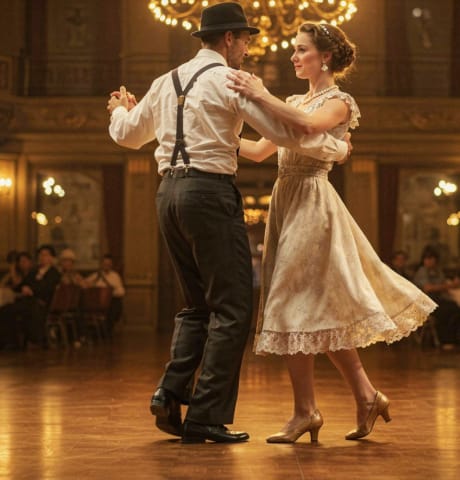 Modern dance music rhythms: Pop hits for partner dancingModern pop and chart hits are taking over the dance floor. In our trend report, learn how to perfectly analyze and dance to current beats in partner dancing.
 Counting the Discofox beat: comparing step systemsThe Discofox beat is a challenge for many dancers. This case study shows how the classic tap-step system differs from the modern three-step system when dancing to fast beats.
 BPM dance music chart: Tempos for all partner dancesOur clear BPM dance music chart shows you the exact speeds of all Ballroom and Latin dances for competitions and social dancing in comparison.
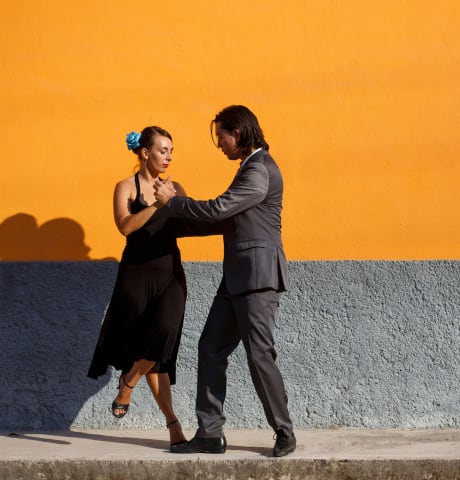 Hear the rhythm of Tango Argentino: Understand beat, Milonga & ValsTango Argentino fascinates with its musical depth. Our guide shows you how to hear the beat of Tango, Milonga, and Vals and adapt your steps perfectly to the music.
 Hearing the Cha-Cha-Cha beat: How to master the chasse timingIf you can hear the Cha-Cha-Cha beat correctly, you will dance the chasse on 4-and-1 with absolute ease. This guide shows you how to recognize the syncopated rhythm instantly.
 Salsa On 1 vs. On 2: The rhythmic differenceSalsa On 1 or On 2? This guide explains the rhythmic difference and how to hear the timing for both styles perfectly.