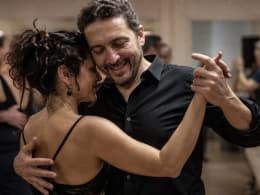
Swing festival5 minutes

Dancing at the Dixieland Festival Dresden: experience Swing and Lindy Hop

By Bernhard De LucaUpdated

In short
  • The Dixieland Festival Dresden offers its own program segments and open dance floors for Lindy Hop and Swing every year in May.
  • Dancing takes place primarily on the open-air stages in the city center and during the Riverboat Shuffles on the historic Elbe steamers.
  • Fixed dance partners are not necessary, as social dancing with regular partner rotation characterizes the festival experience.
  • Flat shoes with durable soles are best suited for cobblestones, asphalt, and wooden decks.

When the brass sections echo through Dresden in May, the streets start to swing: the Dixieland Festival opens its stages, steamer decks, and squares to everyone who wants to feel live music throughout their entire body.

DefinitionLindy Hop

Lindy Hop is the original swing dance from the 1930s, which is based on African American rhythms and is known for its bouncy posture, improvisation, and musicality. It is primarily danced to big band jazz and traditional swing music.

Traditional jazz as the driving force for swing on the streets of Dresden

The International Dixieland Festival Dresden transforms the city into a huge open-air stage for traditional jazz every May. While many visitors stand in front of the stages to listen, more and more dancers are using the infectious live music for partner dancing. Dancing at the Dixieland Festival Dresden means: cobblestones, ship decks, and historic halls are spontaneously converted into dance floors. The local Lindy Hop Dresden scene mixes completely casually with guests from all over Europe, creating a lively social dance.

The festival, which has been running since 1971, is now also explicitly aimed at swing enthusiasts. The rhythms of classic Dixieland jazz and marching bands are characterized by a driving two-beat or four-beat pulse, which is ideal for Charleston steps, Lindy Hop, or fast Balboa. If you are wondering beforehand which dance style suits you, you will quickly realize here: swing does not require stiff choreography, but rather responding together to syncopated horn sections and spontaneous solos.

On street asphalt and wooden decks, springy ground contact counts for more than the perfect turning sole of classic indoor shoes.

Dancing between riverboats and open-air stages

If you want to dance at the festival, you will find a wide variety of venues. Some of the most well-known formats include the open-air stages in the city center and the traditional riverboat shuffles on the Elbe steamers. On the boats, space is often limited and the wooden deck is slightly uneven: this is where compact figures and a close dance hold are essential. In contrast, the areas in front of the outdoor stages offer plenty of room to enjoy dynamic swings, kicks, and loose turns.

For a pleasant dance experience on cobblestones, asphalt, or wooden planks, the choice of footwear is crucial. Heavy dance shoes with delicate chrome leather soles are easily damaged outdoors. Experienced dancers opt instead for comfortable sneakers with flat, smooth rubber soles or leather soles that allow for gentle turns without putting strain on the joints. For transport between the stages, a simple bag is perfect, like the ones you know from practical tutorials for a DIY dance shoe bag.

Tips for dancing on festival stages and Elbdecks

How to succeed

  • Wear sneakers or leather shoes with a sturdy sole
  • Dance compact figures on tight decks and squares
  • Openly change dance partners after one or two songs
  • Absorb floor unevenness with loose, bent knees

Better to avoid

  • Wearing delicate dance shoes with chrome leather soles
  • Forcing expansive acrobatic moves in a crowded space
  • Dancing exclusively with only one person
  • Landing on cobblestones with straight legs

On the pavement, no textbook step counts, only the shared pulse with the band and the partner in the moment.

Swing dancer, Dresden

Social dance culture without rigid etiquette

Lindy Hop is by nature a social dance where the focus is on togetherness. At the Dixieland Festival, it is rare for a couple to dance exclusively with each other all day: changing partners after one or two songs is considered good manners. No one expects acrobatic aerials or perfect textbook technique. What matters is the basic pulse, also called bouncing, which you use to adjust to the tempo of the respective band.

Especially when marching bands move through the alleys or play fast tempos on smaller stages, it helps to switch between six-count and eight-count steps or to incorporate fast tandem Charleston. If you want to use the festival as an introduction, you do not need to have completed a multi-year course beforehand. The event thrives on mutual consideration, improvised playfulness, and open exchange between newcomers and long-time dancers.

Two styles of swing at the Dixieland Festival

Steamer

Compact on the paddle steamers

Riverboat shuffle on a narrow wooden deck

On the paddle steamers, you dance close together in a confined space. Compact basic steps, Charleston, and gentle leading prevent collisions during ship movements.

Open-air

Swinging on cobblestones

Open-air stages in historic squares

In the city center squares, there is plenty of space for wide swings and turns. However, uneven cobblestone joints require flat shoes and springy steps.

Frequently Asked Questions

  1. No, you can easily come to the Dixieland Festival alone. Swing and Lindy Hop are pure social dances, where you ask people to dance right at the edge of the dance floor or in front of the stage and usually switch partners after one or two songs.

Swing is best danced together

Connect with enthusiastic dancers in Dresden and arrange to meet directly for the next open-air dance floor.

Swing is best danced together