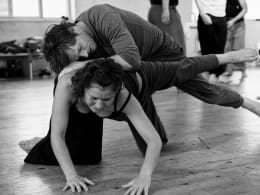
From rhythm laboratory to international dance stage
Anyone looking for contemporary dance in Dresden will immediately come across the name Hellerau. The Festspielhaus Hellerau was built starting in 1911 in the first German garden city and originally served as the educational institution for rhythmic gymnastics by Émile Jaques-Dalcroze. Here, music, architectural spatial design, and movement met. From this interplay, a completely new understanding of the body developed, which significantly shaped expressionist dance. While ensembles like the Semperoper Ballett maintain the city's classical heritage at the highest level, a space for risk-taking and the exploration of unconventional forms established itself in the north of Dresden.
These historical roots explain why contemporary dance still holds an extraordinary status in this city today. The achievements of modern dance in Germany are now considered UNESCO intangible cultural heritage, with Hellerau regarded as a pioneering starting point. From the beginning, the building was not intended as a museum monument, but as a laboratory for physical expressive power.