Partner Dance5 minutes

Kizomba in Frankfurt: Understanding Music and Lead

By Mary De LucaUpdated

In brief
  • Kizomba combines a calm, grounded partner dance with music rooted in Angola.
  • Urban Kiz builds on Kizomba and is often danced to more electronic soundscapes.
  • Leading happens through subtle impulses, weight shifts and a shared connection, not by pulling or pushing.
  • In Frankfurt, you can compare classes and pay attention to the music and leading they teach.

A small impulse can say more in partner dancing than a big movement. When you listen to the music consciously, it’s easier to understand why Kizomba can feel calm while still demanding close attention.

DefinitionUrban Kiz

Urban Kiz refers to a modern variation that combines Kizomba with more electronic music and its own movement accents. The style and music selection vary depending on the instructor and the scene.

Kizomba connects Angolan roots with its own evolution

Kizomba is closely connected to Angola. The name is often associated with the Kimbundu word for festival or celebration, and musically, the style is part of Angolan and Lusophone cultural history. For dancing, one thing matters: the music does more than set the tempo. Vocals, bass and recurring phrases shape how calm, soft or accented a movement feels.

Urban Kiz is not simply another name for Kizomba. This modern style incorporates elements of the dance and often goes with music that has a stronger electronic influence, with clearly audible beats and breaks, for example. This can give steps more distinct accents, make movement paths larger or change how pauses are used. The terms are not always used consistently in classes, so it’s worth asking about the specific music and lesson content.

If you’re looking for a place to start in Frankfurt, first check whether the class covers Kizomba, Urban Kiz or both. You can also find an overview of other dance styles in Frankfurt. This will help you get a sense of the musical direction before you decide.

A young woman does a lunge while dancing Kizomba with her partner
When both partners share the weight shift, leading becomes an invitation rather than a forceful movement.

Leading comes from weight shifts and attentiveness

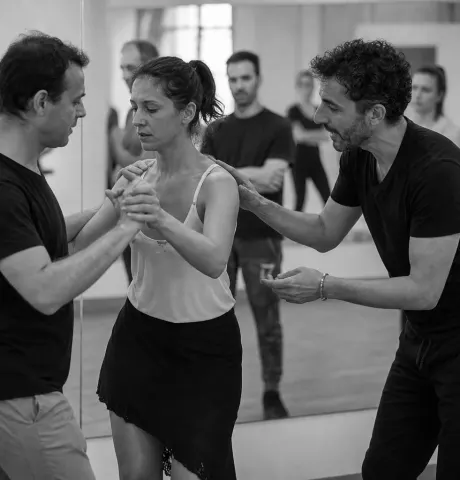
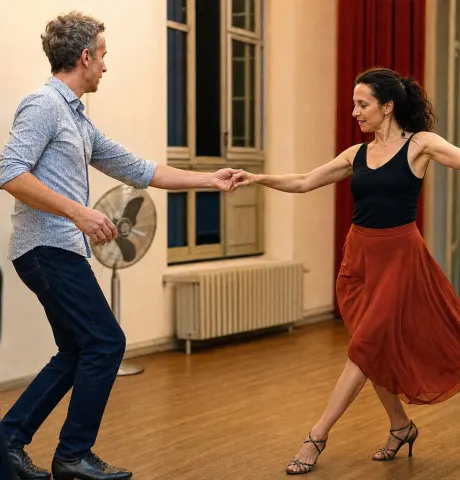
In Kizomba, leading doesn't have to look big. A clear shift of weight, a change in body orientation, or a gentle impulse within the shared frame can signal where the movement is going. The key is for the leader to be prepared: someone who is still swaying on one foot often sends an unclear signal. Pulling on the arm doesn't replace this preparation and can make the connection uncomfortable.

The follower shapes the movement just as actively. They keep their own balance, sense the impulse, and respond at the right moment. Guessing too early can disrupt the shared rhythm; reacting too late makes the connection feel heavy. Both listen to the music while staying attentive to each other. This is especially important when a song has drawn-out phrases or unexpected accents.

In a good practice session, you don't have to get a new figure right away. Instead, repeat a simple shift of weight and check whether it feels clear without using force. If you already know other partner dances, when starting a dance class, make sure you don't simply transfer new movement habits from one dance to another.

How Leading in Kizomba Becomes Clear

Like this

  • Prepare the impulse from your own center of gravity
  • Transfer your weight fully before taking the next step
  • Dance with a relaxed upper body and a clear connection
  • Hold musical pauses together

Not Like This

  • Pulling on the arm to force a movement
  • Starting the next step before the weight has settled
  • Holding every movement in place with a stiff frame
  • Filling every pause with extra steps

When the connection is clear, the lead can be subtle and still reach both partners.

Kizomba dance instructor

The course should teach musicality and connection together

A course is more likely to suit you if its description makes clear what music and fundamentals it covers. For Kizomba, there should be room for the basic step, weight changes, posture and connection. For Urban Kiz, you can also ask how the class works with electronic beats, accents and pauses. A long list of figures, by itself, says little about whether you will understand the movement musically.

During a trial class, notice whether the teacher explains both roles clearly and offers corrections respectfully. Are beginner exercises danced slowly at first? Is there a chance to ask questions about leading? Switching roles can help you understand the impulses from both perspectives, but it is not part of every class. So find out beforehand how the class is structured.

You can compare the current courses in Frankfurt using the course filter. If you are also looking for a practice partner, clear details about your experience level and whether you are interested in Kizomba or Urban Kiz will help. The trial dance checklist also offers practical guidance for a first meeting. That way, you can discuss expectations before practising together.

Two roles, one shared movement

Leading

Offering Impulses

Clarity Without Force

The lead organizes their own step and gives cues through body alignment and weight shifts. They don't decide every movement for their partner, but leave room for their response.

Following

Receiving impulses

Contributing mindfully

The following person reads connection and timing without anticipating movements. They stay active in their own balance and can therefore respond clearly to impulses instead of being passively pulled along.

Frequently Asked Questions

  1. The difference lies mainly in music selection, movement accents, and stylistic development. Kizomba is closely connected to Angolan music and dance traditions, while Urban Kiz often draws on electronic soundscapes. The lines are not drawn the same way everywhere.

Dance classes in Frankfurt

Compare current course offerings in Frankfurt and check whether musicality and connection are explicitly practiced.

Find your rhythm

On udansa, you can compare dance classes in Frankfurt and look for people to practice Kizomba with. That way, you can deepen your connection to the music and each other outside class too.

Find your rhythm