Tango Argentino5 Minuten

Tango in Frankfurt am Main: Milonga oder Nuevo?

By Bernhard De LucaUpdated

In short
  • In Frankfurt am Main, you can find the right Tango by comparing the music, the embrace and freedom of movement.
  • Traditional milonga tango may suit you better if you like a clear connection, a shared axis and musical pauses.
  • Tango Nuevo may suit you better if you prefer a more open hold, changing directions of movement and room to experiment.
  • You can learn both approaches, try an introductory class and pay attention to how you move.

Two couples can listen to the same music and still dance in completely different ways. What matters most in your decision is not a label, but the kind of closeness, orientation, and improvisation that feels comfortable to you on the dance floor.

In Frankfurt am Main, your sense of movement is what matters

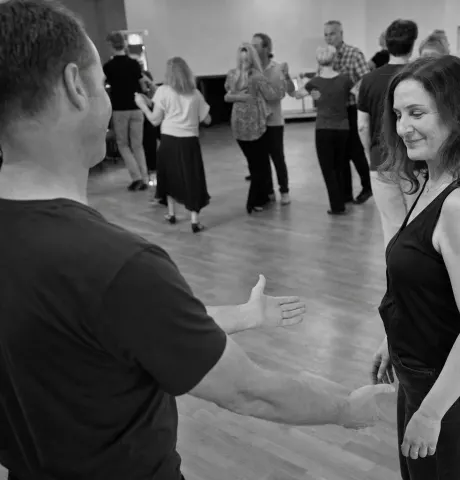
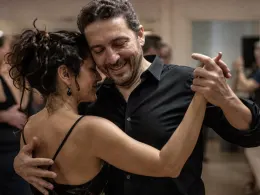
Traditional Milonga Tango and Tango Nuevo are not two rigid categories. Traditional classes often focus on walking, the connection between partners, and following musical phrases together. Many couples dance in a more closed embrace, though posture and distance can change.

Tango Nuevo often places more emphasis on an open connection, changing directions, and exploring movement possibilities. That doesn't mean every movement has to be big or acrobatic. Both approaches work with music, awareness, and coordination, they simply emphasize different things in class.

So when looking for Tango in Frankfurt am Main, the class name alone won't tell you everything. Check the description to see whether it emphasizes walking and musicality or freedom of movement and improvisation. If you don't have much dance experience yet, the guide to class formats for beginner dancers can also help you know what to look for when getting started. What matters is whether you can find your way while practicing and feel comfortable with the connection.

Mach den Test und zähle deinen häufigsten Buchstaben

  1. How do you feel most comfortable on a dance floor?

    • A: With a calm, clear connection while walking
    • B: With changing directions and new ways of moving
    • C: It depends on the music and dance partner
  2. What draws you to the music most?

    • A: The phrases and pauses I can follow while dancing
    • B: The possibilities for turning musical ideas into movement
    • C: The shift between precise musicality and free play
  3. What kind of connection with your dance partner feels right to you?

    • A: A steady, fairly close connection
    • B: A more open connection with room to move
    • C: Closeness and distance can alternate
  4. How do you like to try out new movements?

    • A: I prefer refining basic steps and clear sequences
    • B: I like exploring movement ideas and improvising
    • C: I combine fundamentals with spontaneous variations

Your results

Mostly A: the musically connected one

You probably feel at home with the clear walking movements and musical orientation of traditional milonga tango. Find an introductory class where connection, walking, and musicality are practiced together.

Mostly B: the movement explorer

You probably want room for changing directions and movement ideas. A Tango Nuevo class could be a good fit for you; make sure the basics and safe leading are still explained clearly.

Mostly C: the flexible dancer

You probably like both and don’t want to commit too early. Try one class with a traditional approach and one in Tango Nuevo, then compare which connection feels more natural to you.

How the three test results differ

CriterionMostly A: Milonga TangoMostly B: Tango NuevoMostly C: flexible
Movement feelClear walking and a steady connectionMore open forms and changing directionsSwitching between a clear line and exploration
Musical focusPhrasing, pauses and a feel for the stepsExploring movement ideas that fit the musicFollowing the music closely or varying freely
Possible strengthProvides orientation and supports a calm connectionOpens up room for individual movementsMakes it easier to switch between approaches
Possible challengeMay feel too restrictive for someRequires awareness of the space and your partnerThe preferred approach is less clear at first

The table describes typical teaching and movement focuses, not fixed rules for every school or couple.

Mit deinem Ergebnis findest du den nächsten sinnvollen Schritt

Dein häufigster Buchstabe ist eine erste Richtung, keine endgültige Festlegung. Such in Frankfurt am Main nach einem Kurs, dessen Beschreibung zu deinem Ergebnis passt, und prüfe, was tatsächlich geübt wird. Für einen traditionellen Schwerpunkt kannst du nach Unterricht zu Gehen, Umarmung und musikalischer Interpretation fragen. Bei Tango Nuevo sind Hinweise auf offene Verbindung, Raum und Bewegungsforschung hilfreich.

Wenn du zwischen zwei Stilen schwankst, vergleiche die Probestunden unter ähnlichen Bedingungen: Nimm dir Zeit, die Erklärung zu verstehen, tanze mit wechselnden Partnern, falls das angeboten wird, und notiere danach, was sich angenehm oder ungewohnt anfühlte. Frage auch, ob der Kurs für Einsteiger gedacht ist und ob du allein kommen kannst. Eine passende Social-Dance-Veranstaltung kann später zeigen, wie du das Gelernte in freierem Tanzen erlebst. Aktuelle Kurse und Termine in Frankfurt am Main findest du über den Kursfilter auf der Stadtseite.

Frequently Asked Questions

  1. No, you can try both approaches as a beginner. A trial lesson will show you better than a description whether you enjoy the closeness, the pace of the explanations, and the freedom of movement. Let them know in advance that you have no experience.

Tango Classes in Frankfurt am Main

Compare Tango classes in Frankfurt am Main and see whether the lessons focus more on Milonga Tango, Tango Nuevo, or both.

Dein Tango beginnt mit deinem Gefühl

Auf udansa kannst du Tango-Kurse und Tanzpartner in Frankfurt am Main vergleichen. Nutze dein Testergebnis, um gezielt nach Unterricht zu suchen, der zu deiner Art zu tanzen passt.

Dein Tango beginnt mit deinem Gefühl