Dance culture5 minutes

Queer dancing in Munich: The new freedom on the dance floor

By Mary De LucaUpdated

In a nutshell
  • Queer dancing in Munich means choosing and filling dance roles, such as leading and following, freely regardless of biological gender.
  • The concept includes same-sex couples as well as the conscious switching of roles during a dance.
  • Equal dance offerings are characterized by role-neutral instructions such as lead and follow instead of gentleman and lady.
  • Beginners can find their place by openly stating before dancing which role they would like to learn or deepen today.

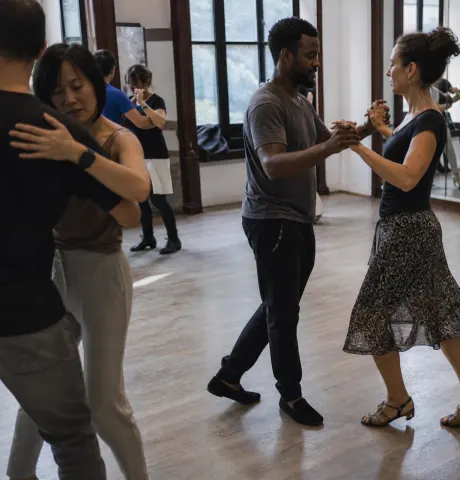
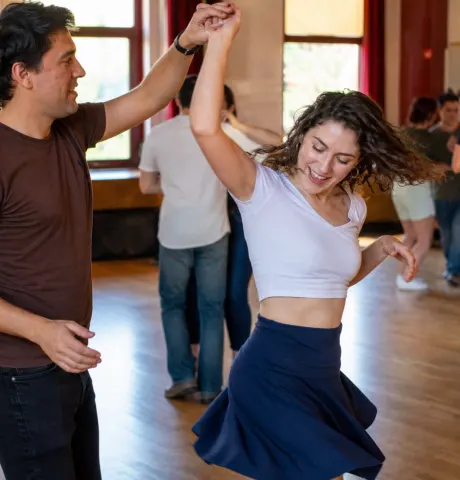
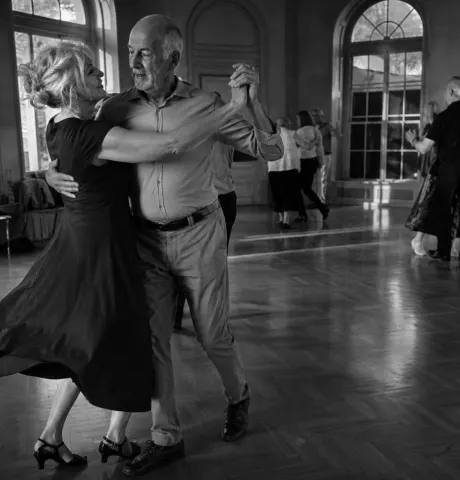
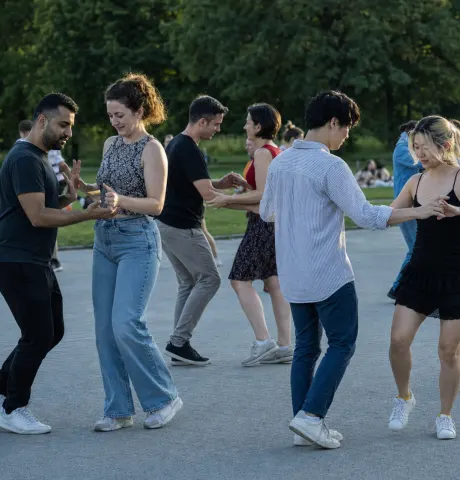
Anyone who leaves behind the fixed assignment of man and woman when dancing discovers a new dimension of communication on the dance floor. Breaking up rigid patterns changes not only steps, but the way you interact with each other.

DefinitionEquality Dancing

Equality dancing refers to partner dance where couples dance together regardless of gender or sexual orientation, and leading and following are negotiated freely. The term originates from competitive dance for same-sex couples and today stands for open, role-neutral dance concepts.

From fixed patterns to open role selection

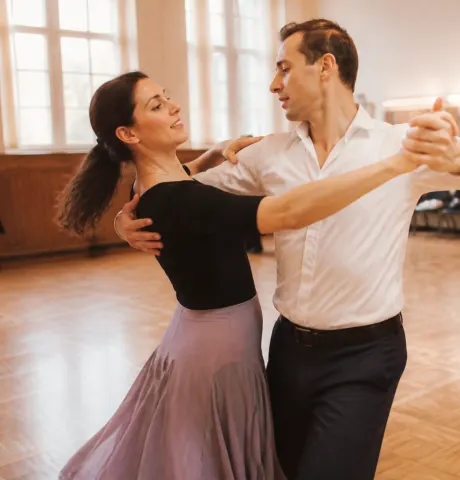
For a long time, partner dance was defined by rigid conventions: the man leads, the woman follows. However, anyone stepping onto the dance floor in Munich today increasingly experiences a practice that breaks away from this assignment. When people dance queer in Munich, it is about much more than same-sex couples in competitive sports. It describes a fundamental shift in perspective, where dance enthusiasts choose their role based on personal interest, body awareness, or musical mood instead of biological gender. In a city whose queer life has historically been strongly rooted in the Isarvorstadt district, this idea has long since opened up beyond individual niches into the broader dance culture.

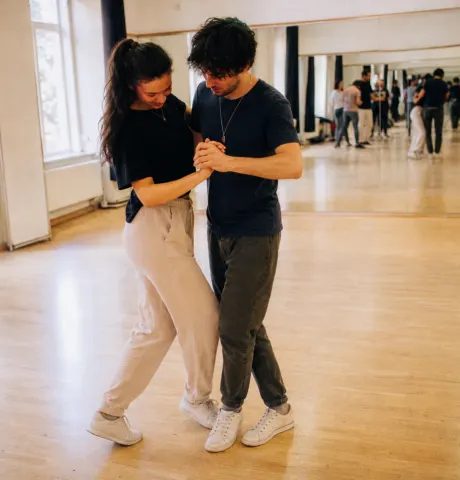
The concept breaks down traditional patterns of thought without abandoning the technique of partner dance. A dance still requires reliable agreements between partners. But who leads and who follows is no longer a natural law, but the subject of a conscious agreement before the first step.

Clear communication and mindful eye contact replace outdated gender roles when dancing.

Precise communication instead of ambiguity

Gender-free dancing is often confused with a lack of rules, as if chaos would break out without traditional role distribution. In reality, leading and following without gender assignment actually requires more mindfulness and clean dance technique. Whoever leads in partner dance sends movement impulses through the center of gravity, body tension, and the frame. Whoever follows actively interprets these impulses instead of letting themselves be guided passively.

The fact that two men or two women dance together was historically by no means always taboo. For example, at the famous Kocherlball in Munich as early as the 19th century, people often danced woman with woman quite pragmatically due to a lack of male dance partners. At the traditional Kathreintanz in Munich, the focus is also on dancing together, where prior knowledge is secondary. Modern equality dancing builds on such open approaches and frees them from being a mere makeshift solution: it turns the conscious role change into a dance enrichment for everyone involved.

Understanding roles in comparison

How to succeed

  • Briefly agree on who leads and who follows before dancing
  • Use terms like lead and follow for the roles
  • Choose your preferred role based on interest and feeling
  • Try out both roles to improve your connection as a couple

Typical fallacies

  • Automatically assuming that the man leads
  • Speaking of ladies' and gentlemen's steps
  • Letting yourself be defined by social expectations
  • Believing that leading means dominance over the partner

Once you have danced both roles, you truly understand partner dance: you listen better and lead with much more empathy.

Partner dance instructor

Switching roles as a dance dialogue

This development is particularly dynamic in so-called switch dancing, where dancers seamlessly alternate between leading and following in the middle of a piece. A brief glance, a fluid shift in weight, or the deliberate release of the dance frame are enough to swap roles to the beat of the music. This trains the ear for musical phrases and deepens the understanding of your partner's needs enormously.

For beginners in Munich, it is advisable to pay attention to clear communication when choosing dance partners or courses. Open groups are characterized by the fact that it is asked right at the greeting who would like to try which role. Dancing together thus becomes an equal dialogue between two individuals on eye level, where the joy of movement is the focus.

Two roles on equal footing

Leading

Consciously shaping the lead role

Giving impulses and shaping space

The lead role plans the path through the space and gives clear movement impulses from the center of the body. Regardless of gender, it requires spatial awareness, a sense of rhythm, and respect for the partner's personal space.

Following

Actively filling the follower role

Receiving and completing impulses

The follower role receives impulses and translates them into their own dynamics and expressiveness. It is not a passive stance, but a highly active response that gives the dance its shared aesthetic.

Frequently Asked Questions

  1. No, you do not have to master both roles at all. Many dancers specialize permanently in leading or following, depending on their personal preference. The approach simply gives you the freedom to choose what suits you, instead of defining your role based on your gender.

Discover partner dance courses in Munich

Find dance courses in Munich that match your preferences and your dance style.

Dance together without gender roles

Meet like-minded people for Tango, Salsa or Ballroom and find dance partners who understand roles just as flexibly as you do.

Dance together without gender roles

Read more