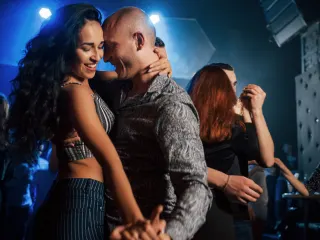
Your dance evening begins solo
On udansa, you can find dance events in Paris that you can attend without bringing a partner. Choose an evening with a format that fits your plans.

By Mary De LucaUpdated
On udansa, you can find dance events in Paris that you can attend without bringing a partner. Choose an evening with a format that fits your plans.
Standing alone at a dance floor can feel unfamiliar, even if you dance confidently. The right event format won’t take away all your uncertainty, but it will prevent you from arriving with a completely different expectation.
At a dance evening in Paris, there are two different questions: Can you enter alone, and can you join in dancing without bringing a partner? A ticket sold individually answers only the first question. Photos full of couples don't tell you much either: those couples may have arrived together or found each other for a dance.
Always match the information to the event stage it applies to. An introductory session with organized partner rotation helps people connect for that activity. Invitations at the dance party that follows may still be extended individually. Conversely, a free-form party section doesn't automatically mean you can dance solo: partner dancing still involves two people, even when nobody is calling out figures.
Paris has a history of public dance halls: in the 1930s, the halls of the Bal musette were located on Rue de Lappe. However, this historical background doesn't explain today's participation requirements. You can find out more about dance traditions in Paris. For your specific visit, what matters is the advertised format, not the tradition label. The overview of dance evenings in Paris can help you work out what kind of event it is, without assuming that the word party means there will be partner rotation.
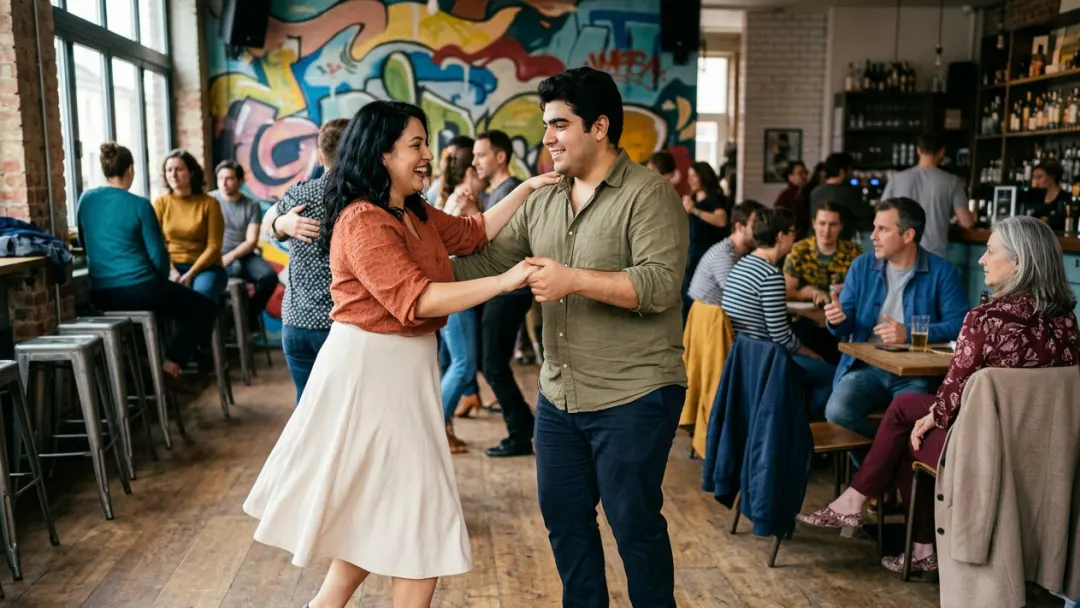
First decide whether you want to dance solo to the music or meet up with others for individual dances. This separates two different wishes: arriving without a companion and staying on the dance floor without a partner. You can describe your plan in one sentence.
Read the event description on udansa, looking specifically for solo participation, partner rotations, and fixed couples. Assign each detail to the introductory or party section. If crucial information is missing, ask once, clearly: “Can I join the dancing during the party without bringing a partner?”
For partner dancing, choose an event that allows you to attend individually, and for dancing on your own, choose an appropriate open dance session. Events that require you to register as a couple aren't suitable if you're attending solo. If invitations are optional, expect some waiting time; an organized partner rotation and spontaneous invitations work differently.
If you'd like to join an announced introductory session, time your arrival for its start. If you're only coming for the party, plan to spend a little time on the sidelines first. You don't have to dance right away, you can first see when guests invite others to dance and step onto the dance floor.
Stand beside the dance floor, not in a walkway. Watch what happens at the end of a song: do couples separate, stay together, or does someone initiate a change? Use what you observe to guide your approach, without assuming it’s a general rule for all guests.
When partner dancing, approach a guest who is taking a break and wait for a clear yes before offering your hand. Accept a no without asking for an explanation. When dancing on your own, move onto the floor with some space and start with small movements.
Thank your partner after dancing together and break contact, unless you agreed otherwise. Step off the dance floor for a break. Then decide whether you want to invite someone to dance again, dance on your own, or call it a day, without setting yourself a dance quota.
Yes, that's right
Not like this
Preparation
Getting Your Bearings
Wrap-up
No, coming alone says nothing about your relationship status. Attending solo simply means that you are not bringing a second guest. An evening with rotating dance partners is therefore not automatically a dating event. What matters is the stated format of the event, not whether you are in a relationship in your private life.
Yes, at an open party you can initially stay on the sidelines, as long as active participation is not required. Stand away from the dance floor and keep entrances clear. At an organized rotation, however, sitting out for too long means you should leave the circle so no one waits in vain for you to join in.
You can politely invite someone to dance yourself. Choose a guest who is not dancing at the moment and does not appear to be deep in conversation. If it turns out to be a quiet evening, that does not mean your visit was a failure. A single evening does not reliably indicate how welcome you are in general.
No, you can turn down an invitation without giving a reason. A friendly “No, thank you” is enough, even if you dance with someone else later. Agreeing to a dance is also not agreeing to closer contact or more dances. If something makes you uncomfortable, you can end the dance and step away.
No, you can leave an open dance evening whenever you want. If you have started dancing with someone, try to end the dance politely rather than walking away without a word. At a guided rotation, leave between rounds. Feeling tired, not wanting to dance anymore, or feeling that you have danced enough are all good reasons to head home.