Dance history becomes movement
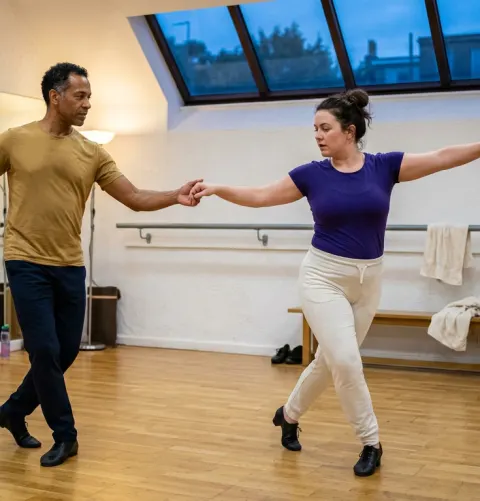
On udansa, you can find people in Paris to share your interest in ballet, partner dancing or contemporary movement.

By Bernhard De LucaUpdated
On udansa, you can find people in Paris to share your interest in ballet, partner dancing or contemporary movement.
If you live in or move to Paris, you'll encounter dance names outside class too. Some describe a movement language, others recall a social space: these differences change how you understand a performance or a tradition.
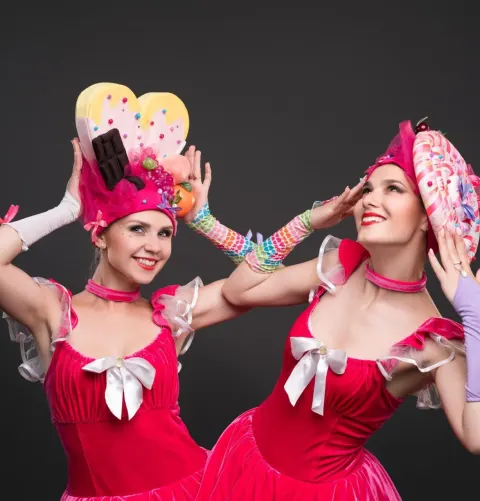
A revue is a stage format that brings together individual dance, music, and variety acts in a program. It does not require a continuous storyline.
When looking at dance styles in Paris, it helps to distinguish between their origins and their later forms on stage. The Paris Opera Ballet traces its roots back to the court of Louis XIV and cites 1661 as its founding year. From 1821, the company performed at the Salle Le Peletier, where romantic ballet took shape. With the opening of the Palais Garnier in 1875, it gained a new home. These milestones tell the story of courtly representation and the development of a theatrical art, not of a dance that remained unchanged over the centuries.
The Cancan took a different path. In public Parisian dance halls, students were its main dancers in the 1830s. In the 1840s, it became a popular music hall dance. The Moulin Rouge, which opened in 1889, became a reference point for the modern Cancan as a standalone revue number.
That is why social origins and stage versions are not the same thing. A revue shapes movement around visibility, repeatability and group effects. The role of costume and presentation can also be understood through the example of Burlesque as a costume-based stage form, without equating the two dances. A striking leg movement alone explains neither the whole number nor its history.
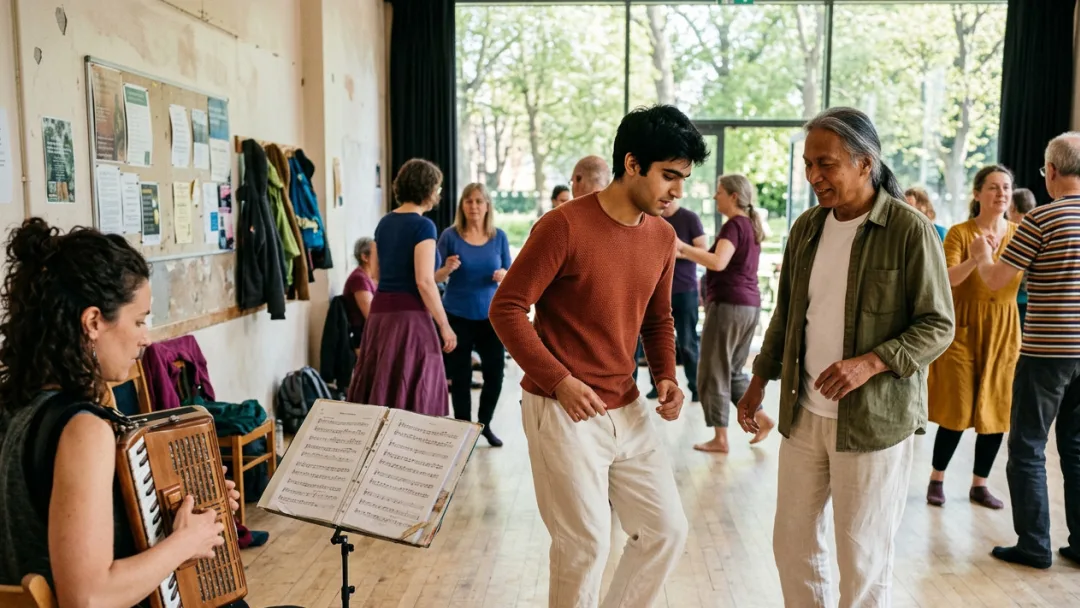
Bal musette became popular in Paris in the 1880s. Migrants from Auvergne opened cafés where people danced to the cabrette, a bellows bagpipe. Later, the accordion played by Italian musicians took the musical lead. The history shows how migration could change music and dance repertoires without giving rise to a single new basic step.
The repertoire initially included Bourrée, followed later by Valse musette, Tango musette and Java. Bal musette is the cultural context, while Java is a dance form within it. Rue de Lappe represents the concentration of this dance culture in one place: in the 1930s, there were seventeen dance halls there. This historical figure does not describe today's nightlife.
Bals des pompiers, in turn, tell the story of an occasion rather than a particular movement vocabulary. The first public ball of this kind is considered to be the one held in 1937 at the Carpeaux barracks in Montmartre. The tradition associated with the national holiday included opening fire station courtyards and setting out a donation barrel to support social causes and improve firefighters' working conditions. The distinction that matters for your understanding is this: a ball can bring people together for a shared social occasion even if they do not all perform the same dance style.
So, yes
Not like this
If you want to experience the differences in movement for yourself, you'll find suitable courses in Paris on udansa.
A dance name only partly explains the movement, its social context explains who dances and for whom.
For contemporary dance in Paris, institutions provide a different point of reference than historic dance halls. In 2008, Chaillot was given the promotion of contemporary dance as its primary mission. Founded in 1972, the Festival d'Automne brought together different art forms without a permanent venue; dance was one of its important disciplines. Both are points of reference in cultural history, not statements about today’s program.
To put things into context, you can consider ten dance style labels according to their movement language. The following selection is not a ranking of their popularity in Paris:
Contemporary choreography can draw on such vocabularies, change them or consciously avoid them. That’s why the difference between a mix of styles and a distinct dance style can also help you as you watch. What matters is the idea that organizes the movement, not simply which familiar step it resembles.
Movement is composed for viewers
On stage, timing, direction of gaze and spatial arrangement can be part of a fixed work. Improvised passages also gain a framework through lighting, music and dramaturgy that guides your perception.
Movement Emerges Between the Participants
In social dancing, familiar steps can provide a shared starting point. But how a dance actually unfolds also depends on the space, the music and the choices made by the people on the dance floor.
No, you can also understand ballet through movement, music, and spatial patterns. Historical knowledge also explains why certain forms or stage designs recur. For example, notice whether an ensemble acts together or an individual figure stands out: this already tells you something about the dramaturgy.
Tango musette refers to a form within musette culture and is not simply interchangeable with every tango tradition. A related name can indicate musical influences without guaranteeing identical technique. The historical connection between accordion music and the dance hall is an important part of understanding it.
No, contemporary dance can be fully choreographed or include improvisation. The term does not describe a fixed relationship between spontaneous and pre-planned movement. Even an apparently casual gesture can be precisely placed, while a formation that seems strict can leave room for individual choices.
No, the venues and traditions mentioned are placed in their historical context, not presented as a current performance schedule. An opening year or a previous institutional commission does not confirm a current production. For your own introduction to classes, current offerings are listed in the course filter on udansa, separately from this cultural and historical explanation.