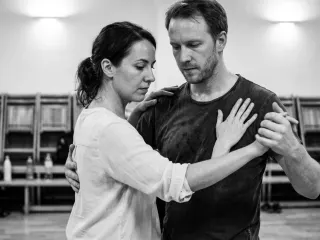
Practise together6 minutes

Dance partners to practise with in Stuttgart: Keep at it together

By Mary De LucaUpdated

In short
  • You can find practice partners in Stuttgart through udansa or personal dance contacts interested in practicing independently.
  • A regular practice partnership needs a shared learning goal, compatible dance roles, and a recurring time slot.
  • Feedback describes a specific movement and leads to an agreed change for the next attempt.
  • After each session, note what went well and what you’ll work on at your next meeting.

Dancing a familiar sequence together feels good. Working through its most difficult part together takes patience and a willingness to adjust your own movements too.

What you need to practice on your own

  • A basic step or sequence that you both already know
  • Suitable shoes and a clear, permitted practice space
  • Music with a clearly audible beat at a familiar tempo
  • An accessible meeting point for both of you in Stuttgart
  • A notebook or phone for brief practice notes

A practice goal needs to be clear to both of you

For a regular practice partnership in Stuttgart, it helps to have a goal you can observe while dancing. “Getting better” leaves it unclear who should work on what. “After the turn, we are both balanced on the intended foot” describes a shared endpoint. The leading and following partners have different tasks, but they are focused on the same point.

A visible mistake does not necessarily reveal its cause. If someone comes out of the turn late, a delayed signal, an overly large step or an incomplete weight transfer could be involved. So change just one thing and repeat the same passage. You can see this in the example of clear directional signals in Foxtrott: preparing the movement is part of the shared task, not just the visible turn.

A partnership becomes reliable when both of you are willing to repeat things. Someone who only wants to collect new figures may not be a good match for someone who wants to stabilize familiar transitions. The practice plan between two classes helps you keep things manageable. Practicing on your own reinforces what you already know; unfamiliar lifts, supports or risky figures don't belong in your practice. If you're unsure about the technique, make a note of what needs clarification instead of using force to put each other into a position.

The feet and shoes of a male-female dance couple during a ballroom and Latin dance practice
A short note also preserves small steps forward that are easy to forget by the next meeting.

Seven Steps to a Steady Practice Partnership

  1. Find people interested in focused practice

    Search on udansa in Stuttgart or ask a personal dance contact about practicing together. Explain how this differs from simply dancing through songs: you want to repeat familiar moves and work on a specific point. A good match is also interested in this way of practicing.

  2. Choose a shared goal

    Choose exactly one area to work on from your shared repertoire, such as the connection after a turn. Define a visible endpoint: both of you return to the basic step without an extra step. Assign roles and leave other figures out of this practice session for now.

  3. Set the practice ground rules

    Agree on a regular time, a manageable duration, and a suitable space. As a starting point, about 30 minutes with a break is enough. Be sure to agree on the start and end times, so “We should practice sometime” becomes a concrete plan you can both schedule.

  4. Dance the Starting Situation Together

    Warm up with familiar, small movements and dance your sequence first without making corrections. Each person then shares one observation about their own movement. Note where the shared sequence gets stuck, without deciding yet who is responsible.

  5. Try one change

    Agree on exactly one change, for example smaller steps during the transition. First repeat the passage slowly without music, then to a familiar beat. At the predetermined endpoint, assess whether it helps. If the result is unclear, don't simply increase pressure in your hands or arms.

  6. Share feedback in small doses

    Stop after a complete attempt and let both of you finish speaking. Say something like: “Before the direction change, I still have weight on the other foot.” Use that to agree on the next attempt. Only speak while dancing if you need to stop or something hurts.

  7. Track progress and next steps

    To wrap up, dance the passage all the way through without interruption and note the result and any sections that still need work. Decide together whether the goal is complete or still in progress. Confirm the next date and agree that if a session is canceled, the next practice task will still stand.

How to Make Feedback Useful

Yes, like this

  • Describe your own perception: “I’m losing contact here”
  • Limit feedback to a specific transition
  • Always ask for consent before making physical corrections
  • If you’re unsure, shorten the sequence

Not like this

  • Judging the other person: “You always lead badly”
  • Commenting on their entire technique after one attempt
  • Adjusting their arms, back or hips without asking
  • Forcing bigger and faster movements when they feel unsure

These are the points you can check off

Before the class

Preparation

After the First Attempts

Check-In

To wrap up

Follow-up

Frequently asked questions

  1. No, above all, you need a shared task that both of you can work on meaningfully. The more experienced person can offer tips, but shouldn't take on the teaching role all the time. If one person is constantly explaining and the other is only following, you're missing out on practicing together. Choose a simpler passage to work on together instead.

Partner Dance Courses in Stuttgart

If you and your partner need a shared foundation to reach your practice goal, you can find current courses and dates in Stuttgart using the filter.

A reliable partner to practise with

On udansa, you can find dance partners in Stuttgart to practise familiar figures with. Share your practice goal so you can turn a connection into a shared activity.

A reliable partner to practise with