Developmental Stage Determines the Learning Task
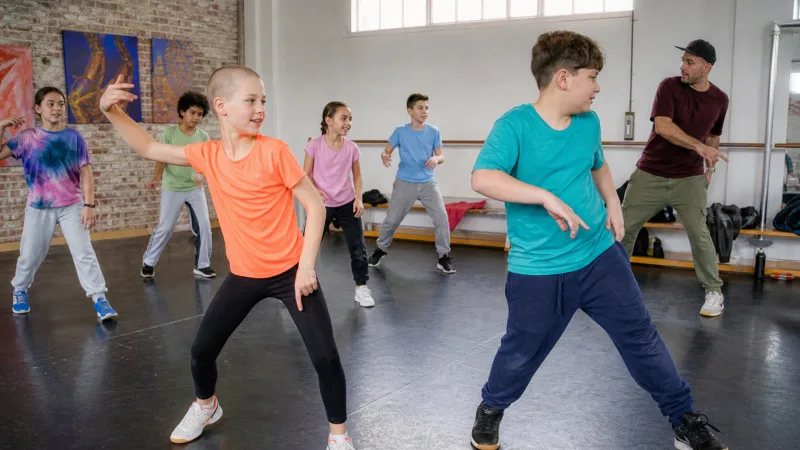
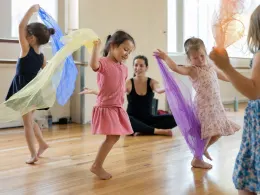
If you want to understand children’s dance classes in Stuttgart, it helps to look at the activities in class. Young children, for example, learn to stop when the music stops, switch between fast and slow movements, or find a path through the room. Animal imagery and short stories make these tasks easy to understand. So a successful class does not have to result in a choreography ready to perform.
With more experience, children can repeat movements more deliberately: shift their weight from one foot to the other, finish a turn with control, or move in time with the group. Age alone does not describe this readiness. Attention, movement experience, and feeling comfortable in a group also play a part. A reserved child can watch at first and join in later without being unsuitable for the class.
For teenagers, tasks can become more complex, for example by adding changes of direction, different movement qualities, or variations they develop themselves. During growth spurts, familiar movements can temporarily feel unfamiliar. In that case, adaptable tasks are more helpful than comparisons with others. The overview of dance classes and dance culture in Stuttgart places children’s and youth classes within the wider range of dance options.