Club life4 minutes

Acrobatics for adults: Master your start at the club

In a nutshell
  • Getting started with acrobatics is possible for adults of any age through specialized hobby and recreational sports groups.
  • Adult groups in Acro Dance focus on healthy movement execution and individual learning processes without the pressure of competition.
  • The biggest hurdle for late starters is usually mental, which is why training begins with systematic preparatory exercises and safety mats.
  • A targeted search for club offers for those 18 and older prevents you from ending up in pure performance groups for children.

Starting acrobatics as an adult takes courage, but it rewards you with a completely new level of body control. Learn how to find the right club and master the typical hurdles of starting later in life.

DefinitionAcro Dance for ages 18 and up

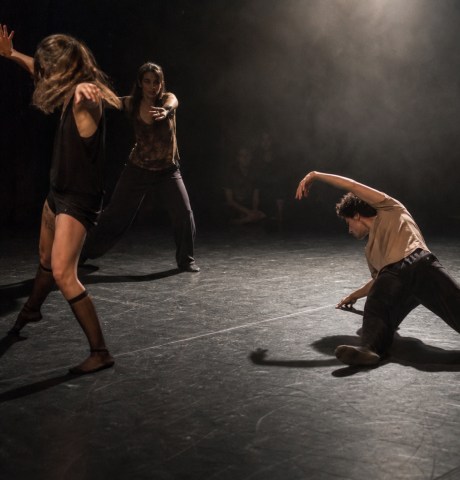
Acro Dance for ages 18 and up refers to the athletic combination of classic dance elements and acrobatic floor work, specifically adapted to the physical requirements of adults. This discipline combines athleticism with artistic expression.

The late start into the world of gravity

Anyone who decides to start acrobatics at 20, 30, or 40 years old often faces a mental hurdle. The worry of ending up in a group full of flexible teenagers keeps many from taking the first step. However, starting acrobatics as an adult is by no means impossible. Many clubs have long recognized that interest in this dynamic art form is growing at a mature age. They offer special training times that are tailored to the needs of late starters.

The biggest challenge for adults usually lies not in strength, but in self-assessment. While children try out new movements without fear, the adult mind is often blocked by risk assessment. In a good acrobatics dance club, late starters therefore learn to break down these mental blocks step by step. Training does not begin with a somersault, but with precise control of one's own center of gravity and the development of stable core tension.

Age groups and the right club structure

A typical problem when looking for a club is the age classification. Many classic gymnastics clubs are strictly structured according to performance and age groups, which are geared towards youth sports. For late starters, it is therefore advisable to specifically look for an acrobatics group for adults or offers in the field of Dance Acrobatics. These groups are often designed to be more open and focus on the combination of dance and acrobatics, instead of meeting rigid competition requirements.

Anyone practicing Acro Dance from the age of 18 benefits from a more mature training atmosphere. Here, it is about working together on choreographies and learning elements at your own pace. The trainers in such groups are specialized in explaining movement sequences for bodies that no longer possess the extreme flexibility of a child, but instead have more discipline and a better understanding of biomechanics.

The safe start for adults

That's how it works

  • Search for specific adult or hobby sports groups
  • Give your body time to build strength
  • Ask questions and mentally analyze movement sequences
  • Actively use safety mats and assistance

Not like this

  • Wanting to train in pure children's performance groups
  • Forcing difficult lifts immediately without basic tension
  • Silently struggling through pain or being overwhelmed
  • Forgoing safety out of false pride

Adults learn acrobatics differently than children, namely through the head. Anyone who understands why a movement works physically quickly loses their fear of the new.

Trainer for adult acrobatics, Cologne

Achieving training success with system and patience

Starting as an adult requires patience and the willingness to embrace new learning methods. Unlike training for children, which is strongly based on play, adults work in a more analytical way. It helps to mentally break down the movements and understand the theoretical foundations of balance. A systematic approach prevents feeling overwhelmed and ensures that the joy of movement remains the focus.

In addition to the actual training at the club, it is worth working on your general fitness outside the studio. A strong core and solid muscle tension make the first hours on the mat much easier. Anyone who also internalizes the safety rules for dance acrobatics will quickly gain the necessary self-confidence to venture into more complex floor elements or initial lifts.

Two paths to the same goal

Technique

Classical Acrobatics

Focus on individual elements

Here, the focus is on the precise execution of individual elements such as handstands, cartwheels, or lifts. The structure is often technical and strength-oriented, ideal for everyone who wants to work purely on their athleticism.

Expression

Acro Dance

Fluid movements in space

This form seamlessly combines acrobatic elements with dance transitions and choreography. Starting at age 18 is particularly popular here, as the dance-based design leaves plenty of room for individual expression.

Frequently Asked Questions

  1. Yes, it is possible to start without any prior gymnastics experience. Special beginner groups for adults build the necessary strength, body tension, and flexibility from the ground up and in a safe environment.

Acrobatics and dance courses near you

Discover the right group for your start in Acro Dance.

View all suitable courses

Find your acrobatics community

Whether you are in a beginner group or a show ensemble: on udansa you connect with like-minded people and find exactly the club that fits your age and your goals.

Find your acrobatics community