The renaissance of the baroque country dance at midnight
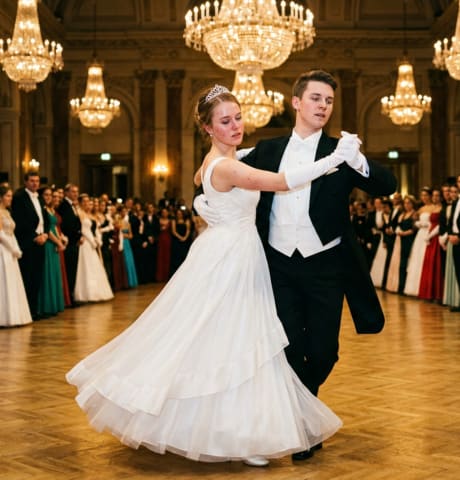
The Fledermaus-Quadrille is the undisputed highlight of almost every classical ball night. When the couples form in the ballroom at midnight, formal etiquette gives way to a boisterous, almost cabaret-like atmosphere. Originally composed by Johann Strauss II based on motifs from his famous operetta "Die Fledermaus", this historical group dance is a living cultural asset today. Unlike classical partner dance, the focus here is not on perfect posture, but on the shared, often wonderfully chaotic experience on the dance floor.
To avoid losing your way during the fledermaus quadrille sequence, it helps to understand the basic structure. It is danced in a so-called country dance formation. This means that two couples stand directly opposite each other in a lane and form a "carré" (a square). Several of these lanes stretch across the entire ballroom. The movements are traditionally announced live by a dance master via microphone. These charming, often bilingual commands in German and French drive the action forward and save those who lose their orientation in the hustle and bustle.