
Find your partner for the Waltz
On udansa you will find like-minded people who want to practice the rhythm of the three-quarter time with you or accompany you to the next festive gala. Sign up and find your dance match.


By Mary De LucaUpdated
On udansa you will find like-minded people who want to practice the rhythm of the three-quarter time with you or accompany you to the next festive gala. Sign up and find your dance match.
The Viennese Waltz is the crown of every ball night, but its fast tempo requires a solid foundation. With the right approach, you will master the basic step without stress and soon glide confidently across the dance floor.
The Viennese Waltz has fascinated generations with its rapid tempo and floating elegance. For beginners, the speed of about 60 bars per minute often seems intimidating, but the secret lies in reduction. Before you dare to attempt the continuous Viennese Waltz turn, you must internalize the linear movement. The dance is based on a clear three-quarter time, where every beat receives a step. Those who practice the basics calmly without rotation build the necessary balance to later glide effortlessly across the dance floor.
A common misconception is that you have to whirl in circles immediately. In fact, all successful couples start with the so-called pendulum step or the basic forward-and-backward step on the spot. This simplified form takes the stress out of the movement and gives you time to feel the rhythm in your body. Only when your feet find the beat blindly does the first gentle change of direction follow. It is best to prepare yourself with a structured perfect ball preparation to stay relaxed on the big evening.

Stand facing each other. The leader starts with the right foot forward, the follower with the left foot backward. Place the first step flat and in a controlled manner.
The second step is taken with the other foot to the side. This step is smaller and serves to continue the movement sideways, while the body is slightly lifted.
Pull the first foot towards the standing foot so that the feet are side by side. Lower your weight slightly at the end of the third beat to gain momentum for the next bar.
Now follows the backward part for the leader: Step back with your left foot while the follower moves forward with their right foot. The movement remains fluid.
Step your right foot to the side to open up the movement again. Make sure to keep the distance to your partner constant and avoid swaying.
Bring your left foot back to meet your right. This completes the full six-part basic step, and it can be repeated again from the beginning in a continuous flow.
How it works
Avoid this
Preparation
Arrival
During
Viennese Waltz is danced in a fast three-four time, while Slow Waltz is only about half as fast. In addition, Slow Waltz has a very pronounced rise-and-fall movement, while Viennese Waltz is danced in a flatter and more gliding manner.
No, as a beginner you should first practice the basic step moving straight forward and backward. Only once this movement is fluid and synchronized with your partner should you start incorporating the first slight turning angles.
Viennese Waltz is traditionally danced counter-clockwise along the line of dance around the floor. Couples move in a circle on the outer track, while the center of the hall remains free for slower dancers or figures.
Find the right dance course and learn the Viennese Waltz from scratch in a relaxed atmosphere.
BallroomMeißen · Germany
Tanzkreis | PROFESSIONALTuesday · 20:15 · Oct 27, 2026 - Jan 5, 2027
“Ein Haus für Vieles” - Saal Tanzkurse
Couple danceLimbach-Oberfrohna · Germany
PaartanzkreisThursday · 18:50 · Oct 8
Limbach-Oberfrohna
 Learn ballroom dancing and master floor etiquetteGet ready for the glamorous ball season. Learn everything about the most important ballroom dances, the Viennese Waltz, and proper floor etiquette.
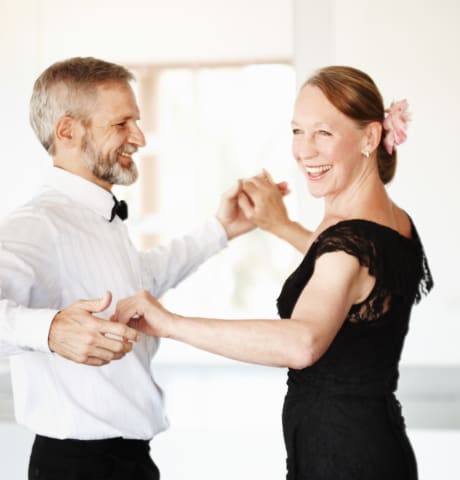 Dance floor direction: Rules for smooth movementDance floor direction is the most important traffic rule for dance couples. Learn how to move correctly in a counter-clockwise circle and elegantly avoid collisions.
 Classic Ballroom Dances: The 5 Essential StylesDiscover the five most important classic ballroom dances. From the lively Viennese Waltz to the elegant Foxtrot, learn all about their unique character here.
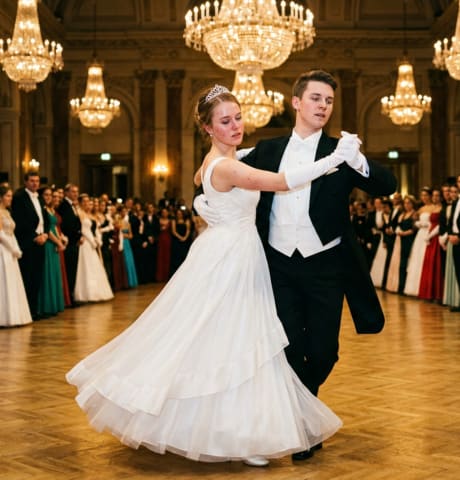 Which dance course for the ball? Take the self-testIs the ball season just around the corner and you are not sure which course will best prepare you for the dance floor? Our self-test shows you the ideal path for your time budget.
 Asking for a dance: Etiquette for the perfect ball nightAsk with style and decline with charm: With our etiquette guide for dance invitations, you will navigate every ball with absolute confidence.
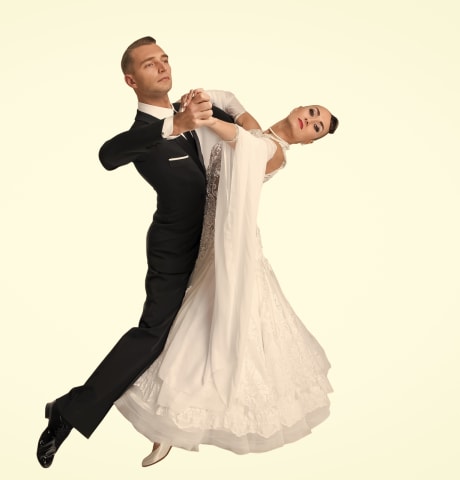 Foxtrot at the ball: Your reliable savior in the crowdFoxtrot is the secret hero of every ball night. Learn how this uncomplicated dance saves your evening when the floor is crowded and the music is unclear.
 Ladies' Choice & Gentlemen's Gifts: Modern Ballroom EtiquetteDiscover how ladies' choice and gentlemen's gifts bring a fresh breeze to the dance floor and how to behave elegantly in the modern ballroom.