
Find your partner for the ballroom
On udansa, you meet other dance enthusiasts for the next ball and find the right dance courses in your area to solidify your steps before the big performance.


By Mary De LucaUpdated
On udansa, you meet other dance enthusiasts for the next ball and find the right dance courses in your area to solidify your steps before the big performance.
The Viennese Waltz inspires with its momentum and elegance. To ensure that gliding across the dance floor together does not end in chaos, an unwritten rule governs the flow of traffic in the festive ballroom.
Dancing counter-clockwise describes the universal direction of movement in partner dance, where all couples move in a circle to the left around the dance floor. This rule prevents head-on collisions and ensures an orderly flow in the room.
Anyone stepping onto the dance floor at a festive gala for the first time often rubs their eyes in wonder. As if guided by an invisible law, dozens of couples move in a harmonious, circular path. This phenomenon is not magic, but the strictly observed dance direction in the ballroom. It ensures that, despite high speeds and expansive steps, all couples glide past each other safely. The most important basic rule is to always move counter-clockwise.
Maintaining this circular path is the foundation for every harmonious ballroom evening. As soon as even a single couple decides to reverse direction or drift across the floor, painful collisions become a risk. Especially with spirited ballroom dances like the Wiener Walzer or the Quickstep, enormous centrifugal forces are created. Orienting yourself to the common direction of travel protects you and your dance partner from bruises and damaged evening attire.

The circular path in the ballroom does not have the same speed in all lanes. You can imagine the dance floor like a highway: the outer lane is reserved for fast couples who push forward with long steps. The further you move towards the center of the room, the calmer the pace becomes. Anyone who is still unsure or wants to dance figures on the spot should consciously move to the center so as not to block the traffic flow on the outside.
A typical mistake in the social dance etiquette is suddenly stopping on the outer lane. If you need a break or want to talk to your partner, you should leave the dance floor quickly towards the edge. The outer lane must be kept clear for fluid movement. Through this simple division into fast outer lanes and a calm inner zone, dancing remains relaxed and safe for all skill levels.
Correct
Wrong
The dance floor at a ball is like a living organism. Only when everyone follows the common direction does this incomparable feeling of floating emerge.
Despite all caution, it is not always possible to avoid getting too close on a busy dance floor. This is where the classic ballroom etiquette for damage control comes into play. If a collision is imminent, it is the responsibility of the leading person to protect the couple by quickly adjusting their steps. Should a bump occur nonetheless, a brief, silent apology via eye contact is considered good manners, without interrupting the flow of other couples.
For relaxed navigation in the hustle and bustle, a timely and perfect ball preparation is worthwhile. Anyone who learns to keep an eye on their surroundings in their peripheral vision beforehand will avoid obstacles effortlessly. The direction of dance in the ballroom is not a rigid prison, but a dynamic system. The more considerate and attentive each individual couple moves, the more magical and weightless the shared gliding in three-quarter time feels.
For expansive gliding
Use the outer lane of the hall for sweeping, expansive steps. Stick strictly to the circular path counter-clockwise so you do not disturb the flow of the fast couples.
For beginners and figures
Move to the middle of the dance floor if you want to practice new figures or are still unsure about the beat. Here, the pace is significantly calmer and you won't block anyone.
The dance direction in the ballroom always runs counter-clockwise. All couples move in a common circular path to the left around the center of the dance floor.
The Waltz dance direction follows the general circular path counter-clockwise. Since the Viennese Waltz is very fast, experienced couples prefer to use the outer lanes of the dance floor to fully utilize their momentum.
If the floor is too crowded, it is best to move to the inner area of the room. The tempo is slower there, or you can use compact dances like the Foxtrot to move safely in a confined space.
Prepare yourself perfectly for the ball season and learn the most important steps in partner dancing.
BallroomMeißen · Germany
Tanzkreis | PROFESSIONALTuesday · 20:15 · Oct 27, 2026 - Jan 5, 2027
“Ein Haus für Vieles” - Saal Tanzkurse
Couple danceLimbach-Oberfrohna · Germany
PaartanzkreisFriday · 18:15 · Oct 9
Limbach-Oberfrohna
 Social Dance Etiquette: Guidelines for stress-free dancingThe social dance etiquette is your guide to respectful interaction on the dance floor. Get to know the unwritten rules of social dancing.
 Perfect ball preparation: Stress-free for the big nightThe big ball night is coming up and requires smart planning. From getting your tickets to the logistics on the day of the event, learn here how to make your ball preparation stress-free.
 Learn ballroom dancing and master floor etiquetteGet ready for the glamorous ball season. Learn everything about the most important ballroom dances, the Viennese Waltz, and proper floor etiquette.
 Classic Ballroom Dances: The 5 Essential StylesDiscover the five most important classic ballroom dances. From the lively Viennese Waltz to the elegant Foxtrot, learn all about their unique character here.
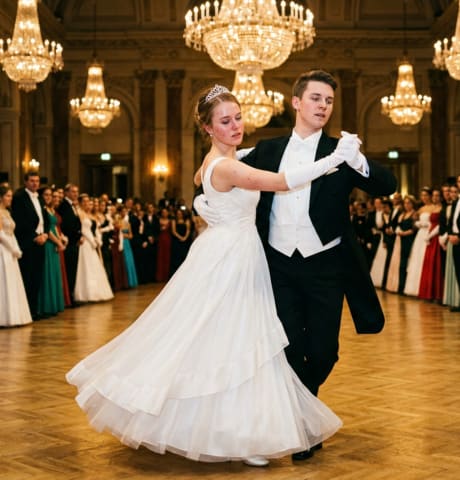 Which dance course for the ball? Take the self-testIs the ball season just around the corner and you are not sure which course will best prepare you for the dance floor? Our self-test shows you the ideal path for your time budget.
 Asking for a dance: Etiquette for the perfect ball nightAsk with style and decline with charm: With our etiquette guide for dance invitations, you will navigate every ball with absolute confidence.
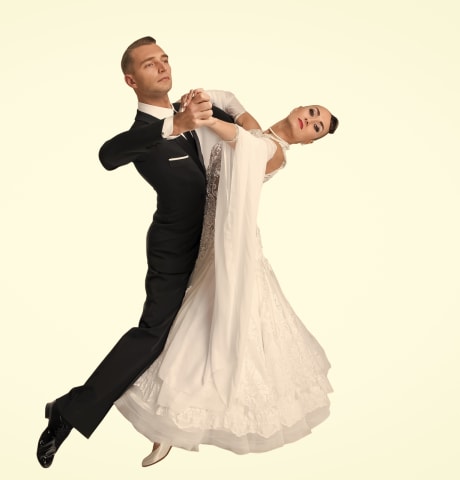 Foxtrot at the ball: Your reliable savior in the crowdFoxtrot is the secret hero of every ball night. Learn how this uncomplicated dance saves your evening when the floor is crowded and the music is unclear.
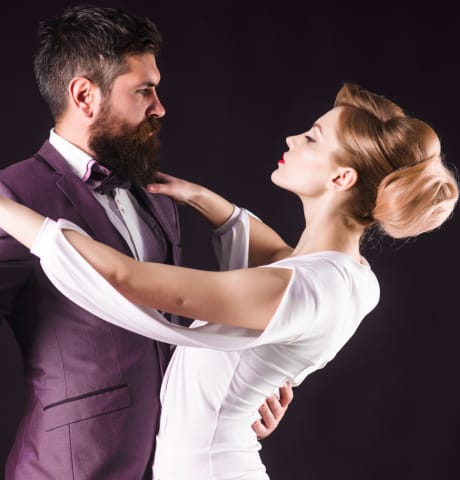 Ladies' Choice & Gentlemen's Gifts: Modern Ballroom EtiquetteDiscover how ladies' choice and gentlemen's gifts bring a fresh breeze to the dance floor and how to behave elegantly in the modern ballroom.
 Crowded Ballroom: Tips for Dancing on a Full FloorA crowded ballroom floor requires maximum concentration. With our field-tested tips, you and your partner will navigate the festive bustle elegantly, efficiently, and completely collision-free.