Your savior in times of crowded floors and unclear music
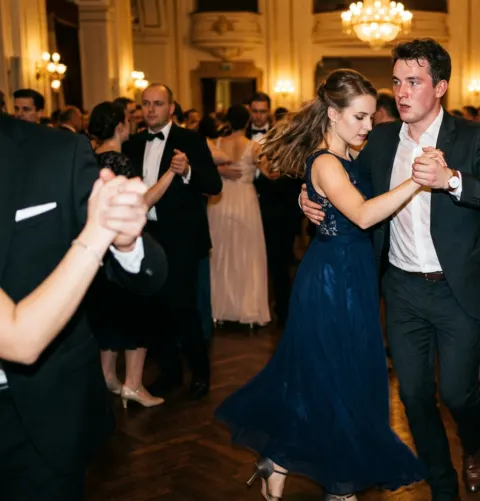
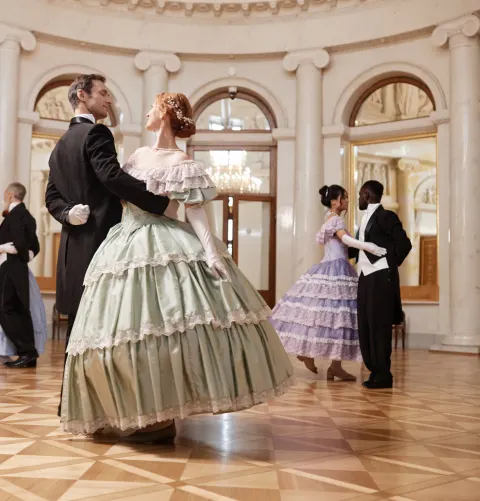
A classic ballroom can feel intimidating when the dance floor is packed and the orchestra plays a piece of music that is not immediately rhythmically identifiable. These are the exact moments when the Foxtrot shines. While couples get stuck during the fast Viennese Waltz or the space-consuming Quickstep, the Foxtrot offers maximum flexibility in the tightest of spaces. Among experienced dancers, it is considered the ultimate emergency dance in the ballroom because it can be adapted to almost any music in 4/4 time and can be danced in an extremely space-saving way.
Anyone who masters the Foxtrot basic step at the ball stays calm even in the biggest crowd. Since the basic step consists of simple walking steps and a chassé, it can be effortlessly downsized. When the density of couples increases, you simply dance the steps almost on the spot. In addition, the rhythm forgives small uncertainties. If you or your partner ever get out of step, getting back into the rhythm with the Foxtrot is as uncomplicated as with hardly any other ballroom dance.
Another reason why you should dance Foxtrot is its versatility when the music selection is unclear. Ball orchestras often play modern pop classics, swing numbers, or slow hits in 4/4 time that cannot be clearly assigned to any classic competition dance. Before you stand helplessly on the sidelines while others block the dance direction in the ballroom, you simply start with the Foxtrot. It fits practically always, saves the situation, and ensures a relaxed feeling on the dance floor.