Ballet for adults5 minutes

Pointe work for adults: The honest test for your feet

In a nutshell
  • Pointe work for adults requires at least two to three years of continuous ballet training as well as fully developed foot and core muscles.
  • Sufficient extension of the ankle joint is absolutely necessary to form a straight vertical line on the platform of the shoe.
  • The body must be able to keep the pelvis and knees stable even under maximum load without compensatory movements.
  • A sound aptitude test in the studio and the go-ahead from the ballet teacher are indispensable to avoid serious injuries to ligaments and joints.

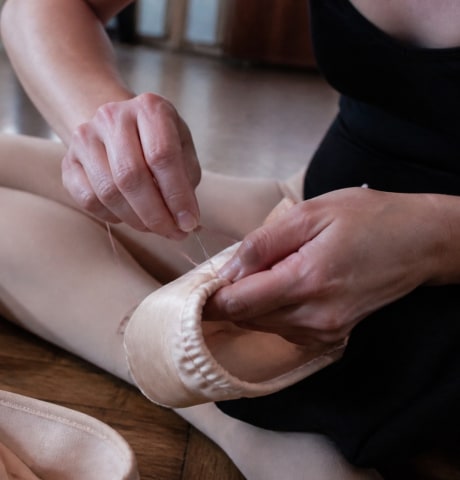
The path to dancing on your toes is the crowning achievement of classical ballet. However, before you decide to buy your first pair of pointe shoes, you should take a close look at your physical requirements.

The anatomical hurdles of starting late

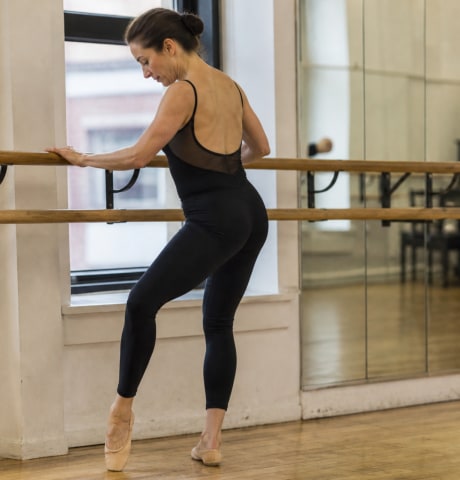
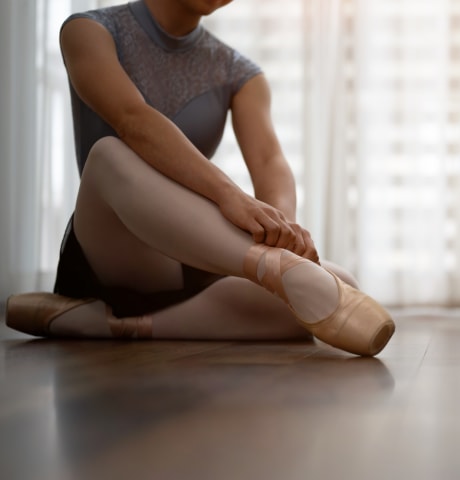
The dream of floating gracefully on your tiptoes fascinates many who start ballet at a mature age. However, pointe work for adults places extreme demands on the entire body. While children's feet are still malleable, adult late starters work with a fully matured bone structure. This by no means implies that the dream is unattainable: many adults learn to dance on pointe successfully and without injury. What is decisive, however, is an honest and anatomically sound self-assessment before the first hard shoes are purchased.

The physical prerequisites for this demanding step encompass far more than just strong feet. Your ankles must have sufficient extension to maintain the vertical line over the standing surface. At the same time, your core requires enormous stability to perfectly align the pelvis and relieve the spine. A stable position on pointe is based on active full-body tension, which you build up in a preparatory ballet warm-up routine and through years of training at the barre.

Take the self-test: Are you ready for pointe shoes?

  1. How stable are you when standing on one leg on your toes (relevé)?

    • A: I wobble a lot and can only hold my balance for one to two seconds
    • B: I am quite stable, but I notice my ankle slightly shifting outwards or inwards
    • C: I am perfectly steady and my ankle remains firmly aligned in a straight line
  2. How far can you point your feet while sitting with your knees straight?

    • A: My toes point upwards, the line from my shin to my instep is sharply bent
    • B: I can point my foot well, but my toes curl up tightly while doing so
    • C: My instep forms an almost straight, soft line as an extension of my shin without curling
  3. How does your pelvis behave when you do pliés at the barre?

    • A: My pelvis tilts forward or backward, and I lose my core engagement
    • B: I have to concentrate hard to keep my pelvis in a neutral position
    • C: My pelvis remains effortlessly vertical and stable, and my core engagement is firm
  4. How often per week do you actively participate in classical ballet classes?

    • A: Irregularly or only once a week for one hour
    • B: Regularly once a week and I do additional exercises at home
    • C: At least two to three times a week continuously for at least two years

Your evaluation

Mostly A: Building a solid foundation

Your muscles and joints do not yet have the necessary stability and alignment to safely support your body weight on your toes. Continue to focus intensively on working on half-toe in your regular classes and specifically strengthen your core and foot muscles. Talk to your instructor about preparatory exercises at the barre.

Mostly B: On the right track

You already have good basic tension and a solid sense of body awareness, but there are still some weak points in terms of strength and joint extension. Use targeted training with a resistance band for your ankles and work on your pelvic stability. Using pointe shoes too early could still lead to strain at this stage.

Mostly C: Ready for pointe work

Your feet, joints, and core muscles show excellent preparation for pointe work. You possess the necessary strength to maintain a vertical line safely without collapsing in your joints. Talk to your ballet teacher to plan the transition to pointe work professionally and under guidance.

Comparing training levels

CriterionBasic Level (Type A)Intermediate Level (Type B)Advanced Level (Type C)
Ankle stabilityWobbly on half-toeSlight swaying noticeableAbsolutely stable and straight
Core and pelvic controlPelvis tilts slightlyConcentration requiredAutomatically stabilized
Recommended training frequency1x per week class1-2x per week plus homeworkAt least 2-3x per week class
Next logical stepStrength training at the barreTargeted foot-specific trainingConsultation with the instructor

The assessment is based on sports science recommendations for adult ballet.

The safe path to your first pointe class

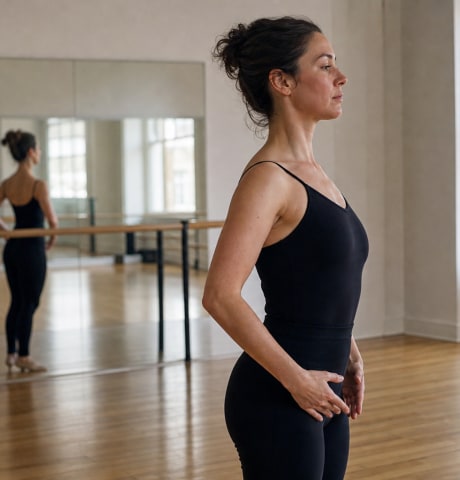
Once you have evaluated the self-test, you will know your current level. If your body is not yet ready, that is no reason for disappointment, but rather a clear training assignment. The path to pointe work leads exclusively through consistent, preparatory training on demi-pointe. In your regular classes, focus on a precise ballet posture for beginners, where the pelvis remains stable and the ankles do not buckle inwards or outwards.

Additional strengthening exercises for the calf muscles, the shins, and the deep foot muscles using a resistance band will help you build the necessary stability. Only when your instructor at the studio gives you the green light and your joints can safely handle the strain will nothing stand in the way of a professional fitting at a specialized shop. Patience is the most important virtue in adult ballet to ensure you dance healthily and pain-free in the long term.

Frequently Asked Questions

  1. Yes, you can still learn pointe work at a mature age. Prerequisites include a healthy anatomy, several years of regular training on demi-pointe, and excellent core and foot stability to protect your joints.

Ballet classes near you

Find the right dance school on udansa and prepare professionally for your training.

View all suitable classes

Find your ballet community on udansa

On udansa, you can find the right ballet classes for adults in your area. Connect with like-minded people and find teachers who will professionally guide you on your journey to the top.

Find your ballet community on udansa