Ballet training5 minutes

Ballet strength training for adults: Strong core muscles

In a nutshell
  • Strong core and pelvic muscles are the most important prerequisite for balance and injury-free movement in adult ballet.
  • Targeted holding exercises like planks and the activation of the deep gluteal muscles stabilize the pelvis and enable the correct outward rotation of the legs.
  • Regular strength training protects the joints from strain and ensures an upright posture in the dance studio as well as in everyday life.
  • Adult beginners benefit especially from slow, controlled exercises using their own body weight without heavy additional loads.

The apparent weightlessness in ballet is the result of precise muscle work. Learn how to specifically strengthen your deep muscles to dance with stability and elegance in your mature years.

Definition
Deep muscles

Deep muscles refer to the deeper layers of the body's musculature, particularly around the spine and pelvic floor, which cannot be contracted voluntarily but instead stabilize the joints and ensure upright posture unconsciously.

Why deep core muscles are the foundation of ballet

Anyone starting ballet at a mature age quickly realizes that elegance and lightness are based on an invisible strength. This strength does not come from the large, visible muscles in the arms and legs, but from the deep stabilizing muscles around the pelvis, the spine, and the abdomen. Without targeted ballet strength training for adults, it is difficult to maintain balance in the center of the room or to turn the legs cleanly outward from the hips. The deep core muscles work like an inner corset that straightens the body, protects the joints, and relieves the spine.

For late starters, this stabilization is particularly important, as the body has developed movement patterns over the years that need to be corrected in ballet. A strong core prevents you from arching your back or losing your balance during demanding exercises. If you want to consolidate your ballet for adult beginners: basics & posture, the targeted development of these deep core muscles is the most important first step. It gives you the necessary confidence to focus entirely on the flow of movements and the rhythm of the music during class.


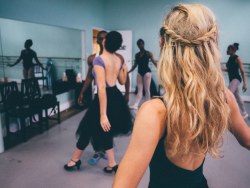
The precise alignment of the pelvis requires the subtle activation of the deep abdominal and gluteal muscles.

Effective exercises for building muscle at home

Effective ballet strength training does not require a daily trip to the studio or expensive equipment. You can train the crucial ballet deep muscles by integrating simple, yet highly effective exercises into your daily routine. An excellent example is the forearm plank with a focus on pelvic tilt. This activates the entire front and back chain of the core. It is important to gently pull the tailbone towards your heels to keep the lower back flat and stable, just like with the classic pelvic alignment at the barre.

Another key exercise for ballet muscle building at home is the so-called "clamshell" while lying on your side. With your knees bent, slowly open the top knee against the resistance of gravity while keeping your feet together. This movement specifically trains the deep gluteal muscles (rotators), which are responsible for the ballet-typical outward rotation of the legs from the hip joint. If you perform these routines, which go along with Ballet for adults: The path to starting at a mature age, three times a week for fifteen minutes, you will feel how much more stable you stand at the barre after just a few weeks.

The right execution determines your success

Correct

  • Consciously tilt your pelvis and pull your tailbone downwards
  • Perform exercises slowly and with controlled breathing
  • Pay attention to the precise alignment of your joints

Incorrect

  • Arching your back to force a higher position
  • Using momentum and holding your breath
  • Letting your knees cave inward under pressure
udansa tip

Focus on your exhalation during every exercise. Exhaling through your slightly opened mouth helps you to automatically engage your deep abdominal muscles and stabilize your pelvis.

Stability in ballet never comes from rigidity, but always from an elastic, deep strength in the center of the body.

Ballet teacher, Hamburg

How controlled strength protects joints as you age

A common misconception when starting classical training is the assumption that you primarily need to be able to throw your legs high to have a good figure. In reality, it is eccentric strength, meaning the controlled braking and holding of a movement, that shapes the typical, lean, yet extremely resilient muscle tone of dancers. Specific ballet strength exercises focus exactly on this: they work with static holding strength and slow, flowing movements against your own body resistance, instead of aiming for explosive bursts of power.

Through this controlled approach, you protect your joints from strain, which is invaluable, especially when training at a mature age. The stability gained in your core transfers directly to your everyday posture: you walk more upright, prevent back pain, and move with a new, confident presence. Strength training is therefore not a tedious additional program, but the key that opens the door to the elegant movement sequences of classical dance for you in the first place.

Two sides of a movement: Holding and moving

Stability

The power of the core

The invisible foundation of the body

The deep core and pelvic muscles provide the necessary stability. They keep the pelvis upright and protect the spine from collapsing during every movement.

Dynamics

The lightness of the limbs

The visible movement in space

The outer musculature performs the graceful movements of the arms and legs. It provides the visible aesthetics and the dynamics in space, but requires a firm anchorage for this.

Frequently Asked Questions

  1. Yes, that is highly recommended. Preparatory strength training for your core and gluteal muscles builds the necessary basic stability, which will make your first steps at the ballet barre much easier.

Ballet for adults near you

Find the right studio and start your training for a strong, elegant posture.

View all matching courses
udansa community

Find your course for Ballet

At udansa, you will find like-minded people and professional ballet studios in your area that offer special courses for adult beginners. Start your training now for an upright, powerful posture.

Find your course for Ballet