

It is easier to dance together
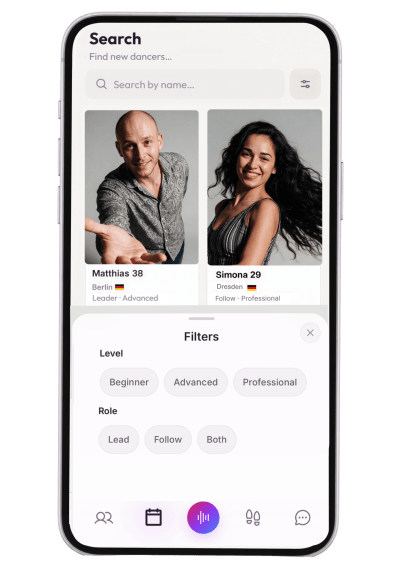
On udansa you will find like-minded people in your age group who enjoy movement and mental training just as much as you do. Sign up and discover dance partners, courses, and events in your area.

With the right mental tools, you will never lose your way on the dance floor again. Learn how to specifically program your memory for dance steps and recall complex sequences effortlessly.
The brain remains remarkably adaptable and malleable even at a mature age. When we learn new movement sequences, fresh neuronal connections are formed in the mind. When dancing, we use the so-called motor memory, which is closely linked to our visual and emotional centers. Instead of memorizing numbers or pure directions, we activate an entire network of senses when learning dance steps. Those who purposefully build visual bridges and break movements down into small, logical units relieve the working memory enormously. This not only helps in class, but is also excellent training for dementia prevention. A wonderful addition to this is the targeted senior dance for health, which is gentle on the body and challenging for the mind. Anyone who would like to find out more about the general benefits of exercise in the second half of life will find valuable insights in the guide on the topic of dancing from 50.
If you ever lose the thread, just stand still calmly and jump back in at the next familiar block instead of frantically searching for the step you missed.
Divide a long choreography into small sections of a maximum of four steps. Focus on the first block until it flows smoothly before you even think about tackling the next part in a mastery-oriented way.
Give every movement a descriptive name. A step to the side becomes an open door, a step back becomes dodging a puddle: these visual bridges anchor themselves immediately in your long-term memory.
Say the directions or the rhythms out loud or quietly while dancing. The combination of speaking, listening, and moving activates multiple areas in the brain simultaneously and doubles the learning effect.
Find fixed points in the room, such as a window or a picture on the wall. Use these markers to orient yourself during turns and changes of direction in the room and to maintain your balance.
Close your eyes and go through the sequence of steps in your mind while the appropriate music is playing. This mental training activates the same motor centers in the brain as actually dancing on the dance floor.
The best way to remember dance steps is to break them down into small blocks of a maximum of three to four movements. Connect these blocks with fixed images or terms and practice them individually before putting them together.
Find the right course to keep your memory in full swing.
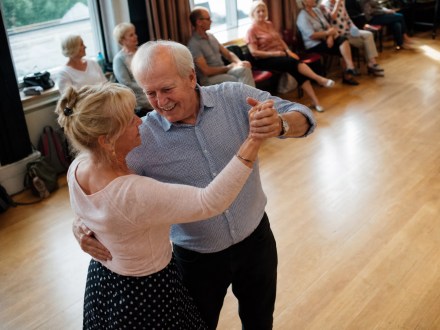 Dance for Seniors: Stay active and gentle on your jointsDiscover how dance for seniors promotes health, protects your joints, and serves as effective fall prevention. Stay flexible and steady on your feet in your golden years!
 Dancing over 50: Stay fit, active, and social in your primeDancing over 50 is the perfect mix of gentle full-body exercise, brain training, and social fun. Discover how easy it is to get started with udansa.
 Dancing against dementia: How movement keeps the brain youngDancing is the perfect brain workout. Learn why rhythmic movement is the best prevention against cognitive decline and how you can train your coordination.
 Coordination test for seniors: How fit is your dance brain?How fit is your brain on the dance floor? Take our fun coordination test for seniors and put your sense of rhythm and reaction time to the test.