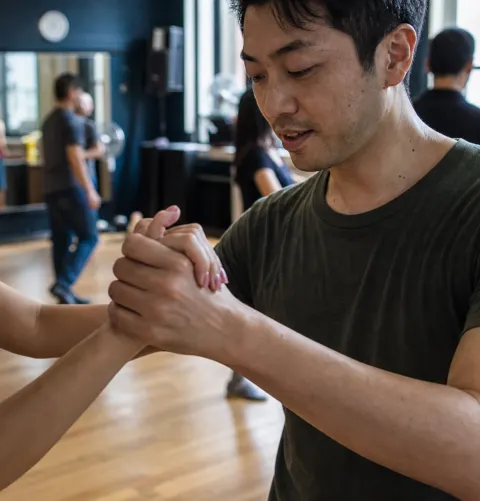
Find your dance partner for Latin
On udansa you will find like-minded people to polish your perfect technique with, as well as suitable courses in your area.

By Bernhard De LucaUpdated
On udansa you will find like-minded people to polish your perfect technique with, as well as suitable courses in your area.
The right footwork determines whether your movements look stiff or radiate that typical Latin American fluidity. With the correct rolling technique, you will take your balance to a new level.
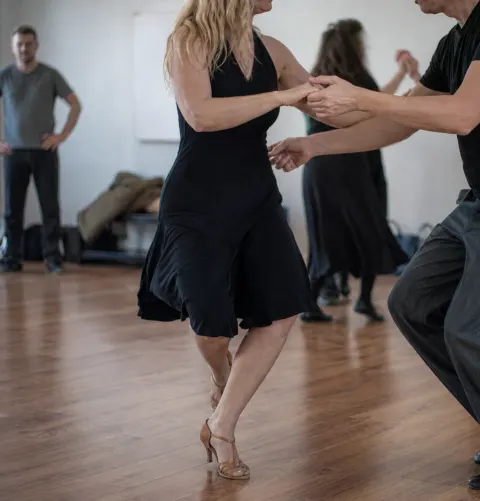
The typical, fluid dynamics of Cha-Cha-Cha, Rumba, or Samba do not originate in the upper body, but start right at the bottom. If you place your feet incorrectly, you block the entire chain of joints all the way up to the hips. Correct Latin American footwork ensures that every step is cushioned softly and the hip can flow naturally into the typical Cuban motion. Unlike in ballroom dances, where the heel often touches the floor first, in Latin dance you work almost exclusively on the balls of your feet.
A common misconception is the so-called "Latin footwork deletion," which refers to uncontrolled dragging or incomplete placement of the feet, where the joints remain rigid. However, if you internalize the mechanics of rolling through the foot, you will immediately gain stability and balance. Consciously rolling from the toe over the ball to the heel gives you the necessary grip on the dance floor and makes your movements appear effortless and elegant. You can also find out in detail how best to implement these basics in practice in the guide on Latin American dances in the world dance program.
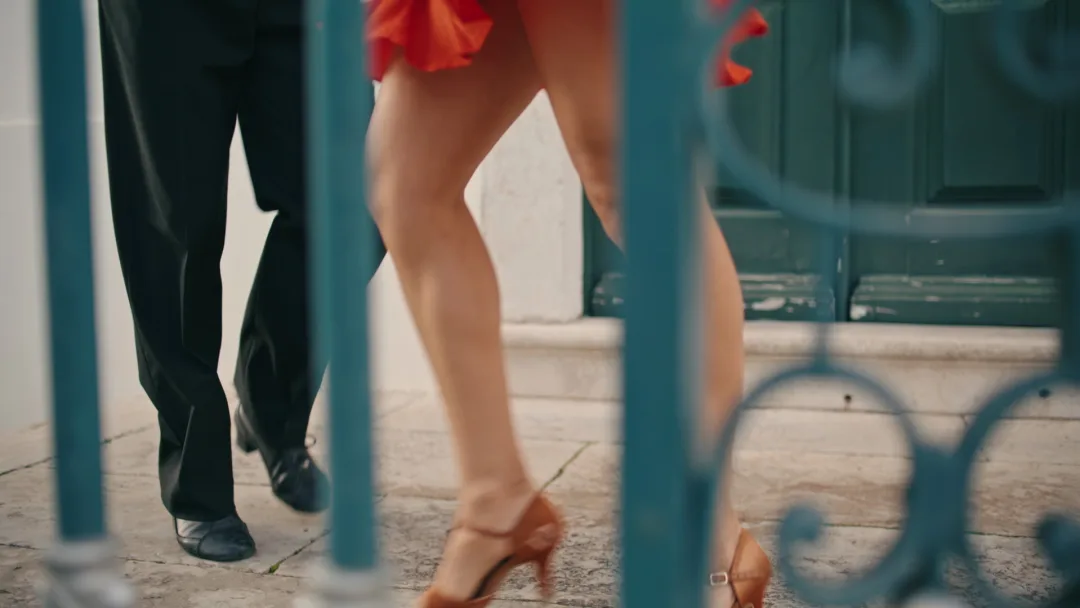
Extend the free leg forward from the hip. The tip of the foot maintains light contact with the floor at all times, as if you were drawing a line on the dance floor.
First, place the tip of your toes and immediately afterwards the inner ball of your foot on the floor. At this moment, your foot is not yet bearing any body weight, but is simply feeling its way to the new position.
Lower your foot softly so that the entire ball of the foot has flat contact with the floor. Keep the knee of the front leg slightly bent to cushion the step elastically.
Now, bring your pelvis and body weight in a controlled manner over your front foot. Only at this moment does the heel lower completely to the floor, while the back leg is straightened.
Sign up for a course and improve your footwork with professional guidance.
Student DanceBurgstädt · Germany
Aufbaukurs Burgstädt Montag Schuljahr 2026/27Monday · 13:30 · Nov 9, 2026 - Jan 25, 2027
Burgstädt
BallroomMeissen · Germany
Fortgeschrittenen-Kurs | ADVANCEDTuesday · 18:30 · Nov 10, 2026 - Jan 19, 2027
“Ein Haus für Vieles” - Saal Tanzkurse
Student DancePenig · Germany
Aufbaukurs Penig Schuljahr 2026/27Monday · 14:30 · Nov 9, 2026 - Jan 25, 2027
Penig
Like this
Don't do this
Preparation
Meanwhile
In Latin dance, you almost always place the ball of your foot down first. Only then do you roll the foot down to the heel in a controlled manner as you shift your weight.
So-called flattening the footwork describes placing the foot down flat and unclearly without a rolling motion. This causes you to lose your spring and blocks your hip movement.
Yes, the ball of the foot touches the floor first for backward steps as well. The heel only lowers once the weight is fully transferred to the back leg to maintain your balance.
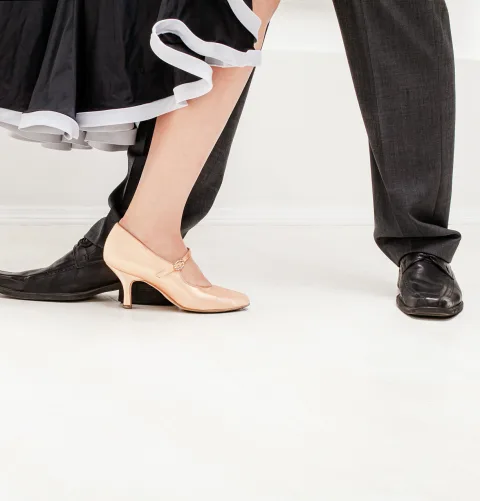 Latin Dance Technique: Mastering Latin Motion
 Mastering Cuban hip motion: The knee technique
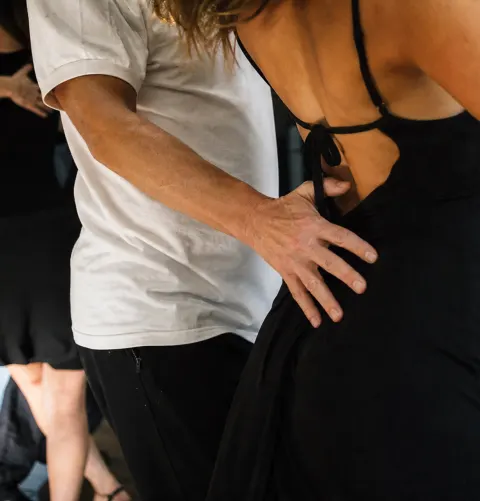 Latin Dance: Mastering Body Tension
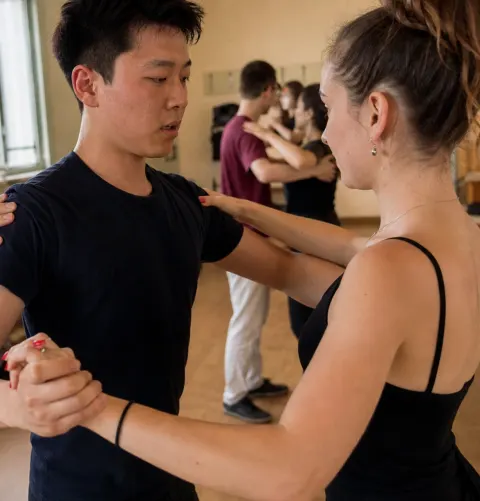 Building a Latin Dance Frame: Stable Partner Connection
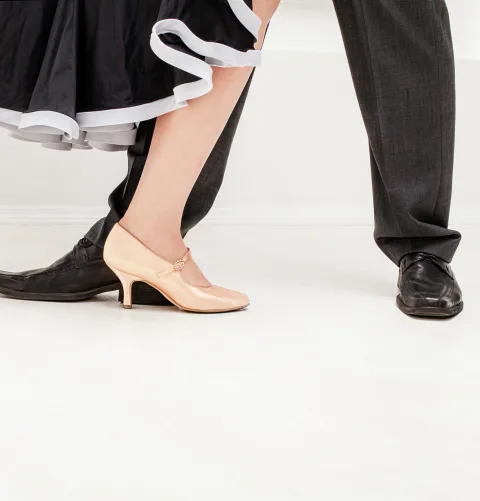 Latin Dance Technique Test: How clean is your dancing?
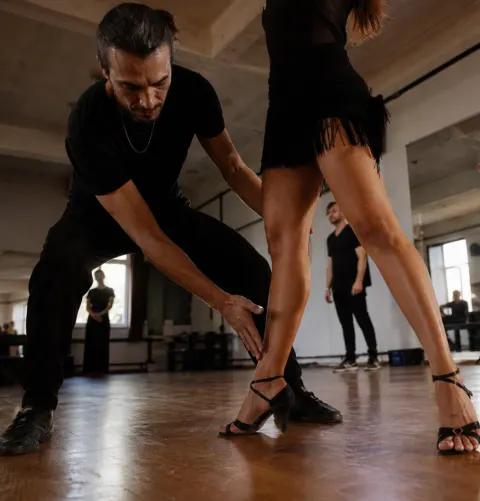 Latin Dance: 7 Common Technical Mistakes
 Jive hip movement: Mastering the right swing technique