Latin technique4 minutes

Latin dances: 7 common technique mistakes

In short
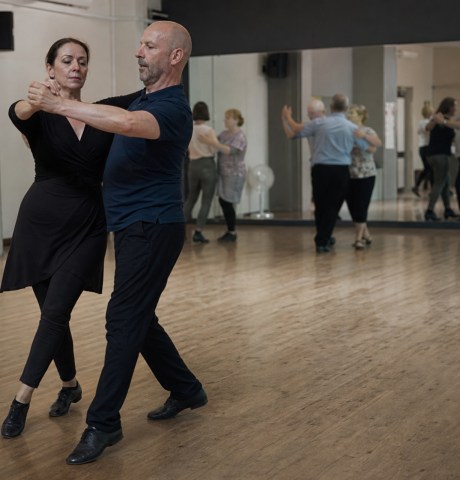
  • Latin American dances require an active weight transfer over the balls of the feet instead of flat steps on the whole foot.
  • Hip movement must not be created artificially, but must result organically from the extension and flexion of the knees.
  • A stable dance frame in the upper body prevents the arms from collapsing uncontrollably and ensures leading within the couple.
  • The spine always remains upright and stretched to avoid an unaesthetic swayback or buckling at the hips.

Beautiful lines and fluid movements are no coincidence, they are the result of clean body mechanics. If you know the typical stumbling blocks, you can work specifically on your presence on the dance floor.

How we selected the technical errors

  • Official technical standards

    All analyzed errors are based on the official guidelines of the World Dance Program.

  • Practical applicability

    The solutions shown can be implemented directly during training or at home.

  • Independent selection

    No dance school or platform has paid for a placement on this list.

The 7 most common technique mistakes in Latin dance

  1. 01

    The heel step instead of ball work

    Interface between foot and floor, all Latin dances

    • Footwork
    • foot technique
    • Rumba

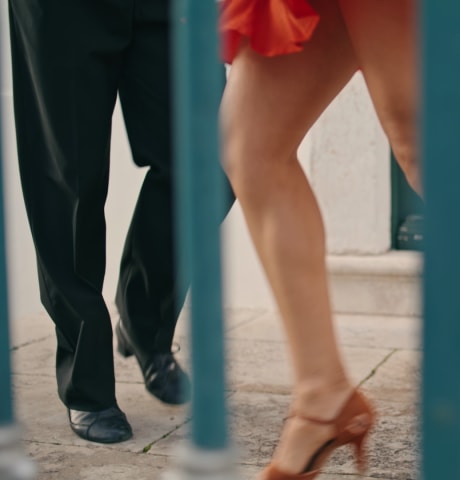
    Anyone who lands flat on the whole foot or even on the heel blocks the entire body dynamic. Latin American dances require landing on the ball of the foot and a controlled roll over the inner edge of the foot.

  2. 02

    Artificial hip wiggling without knee extension

    Pelvic and knee coordination, Rumba & Cha-Cha-Cha

    • Body mechanics
    • hip action
    • Cha-Cha-Cha

    Often, there is an attempt to circle the hips in isolation, which looks unnatural and stiff. Hip movement is the mechanical end product of knee extension: only when the standing leg is completely extended does the hip swing correctly to the back.

  3. 03

    The collapsing dance frame in the upper body

    Upper body and arms, all partner dances

    • Posture
    • partner connection
    • leading

    A slack frame makes leading massively difficult. When the elbows fall behind the body or the arms hang limply, the connection to the partner is lost. The frame must be carried like a stable, elastic window.

  4. 04

    Compensating with a hollow back

    Spine and pelvis, all Latin dances

    • Posture
    • body tension
    • balance

    To appear particularly dynamic, many dancers tend to push their buttocks backwards. This leads to a hollow back, blocks hip movement, and puts strain on the lumbar spine. The pelvis must remain upright and centered.

  5. 05

    Incomplete weight transfer to the standing leg

    Body axis, all Latin dances

    • Weight transfer
    • balance
    • dynamics

    A step is only complete when your entire body weight is over the new standing leg. If you leave your upper body too far back, you lose your balance and fall behind your partner and the music.

  6. 06

    The lifeless free arm in space

    Arm movement, solo & pair

    • Styling
    • body tension
    • charisma

    The free hand and the free arm are often neglected and hang down lifelessly. An uncontrolled free arm disrupts the visual line and throws the entire body off balance. It must be actively guided right down to the fingertips.

  7. 07

    Raised shoulders during fast steps

    Shoulders and neck, all Latin dances

    • Posture
    • relaxation
    • presentation

    Especially with fast figures like in Cha-Cha-Cha, dancers tend to pull their shoulders up due to tension. This blocks the cervical spine and disrupts the elegant, long line of the neck. Shoulders belong down and relaxed.

How to permanently correct common mistakes in partner dance

If you want to fully unleash the typical dynamics of Latin dances, you will quickly reach your limits with pure step power alone. The magic only happens through the right body mechanics. A stable Latin frame, the stretching of the flanks, and precise weight transfer form the foundation. Once you master these basics, your movements will not only look more elegant, but leading and following as a couple will become much easier and more harmonious.

To understand these basics in detail, it helps to take a look at the core mechanisms. The famous hip action, for example, does not come from isolated wiggling of the pelvis, but is the direct result of clean footwork. If you want to learn more about this knee extension, read our guide on Cuban hip motion. A stable upper body is also indispensable: you can find out how to build a firm connection in the guide to partner dance posture. Avoid looking at these technical pillars in isolation, because in partner dance, every detail is interconnected.

Latin technique in numbers

Common posture mistakes in Latin dance
7
minutes of targeted technique training help
15
percent of hip movement comes from the knee
100

Frequently Asked Questions

  1. A Cha Cha Cha posture mistake in the upper body usually arises from a lack of core tension or sagging elbows. Keep your arms actively carried in space and use the muscles in your upper back to maintain a stable and proud presence.

Latin courses near you

Find the right course on udansa now and polish your technique together with professionals.

View all matching courses

Find your dance partner for the perfect Latin dance

On udansa you will find like-minded people who want to work on their posture with you, as well as suitable workshops and courses in your area. Sign up and take your technique to the next level!

Find your dance partner for the perfect Latin dance

Read more