Latin technique3 minutes

Paso Doble posture: The proud matador technique

In a nutshell
  • The correct Paso Doble posture requires maximum extension of the thoracic spine, while keeping the shoulders low and the pelvis tilted slightly forward.
  • The typical Paso Doble body tension is created by permanently engaging the core and abdominal muscles to maintain the proud silhouette of the torero.
  • The powerful marching in Paso Doble is based on an energetic heel step, where the body's center of gravity is immediately shifted over the new supporting foot.

The proud silhouette of the Spanish torero

Paso Doble differs fundamentally in its aesthetics from all other Latin American dances. While soft, flowing hip movements dominate in Rumba or Cha-Cha-Cha, Paso Doble demands almost military discipline and pride. The basis for this presence is an extreme Latin body tension, which is built up throughout the entire torso. The upper body is oriented towards the proud silhouette of a Spanish torero during a bullfight. This means: the pelvis is tilted slightly forward, while the thoracic spine is maximally straightened and stretched upwards. The shoulders remain low and relaxed to ensure a long neck.

Keeping the tension in the center

To keep this posture stable, permanent activation of the abdominal and back muscles is essential. The distance between the iliac crest and the lowest rib is felt to be maximized, which gives the upper body an incredible presence. This proud posture is not a static corset, but the dynamic starting position for the typical forward drive. Only those who master this body tension in Paso Doble can bring powerful steps onto the dance floor in a controlled manner, without losing balance or collapsing in the pelvis.
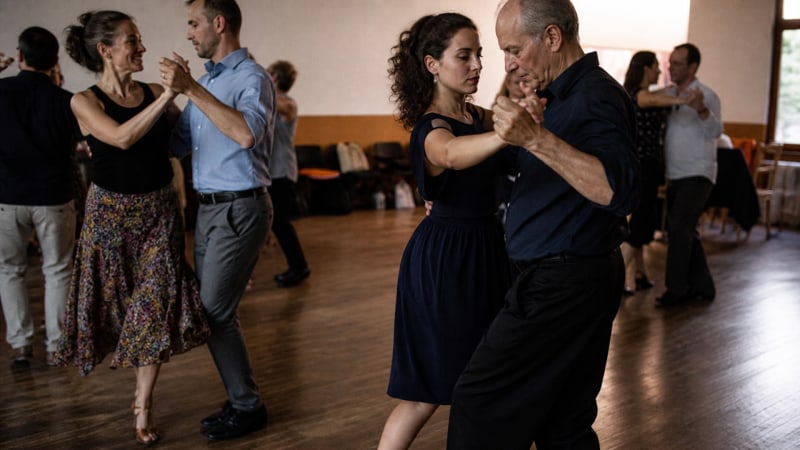
Maximum body tension and an upright chest give the Paso Doble its characteristic, proud elegance.

The posture metrics in Paso Doble

Core tension for posture
100%
Typical steps per minute in a march
120
Focus on the proud chest extension
1/1

Four steps to perfect Paso presence

  1. Tilting and straightening the pelvis

    Straighten your spine as much as possible, consciously pull your shoulders back and down, and tilt your pelvis slightly forward to assume the proud basic position.

  2. Activating core tension

    Activate your abdominal muscles and pull your ribcage slightly together, so that the strong body tension is stabilized throughout the entire core.

  3. Start with the heel

    Place your foot down energetically with the heel when stepping forward, and avoid creeping on the ball of your foot, to emphasize the march-like character.

  4. Shift your weight energetically

    Shift your entire body weight immediately over your new standing foot the moment you step, so that the movement drives powerfully forward.

Frequently Asked Questions

  1. The correct Paso Doble posture requires a pelvis tilted slightly forward and a maximally upright, proud thoracic spine. The shoulders remain low to make the neck appear long, while the entire torso is under high tension.

Latin courses near you

Find the right dance school now to take your Paso Doble technique to the next level.

View all matching courses

Find your dance partner for Paso

On udansa, you will find like-minded people who share your passion for powerful Latin dances and want to work on the perfect posture with you.

Find your dance partner for Paso