Latin technique4 minutes

Latin dance technique trends 2026: modern training

By Bernhard De LucaUpdated

In a nutshell
  • Modern Latin training in 2026 focuses increasingly on functional biomechanics and natural rotational movements instead of rigid poses.
  • Isolation exercises for the upper body and hips are increasingly being replaced by holistic movement chains that involve the entire body.
  • The focus is on an active connection to the floor to generate the necessary stability and dynamics for quick weight shifts.

Latin dances are changing. Modern training methods break with old dogmas and place the natural biomechanics of your body at the center for more dynamics and healthy movement.

Why trends in the dance hall spread more slowly

Dance trends develop in a fundamentally different way than fashion waves on social media. While a viral dance clip on TikTok goes around the world in a matter of days and is forgotten just as quickly, developments in partner dance change over months and years. New methods in modern Latin training for 2026 establish themselves extremely slowly because they must be physically understood, tested in the dance hall, and passed on through workshops and weekly courses. Only when dance teachers and trainers incorporate new biomechanical insights into their regular lessons does the trend reach the masses at dance parties.

This slow cycle has a major advantage: what prevails has real athletic and dance value. If you look around a dance floor today, you will notice that couples appear more harmonious and dynamic than they did a few years ago. This is not due to new steps, but to the way trends in competitive dance training 2026 and in recreational sports emphasize the natural movement of the body. The trends emerge through intensive exchange at international festivals and travel from there directly into local dance schools.

The most important trends in Latin training 2026

  • Fascial stretching and rebound

    Instead of tensing muscles in isolation, this concept uses the body's natural fascial chains. Movements become more elastic, springy, and consume significantly less energy on the dance floor.

    • Fascia training
    • biomechanics
    • elasticity
  • Active Grounding Concept

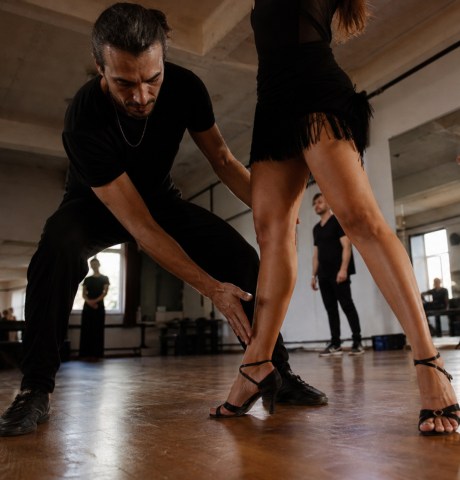
    The conscious interaction with the dance floor is the focus here. Through targeted pressure into the floor, energy is generated for fast turns and explosive hip movements, which massively improves balance.

    • Floorwork
    • balance
    • grounding
  • Multi-Dimensional Spine Isolation

    This training breaks up rigid dance posture and promotes the three-dimensional mobility of the spine. It provides the typical, fluid look of modern Latin American dances.

    • Spine
    • isolation
    • flow

Where new movement concepts come from

The current impulses for modern body movement in Latin dance largely stem from sports science and related disciplines like contemporary dance. In the past, technique training in Latin dance was often characterized by rigid, artificial poses that had to be laboriously maintained. Today, the trend is moving away from pure aesthetics toward functional movement, which ultimately looks even more spectacular. The journey is moving away from the mechanical execution of figures and toward organic bodywork that visualizes the entire rhythm.

For you, this development means an enormous simplification in learning. Instead of tensing isolated muscle groups, you learn in modern courses how to use gravity, ground contact, and the natural rotation of your spine. These trends not only make dancing healthier and easier on your joints, but also ensure that your movements in dances like Rumba or Cha-Cha-Cha appear more fluid and natural. Once you have understood these principles, you can apply them to any Latin American dance.

Anyone trying to learn Latin technique solely by imitating images blocks their own dynamics. Only functional movement from within creates a real flow.

Latin dance instructor, Cologne

Effective Latin training in comparison

Like this

  • Actively use the floor as a source of power
  • Initiate movements fluidly from the core
  • Pay attention to the natural alignment of the joints

Don't do this

  • Force yourself into positions using pure muscle power
  • Perform isolated hip movements without back engagement
  • Force stiff, cramped poses

Frequently Asked Questions

  1. Body movement refers to the coordination of all body parts, apart from pure footwork. In modern training, special attention is paid to ensuring that movements start in the core and continue fluidly to the fingertips.

Find Latin training near you

Discover courses that teach modern movement concepts and the latest Latin techniques.

View all matching courses

Find your dance connection in the Latin scene

On udansa, you can find like-minded people to try out the latest training trends with you. Discover suitable courses and dance partners in your area to take your Latin technique to the next level together.

Find your dance connection in the Latin scene