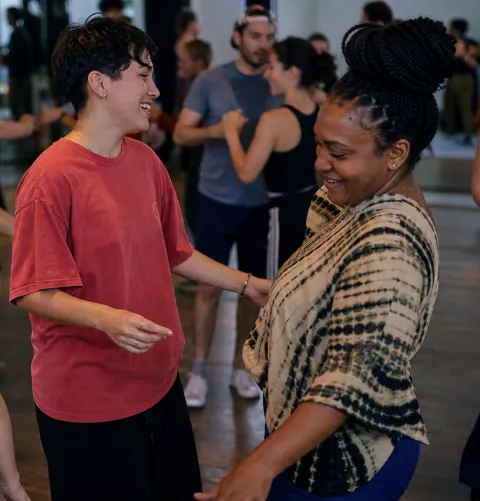
Find your dance partner for competitive sports
Here you can find like-minded people who share your passion for rhythm and technique, as well as experienced coaches for your sporting success.

By Mary De LucaUpdated
Here you can find like-minded people who share your passion for rhythm and technique, as well as experienced coaches for your sporting success.
Switching from relaxed social dancing to true competitive sports is a big adventure. Find out with our quick self-test if you are ready for intensive training and the competition floor.
The transition from the relaxed hobby sector to organized competitive sports is an exciting step. Many ambitious dancers eventually feel the desire to test their own limits and compete with others on the dance floor. However, tournament dancing differs fundamentally from weekly social dancing. It is no longer just about having a good time, but about refining nuances, increasing your own stamina, and building enormous mental presence.
Before you take the step and apply for your license, it is worth taking an honest inventory. The change requires not only dance talent, but above all time, discipline, and the willingness to constantly improve. If you have already completed the German Dance Badge in Standard or Latin, you already possess an excellent foundation. However, actual tournament dancing demands a completely different kind of dedication and regular, goal-oriented training in a club.
You love dancing as a wonderful balance to everyday life, but you do not want to expose yourself to the pressure of evaluations and rigid training schedules. For you, the joy of movement and socializing are in the foreground. It is best to stay in ambitious recreational sports or enjoy demanding hobby courses, where you can grow without performance pressure.
You bring a healthy dose of ambition and want to steadily improve your dancing. A recreational dance tournament or earning dance sport badges is the perfect next step for you. Here, you can get a taste of competition without having to sacrifice your entire leisure budget and your weekends to the sport.
You are mentally and physically absolutely ready for real competitive sports. Structured criticism spurs you on, and you are ready to invest a lot of time and energy into your training. Find a suitable club soon, get in touch with coaches, and start your path into the D-class in Latin competitive dance.
| Criterion | Hobby level | Recreational sports | Competitive sports (D-class) |
|---|---|---|---|
| Training frequency | Once a week | 1 to 2 times a week | 3 to 5 times a week |
| Training focus | Fun & new figures | Basic technique & posture | Precision, athleticism & presentation |
| Weekend commitment | None (leisure) | Occasional events | Regular tournament travel |
| Cost factor | Low (course fee) | Moderate (club membership) | High (licenses, clothing, coaches) |
The transitions between the levels are fluid and depend heavily on personal commitment.
Find the right course on udansa now and start your training.
BallroomMeissen · Germany
Fortgeschrittenen-Kurs | ADVANCEDTuesday · 18:30 · Nov 10, 2026 - Jan 19, 2027
“Ein Haus für Vieles” - Saal Tanzkurse
Couple danceLimbach-Oberfrohna · Germany
PaartanzkreisTuesday · 18:45 · running since Nov 10
Limbach-Oberfrohna
Couple danceBurgstädt · Germany
Paarkurs - Boogie & Rock'n'Roll - ClubTuesday · 19:00 · Nov 10
Burgstädt
When you have made the decision to get into competitive sports, choosing the right environment is crucial. A specialized club offers you not only the necessary training times, but also access to licensed coaches and guided practice sessions. Here, you will learn to hold your own on a crowded floor and make the best use of your presence. For young people, starting via a youth dance club at the dance school is often a good option, serving as a bridge between hobby and sport.
Use your test result as a clear guide for the coming months. If you notice that you are still lacking the necessary stamina or a steady dance partner, use udansa to specifically search for athletically ambitious partners. The road to your first tournament is a marathon, not a sprint. With the right attitude, a structured training plan, and a pinch of patience, you will master the transition and soon be proudly wearing your first competition number.
To get started in the lowest competition class (D-class), solid basic steps and precise timing are completely sufficient. More important than complicated figures is the ability to perform the rhythms of the five Latin dances cleanly and with balance on the floor.
Active tournament dancers usually train at least three to four times a week. Training is divided into free practice, guided group lessons, private lessons with a coach, and supplementary endurance and strength training.
Yes, it is possible to get started without a fixed partner through special solo tournaments or by specifically searching for a dance partner. On udansa, you can specifically search for other ambitious dancers who are pursuing the same dream of tournament dancing.
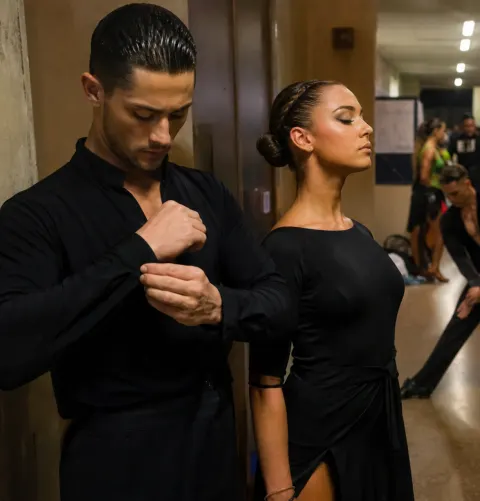 Latin Tournament Dance: From Badges to the Floor
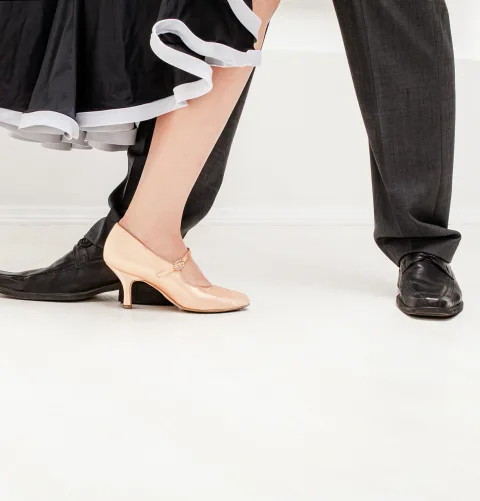 Latin competition shoes: The official rules in detail
 Packing your competition bag for Latin: The ultimate checklist
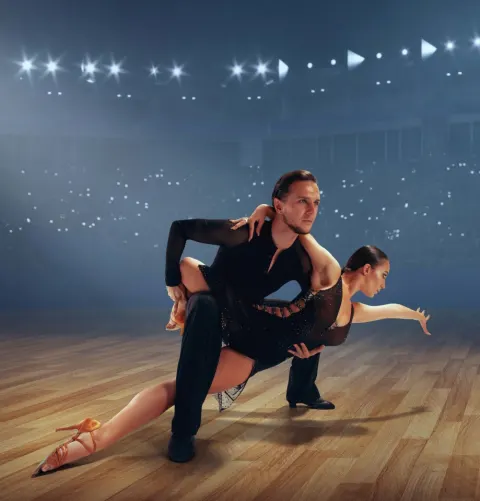 Latin Competition Classes: From D to S
 Step limits in C-Class Latin: Allowed figures
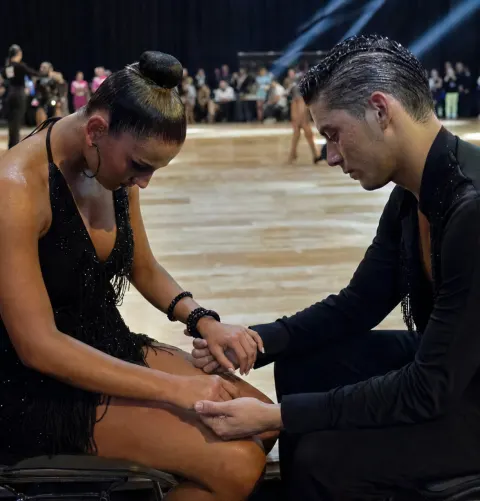 Coping with defeat in dance competitions: Staying mentally strong
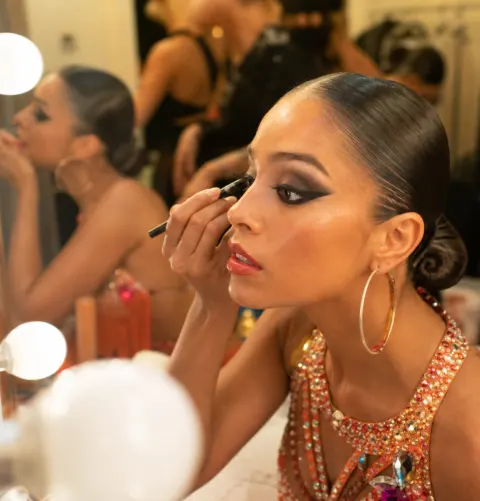 Latin competition styling: The top trends for 2026