Competitive dance5 minutes

Latin competition shoes: The official regulations in detail

By Bernhard De LucaUpdated

In short
  • The official tournament regulations (TSO) of the DTV prescribe exact rules for heel heights and heel shapes depending on the age and performance group.
  • In the children's and youth classes, strict limits apply to the heel height of girls' shoes to protect the joints.
  • The soles of tournament shoes must be made of suede, while rubber or street shoes are prohibited on the dance floor.
  • Plastic heel protectors are mandatory at almost all tournaments to prevent damage to the hall floor.

If you want to gain a foothold in competitive dance, you must master the strict dress code. Find out here why choosing the right Latin dance shoes on the competition floor is not a matter of taste, but a matter of official regulations.

DefinitionTournament Sports Regulations (TSO)

The Tournament Sports Regulations (TSO) are the official set of rules of the German Dance Sport Association (DTV), which govern all sporting and organizational procedures as well as clothing regulations for tournaments. They ensure uniform standards nationwide and fair conditions in competition.

Regulations instead of personal preference on the floor

Anyone who takes the step from recreational sports to true competitive sports quickly realizes that in tournament dancing, nothing is left to chance. The Tournament Sports Regulations (TSO) of the German Dance Sport Association (DTV) govern every detail of the presentation on the floor. A particularly strictly monitored area concerns the rules for Latin tournament shoes. At championships and ranking tournaments, the judges and the tournament director look very closely: if the footwear does not comply with the specifications of the age and performance class, the worst-case scenario is disqualification before the first warm-up.

The regulations differ fundamentally from the casual habits in social dance. While almost anything that you like and that slides is allowed at dance parties, tournament shoes must meet exact criteria. These rules serve not only for visual uniformity on the floor, but above all for sporting fairness and the health protection of the athletes. To avoid unpleasant surprises on the day of the tournament, couples should familiarize themselves extensively with the TSO, which you can find in German Dance Sport Badge in Latin: What you need to know, as early as when purchasing.
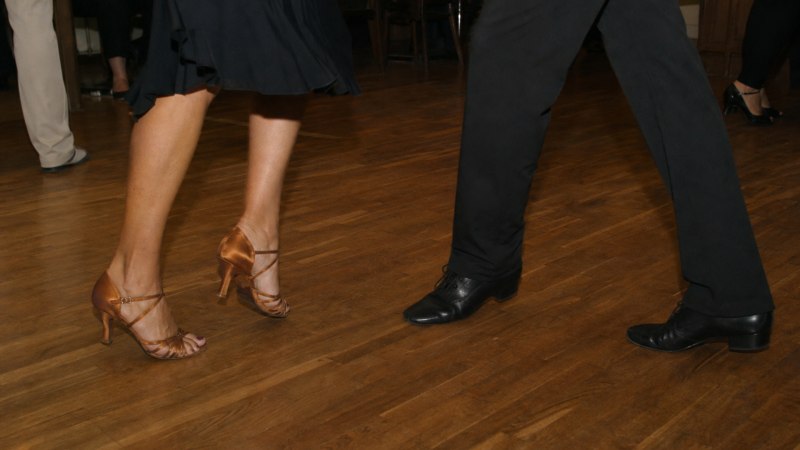
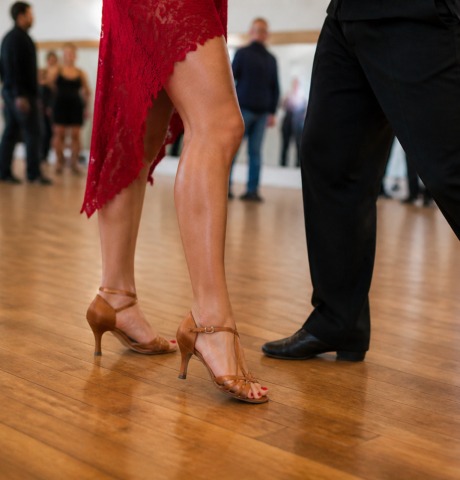
Precision down to the tips of your toes: Only those who comply with the exact material and heel regulations of the TSO will be allowed onto the floor by the tournament director.

Heel heights and shapes in the focus of the sports regulations

The heel height for Latin tournaments according to the DTV is one of the most frequently discussed points in the regulations, especially in the children's and youth classes. Extremely strict restrictions apply to children's classes: here, girls are often only allowed block heels with a maximum height of 3.5 centimeters to protect growing joints and ensure proper Latin dance footwork: rolling through correctly. Only in higher age groups such as youth and main groups are higher heels like the classic flare or slim heel up to 3 inches (approx. 7.5 centimeters) permitted.

For men, the regulations for tournament dance shoes for Latin dances prescribe a typical Latin heel, which is generally between 3.5 and 4.5 centimeters high. This heel automatically shifts the body weight forward onto the ball of the foot, which is essential for typical hip movement and balance. Anyone who mistakenly competes in a Latin tournament with flat standard men's shoes violates the dress code and risks point deductions or exclusion by the tournament director.

Shoe check for the Latin tournament

Compliant

  • Choose shoes with chrome leather soles
  • Check heel height according to the age group
  • Always use fresh heel protectors
  • Wear simple designs in the entry-level classes

Violation of rules

  • Using shoes with street rubber soles
  • Forcing children to wear heels that are too high
  • Entering the dance floor without heel protectors
  • Wearing rhinestone shoes in the D-class

Following the shoe rules is not a bureaucratic act of harassment, but ensures the health of the dancers and protects the valuable studio floors of the clubs.

Adjudicator and tournament coach, Frankfurt

Material requirements and the obligation to use heel protectors

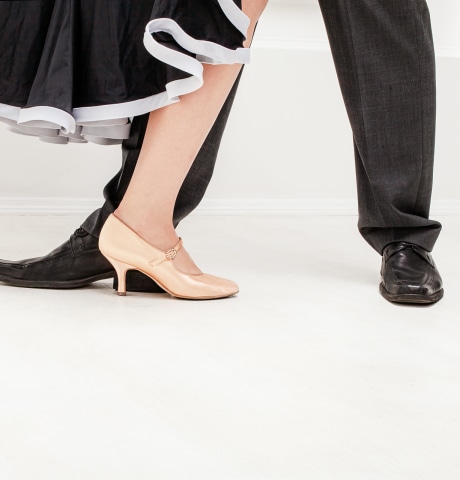
Besides the measurements, materials play a decisive role in the official regulations. The soles of competition shoes must be made of suede (chrome leather). Rubber or plastic soles, which can be found on some casual shoes, are strictly prohibited on the competition dance floor, as they can damage the floor or leave dull stop marks. The upper material must comply with the guidelines of the respective starting class: in the lower classes (D-class), simple designs are mandatory, while glittery decorations or eye-catching rhinestone applications on the shoes are often only tolerated from the B or A class onwards.

An absolute must on almost all competition floors are functional heel protectors made of clear plastic for ladies' heels. Many venue operators and regional associations make these mandatory to protect the fine parquet from deep scratches and damage caused by sharp-edged heel tips. If the protectors are missing during check-in or during the competition, you are simply not allowed to enter the floor. Competition dancers should therefore always carry several pairs of fresh protectors in their bag.

Age groups in direct comparison

Adults

Higher heels allowed

More flexibility from the youth class onwards

In the youth and adult groups, higher heels like flare or slim up to 7.5 cm are allowed for ladies, while men must wear special Latin heels of up to 4.5 cm.

Children

Strict block heel requirement

Strict limits to protect the joints

For children's groups, strict restrictions apply to flat block heels of a maximum of 3.5 cm to guarantee healthy foot development and clean technique.

Frequently Asked Questions

  1. In lower classes like the D-class, glittery decorations and rhinestones on shoes are prohibited according to the TSO. Shoes must be kept plain to keep the focus on the dance performance.

Latin training near you

Find the right course to perfect your technique for your next exam or your first tournament.

View all matching courses

Ready for the start of the tournament?

Whether you are still refining your Latin technique or already looking for the right companion for your first tournament: on udansa you will find like-minded people, instructors, and suitable dance partners for your journey onto the dance floor.

Ready for the start of the tournament?

Read more