Dance badge4 minutes

German dance sports badge in Latin: What you need to know

By Bernhard De LucaUpdated

In short
  • The German Dance Sport Badge (DTSA) in the Latin category requires performing a set number of dances and figures in front of official judges.
  • For the Bronze level, you must show three dances with four figures each, while Silver requires four dances and Gold demands all five Latin American dances.
  • The evaluation is based on timing and rhythm accuracy, the correct technical execution of the steps, and the couple's dance posture.
  • The assessment usually takes place during club events or special testing days at certified dance schools.

The path to the German Dance Sport Badge in Latin American dances requires a sense of rhythm, precision, and good coordination with your partner. With the right preparation, the exam becomes an unforgettable success.

DefinitionDTSA Latin

The DTSA Latin is an official award for recreational dancers, which is earned by performing Latin American choreographies without errors. It serves as proof of a specific technical and rhythmic level in partner dance.

The importance of the badge for Latin dancers

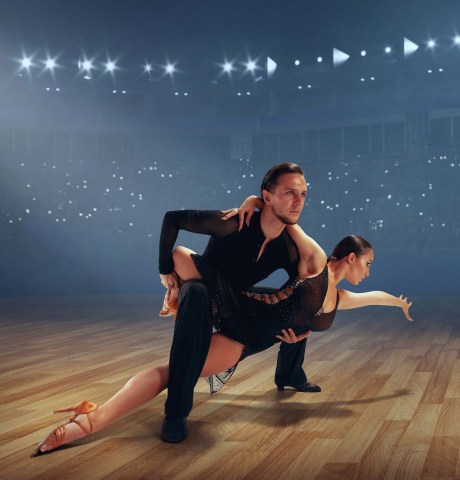
The German Dance Sport Badge, or DTSA for short, is the official award from the German Dance Sport Association (DTV) for dance achievements in recreational sports. Anyone who takes on the challenge in the Latin American category shows that they have internalized the characteristic dynamics of Cha-Cha-Cha, Rumba, Samba, Jive, or Paso Doble. Unlike in competitive tournament sports, this is not about direct comparison with other couples on the floor, but about reaching personal quality standards. It is the perfect stopover for ambitious hobby dancers who want to have their skills objectively evaluated without immediately entering classic tournament sports. Anyone who has mastered the basics and is orienting themselves in Latin tournament dance: Your path from the badge to the floor will find the DTSA to be the ideal first milestone.

The exact requirements and levels of the DTSA

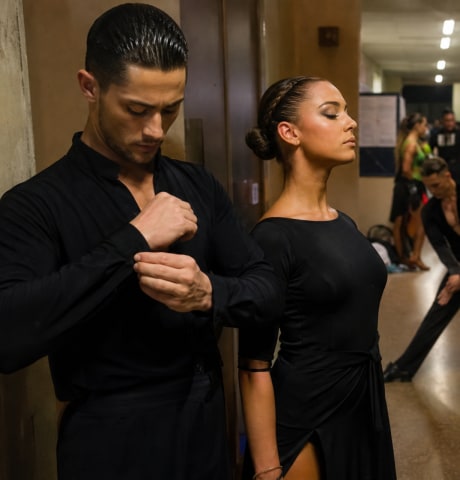
The hurdles for the badge are clearly defined and increase with each level. For the bronze badge, you present three dances with at least four different figures each. For silver, it is already four dances with six figures each, and for gold, you must perform five dances with eight figures each without errors. The requirements for Latin American dance technique: learning Latin Motion correctly increase continuously. While the focus for bronze is primarily on the correct beat and basic movement sequence, the examiners for gold pay meticulous attention to footwork, posture, partner harmony, and the typical hip movement. The music selection is usually provided by the examiner or the hosting dance school, which is why you must master the typical rhythms in your sleep.

The path to a successful udansa performance

Prepare correctly

  • Master the required figures securely in time with the beat
  • Pay attention to an upright posture and body tension
  • Execute the typical hip movement cleanly
  • Maintain eye contact with your partner while dancing

Common mistakes

  • Learning new moves only shortly before the exam
  • Neglecting arm movements entirely
  • Getting distracted by other couples on the dance floor
  • Ignoring the rhythm of the music

The DTSA is not about being better than others, but about combining your own joy for Latin American rhythm with technical precision.

DTSA judge, Frankfurt

The procedure on the examination day and mental preparation

A DTSA assessment takes place under the eyes of licensed judges who evaluate your performance. Each couple dances on the floor in a group with other examinees, which makes the situation very realistic. To keep nervousness in check, only structured preparation in advance will help. Practice the required figure sequences until they can be recalled without thinking. When practicing, pay special attention to keeping the beat exactly, because rhythm errors are the most common reason for point deductions. Use the weeks before the exam to simulate the presentation in front of a mirror or dancer friends, so that you can focus entirely on your partner and the music on the day of the assessment.

Two roles for a harmonious presentation

Leading

Clear impulses on the dance floor

The responsibility for direction and timing

When leading in Latin dance, you provide clear, physical and visual impulses so that figure transitions succeed harmoniously and in the exact timing of the music.

Following

Precision in movement

The art of active reaction

When following, you react sensitively to your partner's signals, maintain body tension, and execute Latin footwork with precision.

Frequently Asked Questions

  1. For the bronze badge, three dances must be shown. As a rule, couples choose their three strongest disciplines from Cha-Cha-Cha, Rumba, Samba, and Jive.

Latin courses near you

Prepare yourself optimally for your next dance badge with professional guidance.

View all matching courses

Find your partner for the DTSA

On udansa you can find like-minded people to train with for your next badge, as well as suitable dance schools in your area. Connect now and take your dancing to the next level!

Find your partner for the DTSA

Read more