


Find your partner for the dance floor
At udansa you will find like-minded people who share your passion, as well as suitable training offers and clubs for your start in competitive sports.

By Bernhard De LucaUpdated
At udansa you will find like-minded people who share your passion, as well as suitable training offers and clubs for your start in competitive sports.
The path to competitive Latin dance is emotionally and athletically rewarding, but it also requires financial discipline. If you calculate the upcoming costs early on, you will dance completely carefree throughout the entire season with udansa.
Tournament sport budgeting refers to the systematic recording and planning of all costs incurred for an active competition season. It helps dance couples to keep track of expenses for licenses, training, clothing, and travel.
Entering the world of competitive dance is a dream for many ambitious dancers. However, those who dare to take the step from the hobby level to the dance floor quickly realize that competitive sports require structured financial planning. The costs in competitive Latin dance consist of many different items that go far beyond the monthly club membership fee. A solid budget for the season protects against unpleasant surprises and ensures that the focus can remain entirely on training.
The fixed basic costs include membership in a dance sports club affiliated with the German Dance Sport Federation (DTV). In addition, there are the annual fees for the competition license, which is mandatory for participation in official tournaments. Those who are already planning their first steps should also familiarize themselves with the athletic requirements and, for example, study the step limitations in the C-class Latin to ensure that training is compliant with the rules from the very beginning.

The largest variable item in the budget is often the equipment. A Latin dress for competitions incurs costs that vary greatly depending on the class. While strict clothing rules apply in the D-class and simple training clothes are sufficient, tailor-made wardrobes decorated with rhinestones are often worn in higher classes. A high-quality Latin dress for competitions according to DTV guidelines can quickly cost four-figure amounts when new, which is why many couples resort to used clothing.
In addition, travel expenses, overnight stays for more distant competitions, and entry fees must be planned for tournament sports budgeting. The regular maintenance of equipment is also a factor that is often underestimated. Anyone who tries out other dance styles in addition to Latin knows, for example from guides such as the one on the topic of washing ballet clothes, how important proper care is for the longevity of expensive sportswear. For Latin dresses, professional cleaning is often added as well.
Reduce costs
Driving up costs
Find the right club or course for your athletic ambitions.
Student DanceBurgstädt · Germany
Aufbaukurs Burgstädt Mittwoch Schuljahr 2026/27Wednesday · 17:30 · Nov 11, 2026 - Jan 27, 2027
Burgstädt
BallroomMeissen · Germany
Tanzkreis | PROFESSIONALThursday · 19:20 · Jan 7 - Mar 25, 2027
"Atelier Federleicht" - Saal Tanzkurse
Smart budgeting takes the financial pressure off couples and creates the mental space that is absolutely necessary for top performances on the tournament floor.
If you want to make progress in your sport, you should invest the majority of your budget in your further development as a dancer. In addition to regular group training at a club, private lessons with specialized instructors are the key to success. Depending on the instructor, these individual sessions can come with significant hourly rates. For solid budget planning in dance sports, these sessions should be calculated firmly for the entire year.
Additionally, training camps and weekend workshops offer the opportunity to work intensively on technique and presentation. To keep costs within a reasonable range, it is worth using training times optimally and practicing independently outside of private lessons. As a supplement, dancers can, for example, practice Latin dance solo to strengthen their own axis and balance without additional instructor costs, thus efficiently saving their budget.
Memberships and licenses
Fixed costs include fees for the dance club, the official competition license from the association, as well as regular entry fees. These items are easily planned and form the financial foundation of the season.
Training and travel expenses
Variable costs include private lessons, travel and accommodation expenses for competitions, as well as the purchase and maintenance of competition clothing. They can be flexibly adapted to your budget through targeted selection.
Annual costs average between 1,500 and 5,000 euros per person. In the lower classes (D/C), it remains cheaper due to affordable clothing and regional tournaments, while in the higher classes (B/A/S), coaching hours and clothing increase the costs.
A new, custom-made dress for the higher classes usually costs between 800 and 2,500 euros. In the beginner classes, strict dress codes apply without glitter, which makes the costs for clothing significantly lower.
Entry fees for individual tournaments are usually in the double-digit range per start. In addition, there are the annual fees for the starting card of the regional association as well as club membership fees.
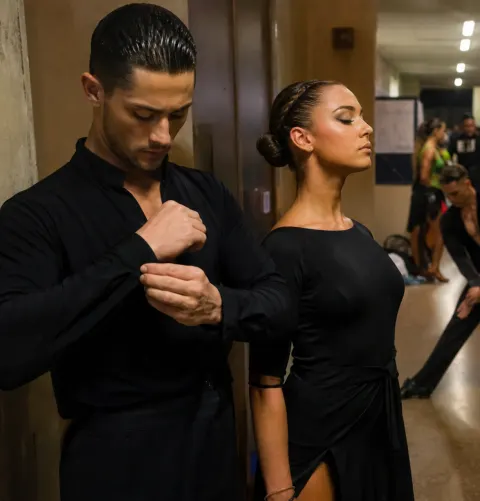 Latin Tournament Dance: From Badges to the Floor
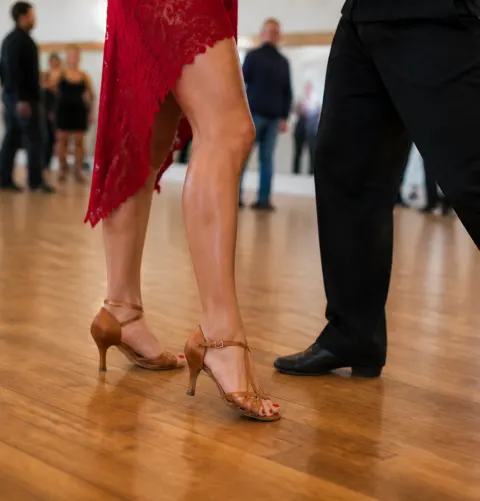 German Dance Sport Badge in Latin: Everything you need to know
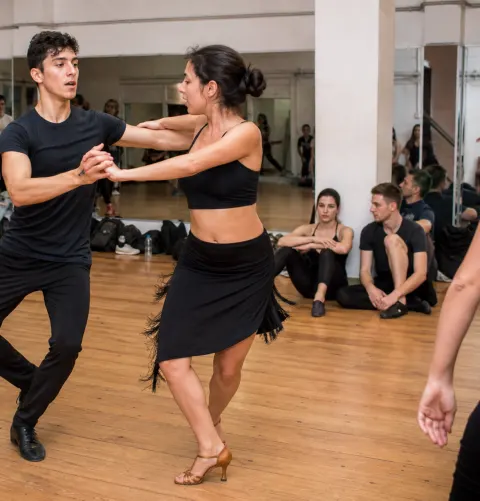 Latin recreational dance tournament: Your start on the floor
 Age groups in Latin tournament dance: Who competes where?
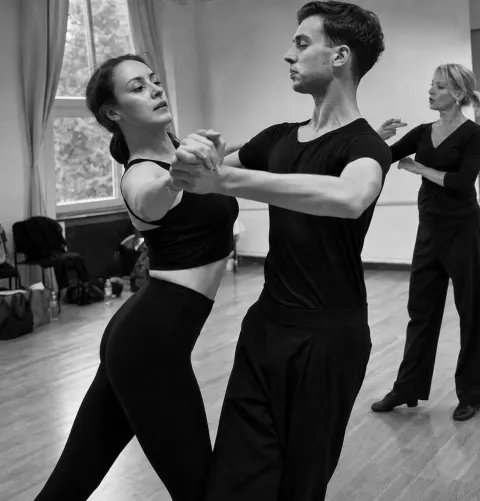 Ready for competitive dance? Take the Latin dance readiness test
 Latin competition shoes: The official rules in detail
 Packing your competition bag for Latin: The ultimate checklist
