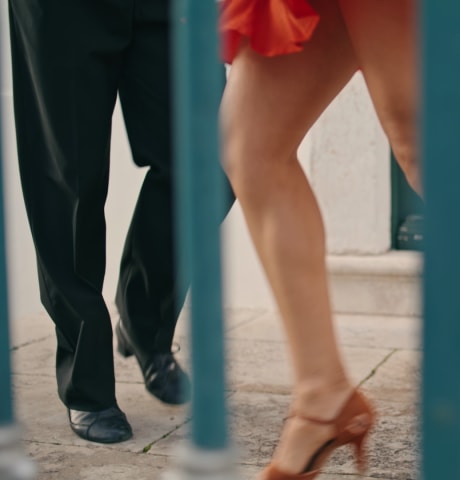
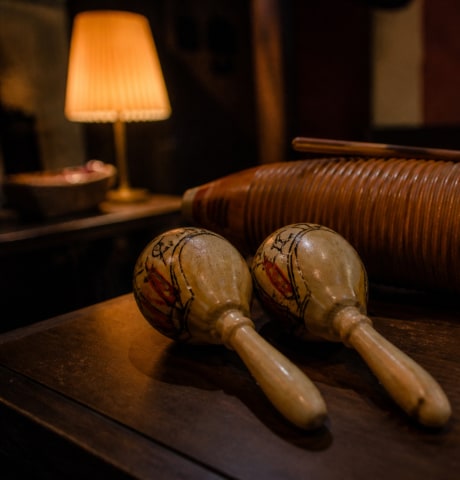
How percussion guides your steps on the dance floor
Anyone dancing a Rumba or a Cha-Cha-Cha for the first time in a dance school is often overwhelmed by the variety of sounds. Unlike straightforward pop music, Latin dance music is based on a dense web of rhythms created by very specific instruments. When you understand which instrument takes on which task in the beat, the apparent chaos in your ears turns into a clear guide for your feet. The percussion forms the rhythmic backbone that you can hold onto at any time.
Learning Cuban hip movement is especially easier when you feel the wooden beat of the claves or the deep foundation of the congas in your body. Each of these instruments has a fixed role: some mark the heavy basic beats, while others decorate the fast intermediate steps. In the dance school, this knowledge helps you not just to count steps, but to actively interpret the music.