Footwork basics5 minutes

Learn CC in Breaking: Dynamic basic footwork

By Mary De LucaUpdated

In short
  • The CC is a fundamental element of footwork in breaking, which is characterized by a dynamic, lateral kick.
  • Unlike complex power moves, the CC does not require acrobatic strength, but rather precise coordination and weight shifting.
  • The move is performed from a deep squat, with the body supported on one hand while the opposite leg kicks.
  • By quickly changing the kick direction, the CC brings dynamics and tempo to any floor-based dance combination.

The CC is the secret to speed and style on the floor. Learn how to build this dynamic basic step cleanly without any prior knowledge and integrate it effortlessly into your footwork.

DefinitionCC (Cee-Cee)

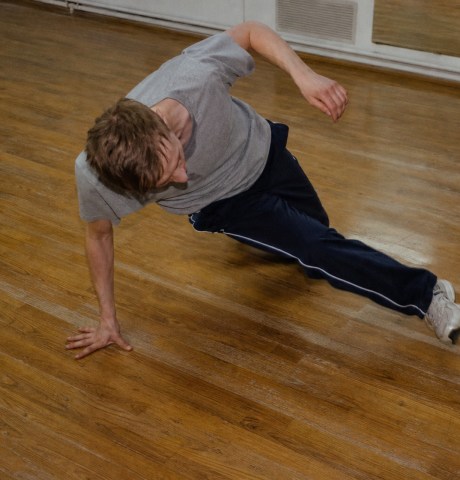
The CC, often written as Cee-Cee, refers to a fundamental step in floor-based breaking (footwork). In this move, one leg kicks dynamically to the side from a squatting position, while the body is supported by the diagonally opposite hand.

The key to dynamic floorwork

Once you have made the transition from standing to the floor in breaking, you are often faced with the question of how to turn simple steps into a fluid dance. This is where the so-called CC comes into play. This move is one of the absolute foundations of floor-based dancing, known as footwork. While the classic 6 Step tends to move in a circle around your own center of gravity, the CC brings a completely new dynamic into play. It thrives on a fast, lateral kick that immediately makes the dance style appear faster and more confident.

For beginners, this move is the perfect milestone. You do not need extreme strength for spectacular spins or the risky acrobatics of power moves. Instead, the CC trains your sense of rhythm, your coordination, and above all, the weight distribution between your hands and feet. Anyone who masters the CC understands how the body moves flat across the floor without losing balance. It is the step that transforms your footwork from a mechanical execution of positions into real, flowing dance.

With the right weight distribution on your fingertips, your footwork remains flat, fast, and extremely agile.

Step by step to the perfect kick

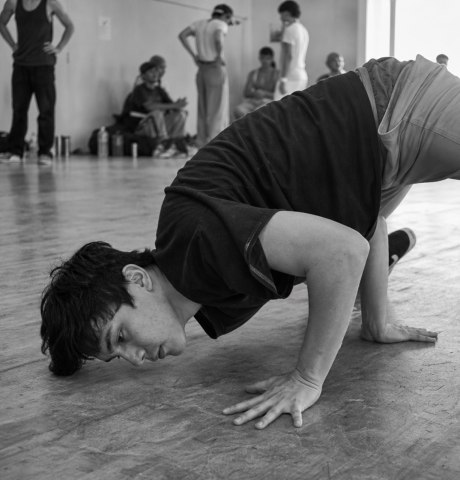
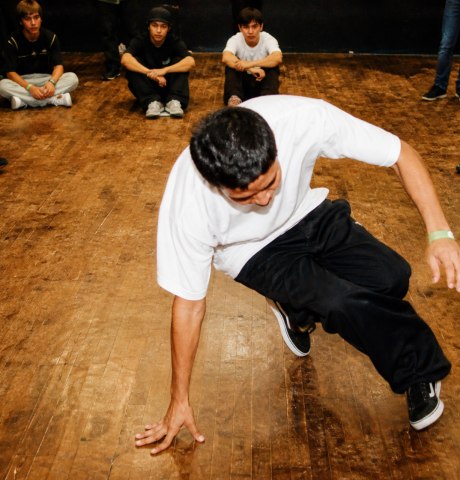
To execute the CC cleanly, start in a squat on the balls of your feet. Your knees point slightly outward, and your glutes stay low without touching the floor. Place your hands behind you to cushion your weight. The actual move consists of a quick kick of one leg forward and slightly to the side, while the other leg remains bent under your body. At the same time, rotate your hips in the direction of the kick and support yourself on the opposite hand. If you kick with your right foot, the left hand supports the body while the right hand pulls dynamically upward.

The most common mistake when preparing for your first breakdance event or simply training in the studio is incorrect weight distribution. Many beginners place their entire palm flat on the floor. This blocks the movement and puts strain on the joints. Instead, use your fingertips and the pads of your hand to stay springy and agile. Also, make sure your hips rotate actively. Without this hip rotation, the kick looks stiff and loses its typical, springy dynamics.

How to master the Cha Cha error-free

Correct

  • Spring off your fingertips and the balls of your feet
  • Actively rotate your hips with every kick
  • Keep your glutes low during the move

Incorrect

  • Slap the palm of your hand flat on the floor
  • Keep your upper body stiff and facing forward
  • Touch the floor with your pelvis

Only when you learn to shift your weight effortlessly between your hands and feet, your footwork will start to fly and the CC will become playfully easy.

Breakdance trainer, Berlin

Fluid transitions and creative combinations in dance

As soon as you have mastered the individual kick, it is time to work on the fluid transition. The CC only unfolds its full effect when you perform it in a constant alternation from left to right. To do this, quickly pull the kicking leg back under your body into a squat, shift your weight to the other hand, and kick directly to the opposite side with the other leg. This continuous rhythm requires good coordination of your core muscles and quick reactions in your legs.

Once you have mastered these basics, you can excellently combine the move with other elements. It is perfect as a connecting element between a fast Toprock and a final freeze. You can start the CC directly from the classic 6 Step or use it to briefly increase the tempo in your performance. Since the move takes up little space, it can be easily incorporated on any dance floor and at any social to demonstrate your versatility on the floor.

Two phases for the perfect move

Holding

Control in position

The foundation for stability on the floor

When holding statically, you focus on the exact position of your hips, supporting hand, and kicking leg. This gives you the necessary security and protects your joints.

Kicking

Energy in interplay

The key to tempo and style

For the dynamic kick, you use the explosive power of your legs and the rotation of your hips. Only through the quick change does the typical, flowing rhythm emerge.

Frequently Asked Questions

  1. For the CC, you primarily need good hip mobility and stable wrists. Leg strength helps you execute the kicks quickly and cleanly, while a firm core stabilizes your upper body.

Breaking courses near you

Find the right course and learn the basics directly from experienced instructors.

View all matching courses

Find your crew to practice

At udansa you will find like-minded people to polish new moves with in the studio. Discover suitable courses and events in your area to take your footwork to the next level.

Find your crew to practice