Breaking basics4 minutes

Protecting your wrists in breakdance: tips for the basics

By Bernhard De LucaUpdated

In a nutshell
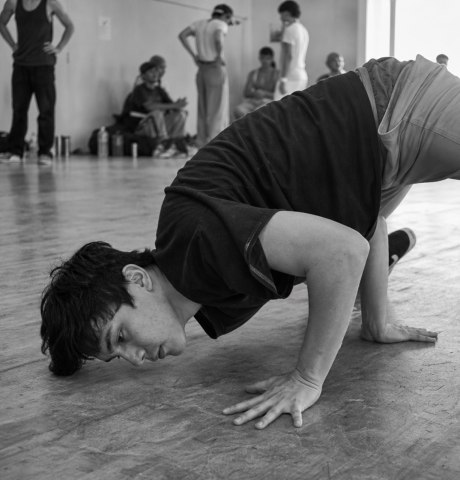
  • During footwork, your hands should never be pressed flat against the floor, but should instead form a slightly arched dome shape.
  • The transition to the floor must be cushioned by elastically bent elbows and active thigh muscles.
  • Conscious body tension and actively pushing away from the shoulders distribute the weight evenly across the entire arm.
  • Regularly warming up your fingers and wrists before every training session prepares the tendons for the unusual load.

The path from standing to the floor begins with your hands. With the right technique and conscious hand placement, you protect your joints from strain from the very first second.

DefinitionCupped hand

The cupped hand describes a hand position in floorwork, where the palm is slightly arched and the weight is distributed across the fingers and the ball of the hand. This technique minimizes the angle of the wrist and allows for quick cushioning.

Absorbing the impact during the transition to the floor

When starting with breaking, most people are quickly drawn down to the floor. However, anyone who plunges directly from toprock into their first go downs will quickly notice that their wrists are not used to this unusual strain. In everyday life, we use our hands for gripping and typing, but rarely as load-bearing pillars for our entire body weight. If you land unprepared with your palm flat on the floor during the transition, the entire impact force acts unfiltered on the small bones and tendons in your wrist.

To be able to protect your wrists in breakdance, you must learn to actively cushion your weight. The secret lies in your knees, your elbows, and a controlled movement. Never just let yourself fall into a support position, but glide downwards consciously. Use your thigh muscles to reduce the height of the fall before your hands even touch the floor. As soon as contact with the floor is made, slightly bent elbows elastically absorb the remaining momentum instead of passing it rigidly into the joints.

The cupped hand as a foundation in footwork

In floor-based dance, known as footwork, the correct hand position determines stability and joint protection. Many beginners tend to press their hand completely flat onto the floor. However, this blocks mobility and forces the joint into an extreme, unnatural angle. The result is rapid fatigue and unpleasant pain during training.

The optimal footwork hand position is the so-called bridge or cupped hand. Instead of placing the entire palm down, you arch your hand slightly so that primarily the finger pads and the front of the palm touch the floor. Imagine you are protecting an invisible ball under your palm. This posture reduces the pressure angle in the joint and simultaneously gives you the necessary flexibility to push off quickly in all directions. Anyone who avoids these breakdance footwork mistakes from the start will build a healthy routine.

Hand position comparison

Supporting correctly

  • Curve your hand slightly like a dome
  • Absorb the momentum with your elbows
  • Push actively from your shoulders
  • Dig your fingers slightly into the floor

Common mistakes

  • Pressing the palm flat against the floor
  • Landing with locked arms
  • Collapsing into your shoulders
  • Placing your fingers loosely and flat

If you want to have long-term fun in breaking, you have to treat your hands like your feet. They need a stable arch to absorb your weight properly.

Breakdance trainer, Berlin

Using body tension and the active chain

A stable support does not originate solely in the wrist, but is the result of an active chain through the entire arm up to the shoulders. When you shift your weight onto your hands, you must not sink into your shoulders. Instead, push yourself actively away from the floor. This body tension ensures that the load is distributed evenly and does not rest entirely on the carpal bones.

Additionally, it helps to spread your finger joints slightly and actively claw them into the floor. This activates the forearm muscles, which act like a natural shock absorber for the wrist. A clean breaking handgelenk stuetzen is only possible if the muscles in the forearm take over the holding work. Consciously take time in every training session to feel this tension in a static stance before you venture into dynamic step sequences. A well-prepared body protects itself best against overexertion.

Two ways to place your hand on the floor

Dome hand

Active suspension through finger strength

Flexible and joint-friendly in floorwork

The fingers are spread and the hand is slightly arched, like a dome. The weight is distributed across the finger pads and the ball of the hand, which gives the joint room for quick changes of direction.

Flat hand

Blocked joints due to flattening

Stiff and prone to injury when supporting

The palm of the hand slaps flat onto the floor. The wrist is extremely hyperextended, blocking any quick rotation and passing the hard impact unfiltered to the bones.

Frequently Asked Questions

  1. Use the cupped hand technique, where you slightly arch your palm and shift the weight onto your fingertips and the ball of your hand. This prevents overextending the joint.

Breaking courses near you

Find the right dance school and learn the basics from experienced instructors.

View all matching courses

Find your crew to practice

On udansa you will find like-minded people in your city who want to polish the basics with you and work on their hand position together during training.

Find your crew to practice