


Master the transition to the floor together
Find like-minded B-Boys and B-Girls on udansa who want to polish their go downs and practice the basics in the studio with you.

By Bernhard De LucaUpdated
Find like-minded B-Boys and B-Girls on udansa who want to polish their go downs and practice the basics in the studio with you.
The transition from standing to floorwork determines how dynamic your dance looks. With the classic kick down, you master this transition safely, in a controlled manner, and without putting strain on your joints.
The kick down is one of the most important and safest go downs in breaking. It closes the gap between dancing while standing, the so-called toprock, and the steps on the floor, the footwork. Many beginners make the mistake of letting themselves fall uncontrollably or catching their full body weight on their wrists. This not only leads to messy movements, but also enormously increases the risk of injury. A cleanly executed kick down uses gravity and the momentum of a targeted kick to lower the hips elegantly and place the hands precisely on the floor.
Anyone who wants to learn to dance breaking needs this fluid transition to bring momentum into their rounds. Through the kick, the body weight is shifted at the decisive moment, so that you glide downwards almost weightlessly. It is not about acrobatics or risky falls, but about pure physics and body control. Once you have internalized the movement sequence, the change of levels feels completely natural and forms the perfect bridge for your first footwork combinations.
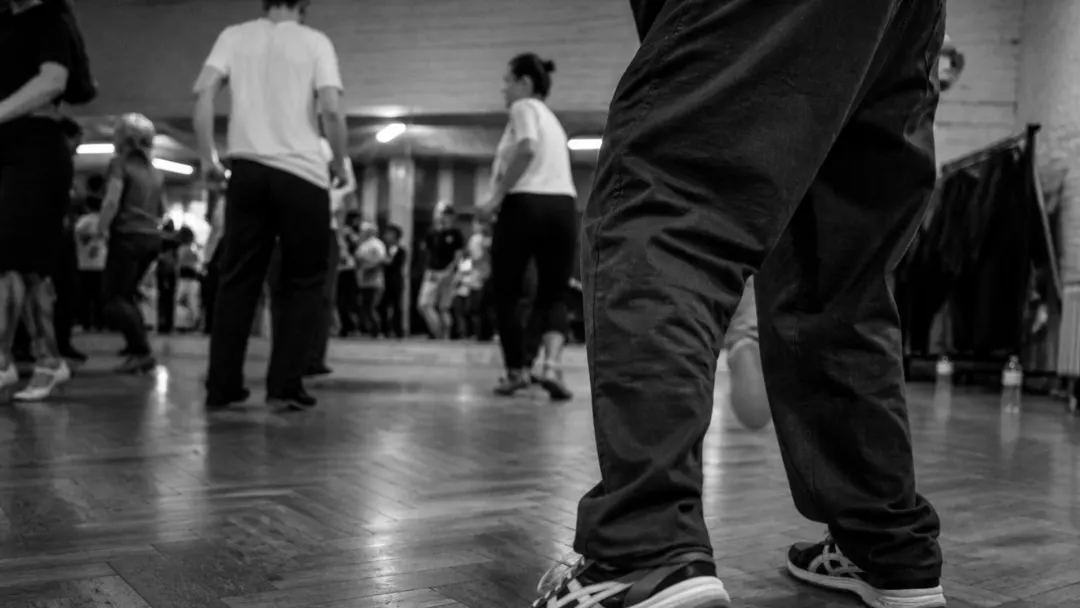
Start in a stable, hip-width stance. Your weight is evenly distributed, and your knees are slightly bent so you can react flexibly at any time.
Kick your dominant leg forward and upward with momentum. This kicking motion automatically pulls your hip slightly backward and initiates the downward movement.
While your kicking leg moves forward, bend your standing leg deeply. Lower your hips in a controlled manner towards your heel, as if you were squatting on one leg.
Bring your hands to the floor before your glutes reach the lowest point. Place your palms flat to gently cushion the remaining weight.
Catch yourself in a stable, deep squat. The kicking leg is pulled back in, so you are sitting stably on both balls of your feet and ready for the footwork.
Find the right course and learn the basics from experienced instructors.
Hip HopLimbach-Oberfrohna · Germany
HipHop 11 - 13 JahreFriday · 15:45 · Nov 13
Limbach-Oberfrohna
Hip HopLimbach-Oberfrohna · Germany
Hip Hop ab 14 JahreFriday · 15:45 · Nov 13
Limbach-Oberfrohna
Correct
Wrong
Preparation
Meanwhile
The kick down is a controlled, fluid transition where the hips are lowered by a kick. A drop, on the other hand, is often an abrupt, more acrobatic fall that requires significantly more strength and cushioning.
No, you do not need to be an acrobat for the classic kick down. It is based on weight distribution and coordination, which is why it is the ideal first go down for beginners in breaking.
Pain usually occurs when you catch yourself with straight arms. Make sure to keep your elbows slightly bent and absorb your weight primarily through your legs and a deep squat.
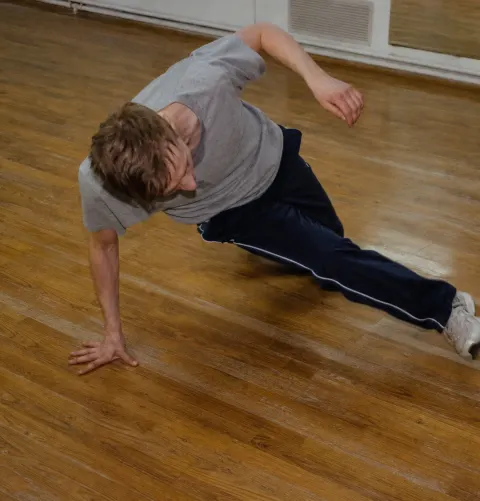 Learn breaking for beginners: Master the basics
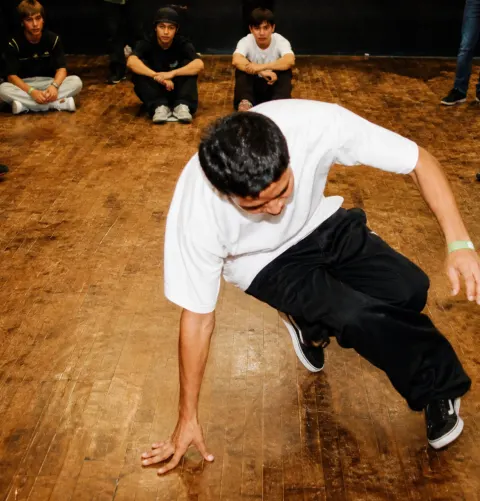 The 6 Step in Breaking: The Footwork Foundation for Beginners
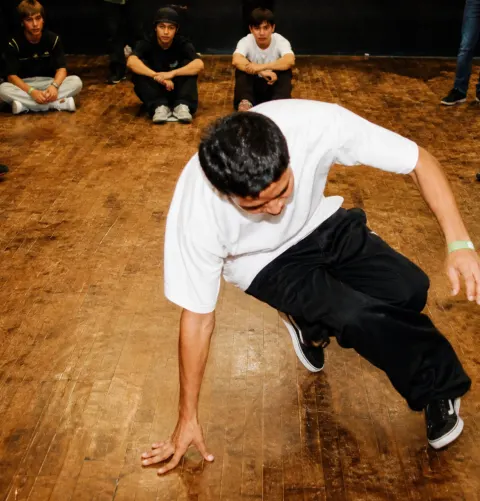 Learn the 3 Step in Breakdance: Fast Footwork
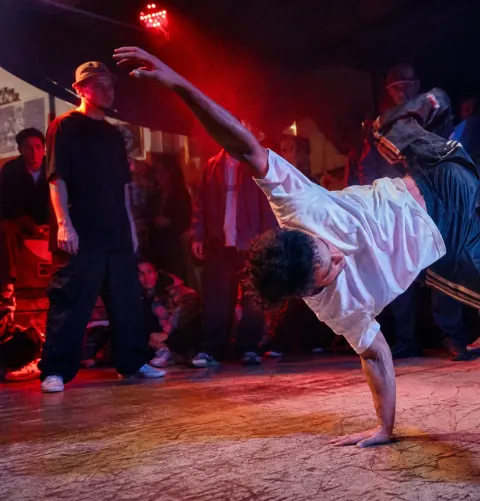 Learning the Baby Freeze: Your first breaking freeze
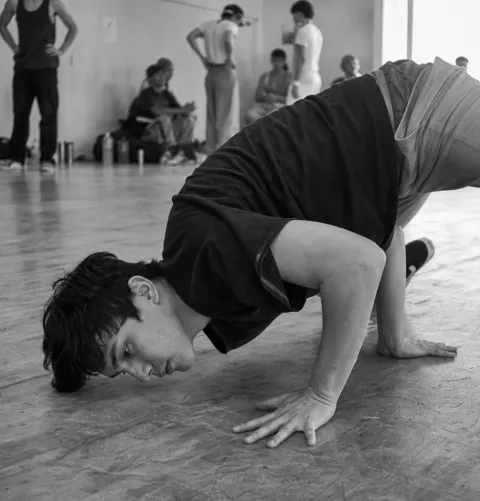 Shoulder Freeze in Breakdance: A Guide for Beginners
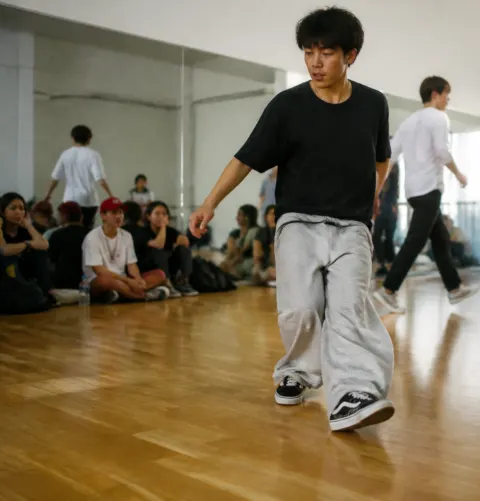 Breaking Beginner Quiz: Which basic element suits you?
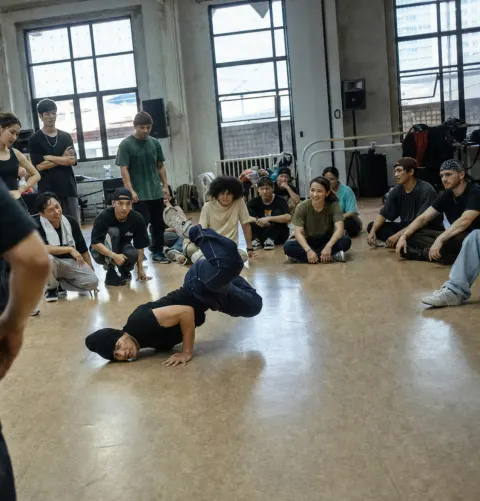 Breakdance footwork mistakes: The 5 biggest blunders in training
