Find your crew for new beats
Find like-minded b-boys and b-girls as well as top-notch courses in your area on udansa to take your sense of rhythm to the next level.

By Bernhard De LucaUpdated
Find like-minded b-boys and b-girls as well as top-notch courses in your area on udansa to take your sense of rhythm to the next level.
The beats in breaking are becoming more digital, global, and unpredictable. Learn how electronic influences and worldwide rhythms are revolutionizing the soundtrack of the dance floor and what that means for your moves.
The modern soundscape of breaking has moved far beyond the boundaries of traditional funk records. Today, DJs and producers are fusing complex, synthetic sounds with organic rhythms to bring a completely new dynamic to the dance floor. These modern breakbeats are characterized by extremely precise, digital sound effects and unexpected tempo changes that force b-boys and b-girls into entirely new forms of movement. Anyone who wants to hold their own in the cypher today must learn to translate these electronic peaks and synthetic basslines directly into physical accents.
The sound development in breaking is significantly driven by the digitalization of music production. While the classic loop used to dominate, modern DJs work with live effects, filters, and spontaneous remix elements directly at the mixing console. For you as a dancer, this means that you can no longer rely on familiar song structures. If you want to learn how to adapt to these dynamic rhythms, our guide Learn to improvise breakdance will help you develop your own freestyle flow and react flexibly to every beat change.
This sound combines the hard, dragging beats of modern Trap with the fast, rolling rhythms of classic breaking. It forces dancers to create extreme dynamic shifts between super-fast footwork passages and sudden, powerful slow-motion pauses.
Here, traditional drum rolls and Latin American or African percussion merge with hard, electronic synthesizers. The result is an extremely driving, polyrhythmic sound that particularly challenges creativity in Toprock and rhythmic footwork.
DJs are increasingly using futuristic, almost industrial synthesizer sounds and glitchy effects that are modulated live. This aesthetic demands robotic isolations, precise stops, and an extremely fine audio perception in the millisecond range from b-boys and b-girls.
Find the right dance school and learn how to move to the latest beats in the cypher.
StreetdanceBurgstädt · Germany
Videoclip Teens 11-13 JahreMonday · 16:50 · Nov 9
Burgstädt
StreetdanceBurgstädt · Germany
Videoclip Teens ab 16 JahreMonday · 17:50 · Nov 9
Burgstädt
StreetdanceLimbach-Oberfrohna · Germany
Videoclip Teens 11-13 JahreTuesday · 18:35 · Nov 10
Limbach-Oberfrohna
A key driver for breakdance music trends for 2026 is the fusion of local, traditional rhythms with hard electronic beats. Whether African polyrhythms, South American Baile Funk influences, or Eastern European melodies: global influences are shaping today's Hip-Hop beats more strongly than ever before. This rhythmic diversity demands enormous adaptability from dancers, as the emphasis of the beat often moves away from the classic "one".
Understanding these complex, global structures is the key to standing out in a battle. It is no longer enough to just reel off fast power moves: the jury pays meticulous attention to whether a dancer embodies the subtle nuances of a track. To prepare yourself optimally for this musical diversity and to time your moves perfectly, it is worth taking a look at the basics in learning Baby Freeze to set your first rhythmic anchor points cleanly.
In breaking today, music is no longer a rigid background loop, but a living, electronic organism that we must react to spontaneously every second.
Like this
Not like this
In 2026, electronic genres like electro, trap, bass music, and futuristic breakbeats dominate the scene. These sounds are blending with global rhythms, increasingly displacing purely analog funk records from the major finals.
Modern beats are often more complex, faster, and more unpredictable due to DJs' digital live effects. This requires you to rely less on fixed choreographies and instead train your ability for spontaneous improvisation.
Yes, absolutely. The influences of global music styles bring unusual time signatures and polyrhythms into the battles, making the rhythms more varied and international than the classic Hip Hop beats of the past.
 Breakdance Battle Tactics: Understanding Musicality & Culture
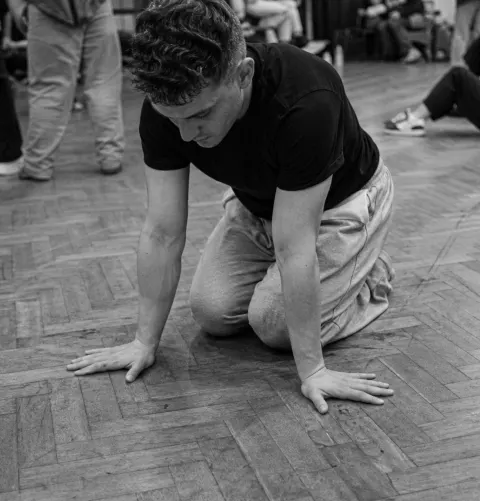 Breakdance mental training for battles: keeping your focus
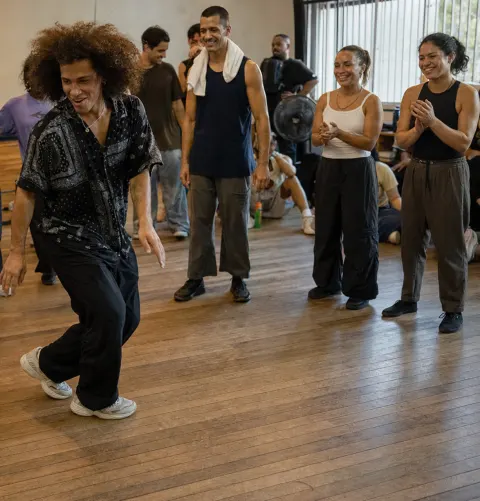 What is a cypher in breakdance? The power of the circle
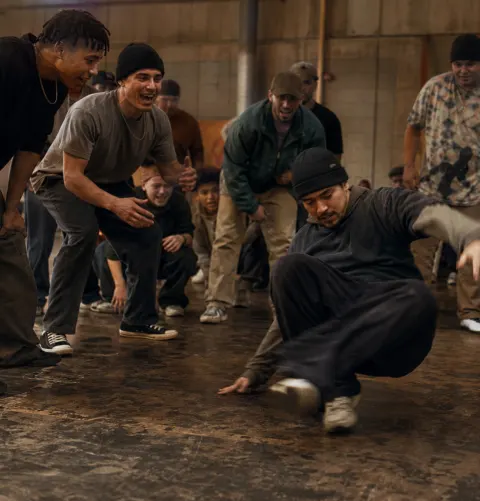 Crew Battle Breakdance Tactics: Lessons from Legends
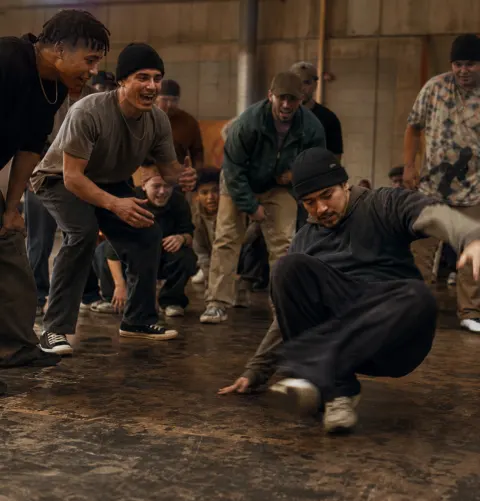 The Breakdance Battle Etiquette: 7 Rules of Respect
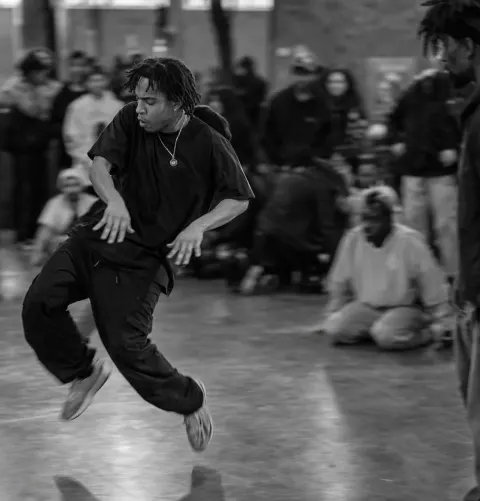 Which battle style suits you? Take the big test
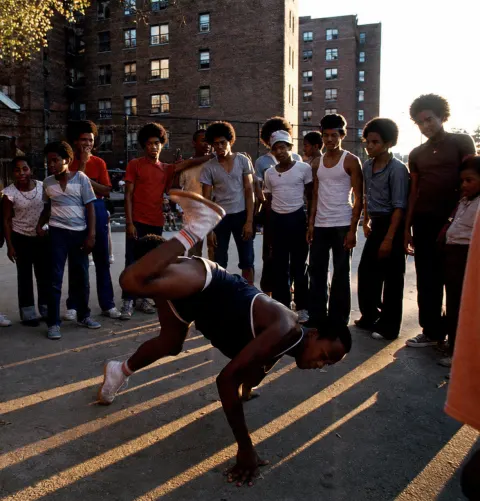 The History of the Breakdance Battle: From the Bronx to the Olympics