Breaking culture5 minutes

What is a cypher in breakdance? The power of the circle

By Bernhard De LucaUpdated

In short
  • A cypher is a circle spontaneously formed by dancers, in the center of which they dance freestyle one after another.
  • Unlike an organized stage battle, there is no jury, no fixed rules, and no trophies in a cypher.
  • The circle serves for creative exchange, gaining respect, and expressing one's own identity within the community.
  • The unwritten laws of the circle demand respect for the space of others and prohibit physical interference.

The cypher is the heartbeat of breaking. Here, raw energy, mutual respect, and the roots of Hip-Hop culture meet in a circle that connects dancers worldwide.

DefinitionCypher

A cypher is a circle formed by b-boys, b-girls, and spectators, where dancers take turns presenting their moves in freestyle. It symbolizes equality, community, and the creative origin of hip-hop culture.

The circle as the foundation of breaking culture

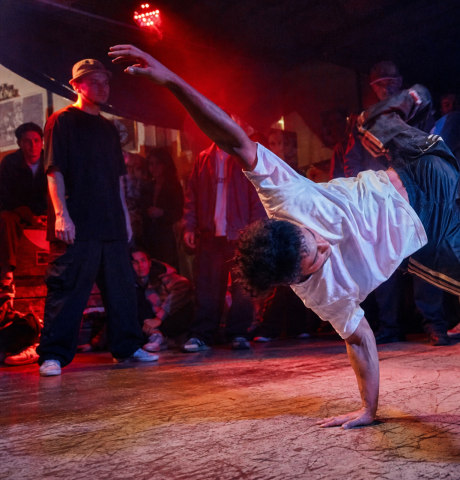
The term cypher describes the circle in Hip Hop that dancers, rappers, or beatboxers spontaneously form to show their skills in the center one after another. In breaking, this circle is far more than just a practical arrangement, it is the spiritual and social foundation of the entire culture. While large stages often feature rigid spotlights and a clear separation between performers and spectators, the circle completely removes these barriers. Everyone standing on the edge is an active part of the action, providing energy through clapping, shouting, and pure presence.

Historically, the concept of dancing in a circle is deeply rooted in Hip Hop and connects to centuries-old African and Caribbean dance traditions. In the streets of the Bronx in the 1970s, the circle offered a protected, yet highly competitive space. Here, it was not about trophies or prize money, but about the respect of peers. Whoever steps into the center shows their personality, shares their latest moves, and faces the direct, unfiltered feedback of the community.
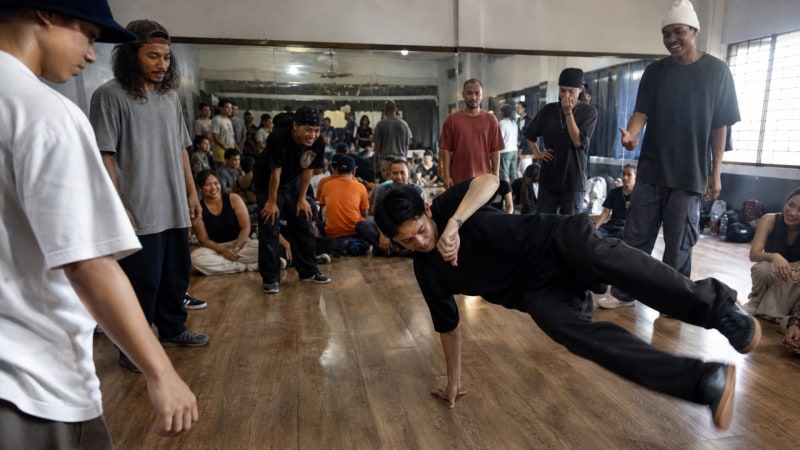
Growing together in a circle: The cypher thrives on the energy of the spectators, who rhythmically accompany every move of the dancers in the center.

Unwritten laws and cypher etiquette

Although a cypher seems organic and wild, it is based on a strict, unwritten code of honor. The most important of the breaking cypher rules is: respect the other person's space. It is an absolute no-go to rush into the middle while another b-boy or b-girl is still in the middle of a move. Only when the previous dancer visibly clears the center and steps back is the way free for the next dancer. This fine sense for timing and gaps distinguishes a harmonious circle from a chaotic scramble.

Another central aspect of cypher etiquette concerns physical contact. In contrast to some heated stage battles, any intentional touching of the opponent is taboo in the circle. Blocking or imitating moves to expose the other person is also frowned upon. Instead, it is about responding creatively to the performance of the previous dancer, raising the level, and passing on the energy in the circle. Anyone who understands this dynamic uses the energy of those standing around to grow beyond themselves.

If you want to expand your freestyle skills to perform confidently in the circle, you will find valuable methods in the guide on the best exercises for dance improvisation at home to train your spontaneity and body control in a protected space beforehand.

Behavior in the cypher: do's and don'ts

Doing it right in the circle

  • Let others go first and wait until the center is completely clear
  • Actively support the energy of those around you by clapping
  • Show your own creative freestyle ideas instead of copied sets
  • Respect the distance to the person you are dancing with at all times

Wrong on the dance floor

  • Rushing into the center while someone else is still dancing
  • Standing apathetically on the edge and looking at your phone
  • Running through rehearsed choreographies rigidly and without any connection to the music
  • Restricting someone else's space by stepping too far forward

In the cypher, your true face as a dancer is revealed. Here, you cannot hide behind a rehearsed choreography, but must react to the music in the moment.

Breaking coach, Berlin

Community circle versus athletic competition

The difference between a cypher and a classic one-on-one battle on a stage lies primarily in the intention and the atmosphere. On stage, a selected jury evaluates the performance based on fixed criteria such as technique, musicality, and originality. There are set round times, spotlights, and a clear character of athletic competition. The pressure is high, and dancers often perform strategically prepared sets to score maximum points.

In the cypher, however, there are no official winners, no judges, and no stopwatches. The evaluation happens instantly through the honest reaction of those standing around, a murmur in the crowd, or an appreciative nod from the veterans. Here, there is room for experiments, unfinished moves, and pure, unfiltered emotion. While the stage battle serves athletic ambition, the circle nourishes the soul of the culture and strengthens the cohesion of the dance community.

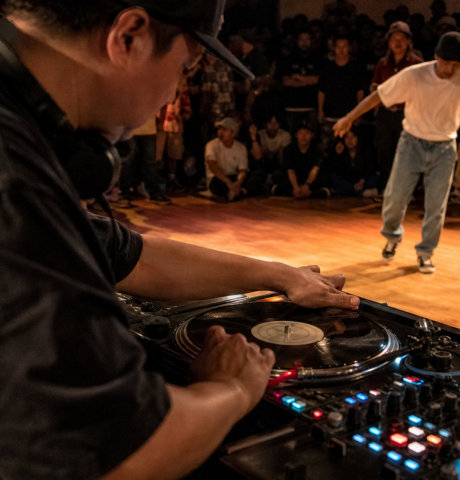
To better understand the musical dynamics in the circle, it is worth taking a look at the key players in the background. In our article about the role of the DJ and MC in breakdance, you will learn how the rhythm setters at the turntable and on the microphone control the mood in the room and provide the dancers in the circle with the perfect setup for their moves.

Two worlds of breaking: stage versus circle

Battle

Focus on athletic performance

Structured competition on stage

Here, the focus is on athletic comparison. Judges evaluate the moves according to criteria, there are time limits, and a clear separation between performers and the audience in the spotlight.

Cypher

Creative exchange on equal terms

The free circle of the community

Here, the social exchange of the community dominates. Without time pressure or judges, dancers share their energy, try out new ideas, and push each other in the circle.

Frequently Asked Questions

  1. You enter the cypher when the previous dancer visibly leaves the center. Do not push your way in, but wait for a moment when the energy in the circle is high, and make eye contact to signal your entry.

Breaking courses near you

Learn the basics and get ready for your first session in the circle.

View all matching courses

Find your crew and share the cypher

On udansa connect you meet other b-boys and b-girls in your area who want to train in the circle with you. Find like-minded people, courses, and the next sessions near you now.

Find your crew and share the cypher