
Find your rhythm together
On udansa connect, you will find like-minded people who share your passion for historic sounds, and discover courses that bring the classic rhythm back to life.



By Mary De LucaUpdated
On udansa connect, you will find like-minded people who share your passion for historic sounds, and discover courses that bring the classic rhythm back to life.
The golden era of Mambo left behind records that conveyed far more than just dance music. These historical albums document the moment when Latin American rhythms changed global pop culture forever.
Time period
Only albums that were first released between 1950 and 1960 are considered.
Cultural influence
The albums must be proven to have significantly influenced the development of the genre.
Historical authenticity
Only officially documented and historically verified studio releases are listed.
Independent selection
No payments or sponsorship deals were accepted for the creation of this top list.
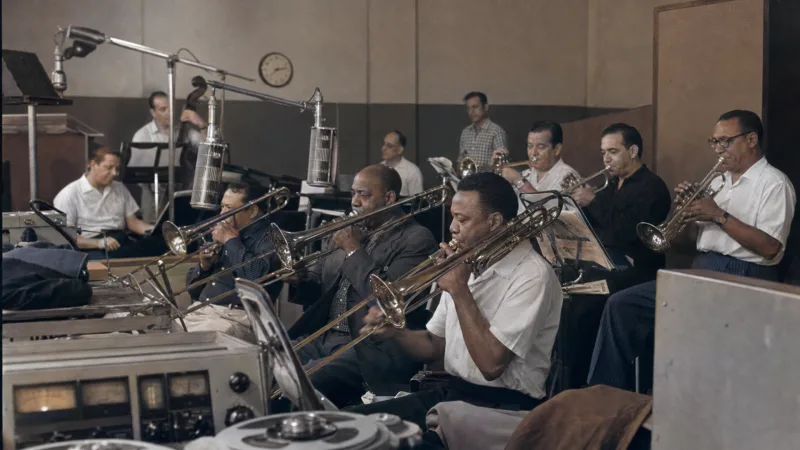
New York, 1958, 12 tracks
This album is considered the absolute benchmark of the Mambo era. Here, Puente masterfully combines highly complex Afro-Cuban rhythms with the elegant arrangements of New York big band jazz.
Mexico City / New York, 1954, 8 tracks
On this historic compilation, Prado presents his groundbreaking recordings from the late 1940s and early 1950s that triggered the Mambo boom in Mexico and the USA.
New York, 1957, 12 tracks
A milestone that captures the raw energy of the New York club scene. Rodriguez shows himself here at the peak of his vocal and orchestral precision.
New York, 1954, 10 tracks
This album impressively demonstrates the jazzy side of Mambo. Puente's orchestra shines with rapid tempo changes and virtuoso solos on the timbales.
Mexico City, 1955, 12 tracks
The recordings on this album showcase Prado's unmistakable style with the typical, energetic shouts and the extremely precise, sharp brass sections that made him world-famous.
The era of Mambo in the 1950s was defined by a musical revolution that reached its peak at the New York Palladium Ballroom. The big bands of this time fused the rhythmic complexity of Afro-Cuban drums with the powerful ensemble sound of American jazz brass. If you want to understand the development of this music, you have to listen to the albums that served as the blueprint for the entire genre. These recordings show how Mambo evolved from an experimental variation of the Cuban Danzón into a globally celebrated big band phenomenon. They established fixed structures, such as the gripping dialogue between trumpets and the rhythm section, which still shapes the DNA of Latin dance music today.
The albums of this era are much more than historical documents: they are milestones that mark the transition from purely acoustic live performance to sophisticated studio production. If you want to dive deeper into the world of classic partner dances, it is worth taking a look at the Mambo history and its roots. The cultural currents described there find their direct, audible expression in the albums listed here. Each of these works tells the story of an era in which musicians, without digital aids but with unbridled precision and energy, set the beat for generations of dancers.
The most influential album is "Dancemania" by Tito Puente from 1958. It is considered the absolute masterpiece of the Mambo era, as it documents the perfect balance between jazz harmonies and traditional Afro-Cuban rhythm.
Perez Prado is considered the "King of Mambo" because he made the rhythm accessible to a global audience through simplified structures and striking brass sections. His hits like "Mambo No. 5" made the genre internationally popular.
Classic Mambo is characterized by a pure big band lineup with dominant brass instruments and traditional percussion. Later Salsa albums increasingly integrated trombones, modern bass lines, and other vocal styles.
Experience the energy of classic Mambo live on the dance floor in a course in your region.
BallroomMeißen · Germany
Tanzkreis | PROFESSIONALTuesday · 20:15 · Oct 27, 2026 - Jan 5, 2027
“Ein Haus für Vieles” - Saal Tanzkurse
 Mambo history: The fiery rhythm and its rootsDive into the fascinating history of Mambo: Learn how Afro-Cuban rhythms and New York big bands created one of the most exciting dance styles of all time.
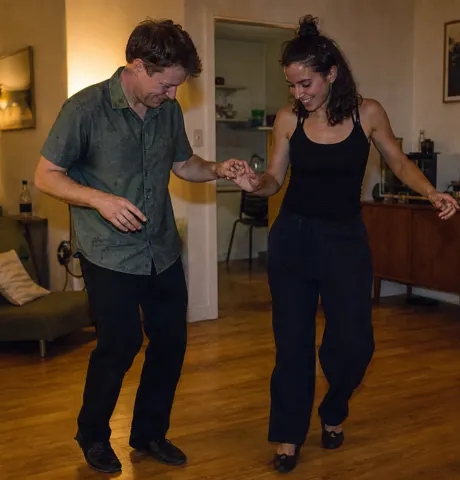 Voice and Rhythm: The Role of Vocals in MamboDiscover the fascinating evolution of vocals in Mambo, from short rhythmic calls to the high art of the sonero's improvisation.
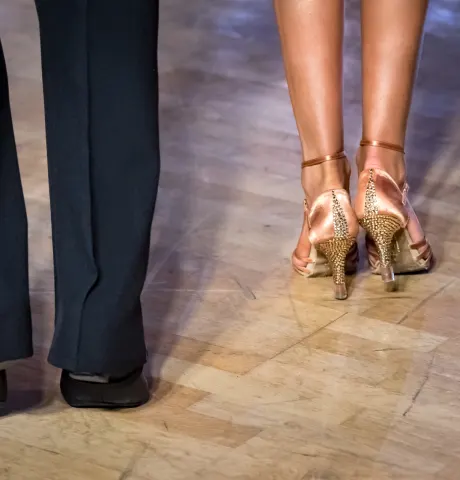 The origins of Mambo: How it all began in CubaThe origins of Mambo lie in 1930s Havana. Discover how the fusion of Danzón and Afro-Cuban rhythms changed the music world forever.
 The Palladium Ballroom: Heartbeat of the Mambo EraThe Palladium Ballroom in New York was the epicenter of the Mambo era. Learn how this legendary club revolutionized the dance world and broke down barriers.
 The Three Mambo Kings: Prado, Puente, and RodriguezGet to know the three Mambo Kings who sparked a global dance revolution in the fifties with their distinctive big band rhythms.
 Mambo rhythm explained: Understanding the musical structureUnderstand the fascinating musical structure of Mambo. We explain the beat, the secret of the clave, and the power of syncopation to you.
 Mambo Instruments: The Big Band SoundBehind the infectious groove of Mambo lies a perfectly tuned interplay of Afro-Cuban percussion and powerful brass. We introduce the key instruments.