
Find your partner for Mambo
On udansa you will find like-minded people who share your passion for classic rhythms, as well as the right dance classes in your area. Sign up and bring Mambo to the dance floor!


By Bernhard De LucaUpdated
On udansa you will find like-minded people who share your passion for classic rhythms, as well as the right dance classes in your area. Sign up and bring Mambo to the dance floor!
The Mambo of the fifties was more than just music, it was a worldwide attitude to life. Three visionary bandleaders made the wild rhythm socially acceptable and created legends that still resonate today.
Historical relevance in the Mambo boom
The musician must have contributed significantly to the worldwide popularity of Mambo in the 1950s.
Influence on the orchestral sound
The bandleaders must have shaped the typical Mambo orchestral sound with their own big bands.
Independent selection without sponsorship
No financial contributions or paid placements were considered for this ranking.

Active Mambo era from the late 1940s, worldwide tours
The Cuban bandleader made Mambo world-famous with hits like Mambo No. 5. His sharply accented brass sections and his distinctive shout became his unmistakable trademark.
Decades-long career, epicenter of the Palladium Ballroom
Known as El Rey del Timbal, the New Yorker shaped Mambo through his fusion with jazz elements and his virtuosic percussion. He brought the rhythm section directly to the edge of the stage.
1950s, famous for elegant shows and singing
He was the gentleman of mambo. Rodriguez combined the rhythmic intensity of mambo with the elegant, smooth vocals of bolero and offered Puente a legendary rivalry at the New York Palladium.
1950s, traditional flute and violin sounds
As a virtuoso flutist and bandleader of Orquesta Aragón, he shaped the softer Cha-Cha-Cha and Mambo style in the charanga format, which represented an important alternative to the pure big band sound.
1950s, focus on danceable uptempo rhythms
With his orchestra, the singer and bandleader created an extremely danceable, driving Mambo sound that ensured ecstatic nights, especially for the dancers at the New York Palladium.
The Mambo era of the 1950s was characterized by an unparalleled energy that spread from New York to the entire world. At the center of this musical revolution were three outstanding bandleaders who went down in history as the undisputed Mambo Kings. Perez Prado, Tito Puente, and Tito Rodriguez shaped the sound of an entire generation with their orchestras. Although they all used the same basic rhythm, they brought completely different influences into the music. While Prado made Mambo accessible to the masses with sharp brass sections and theatrical shouts, Puente focused on percussive genius and Rodriguez on elegance and soulful vocals. Their friendly but intense competition on the stages of New York pushed each of them to peak performance and helped Mambo achieve worldwide fame.
The three mambo kings managed to merge the Afro-Cuban roots of the dance with the big-band jazz of the USA. This fusion was so powerful that it broke through the barriers of that time and united people of all backgrounds on the dance floors. Anyone who wants to understand the roots of modern Latin American dances today cannot ignore the works of these pioneers. If you want to dive deeper into the origins of this fascinating dance style, you will find valuable historical background information in the article about Mambo history and its roots, which makes the golden age even more tangible.
Perez Prado, Tito Puente, and Tito Rodriguez are known as the three Mambo kings. They dominated the golden era of Mambo in the 1950s with their big bands.
Perez Prado is considered the king of Mambo because he made the musical style globally known and commercially successful in Mexico and the USA through hits like Mambo No. 5.
Tito Puente brought the timbales to the front of the stage and played them while standing. Through his jazzy arrangements and virtuoso solos, he revolutionized the sound of Mambo.
Find the right course now and learn the steps to the rhythms of the kings.
BallroomMeißen · Germany
Tanzkreis | PROFESSIONALTuesday · 20:15 · Oct 27, 2026 - Jan 5, 2027
“Ein Haus für Vieles” - Saal Tanzkurse
 Mambo history: The fiery rhythm and its rootsDive into the fascinating history of Mambo: Learn how Afro-Cuban rhythms and New York big bands created one of the most exciting dance styles of all time.
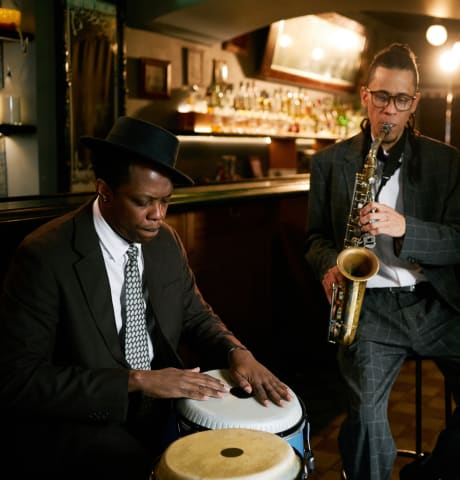 Mambo rhythm explained: Understanding the musical structureUnderstand the fascinating musical structure of Mambo. We explain the beat, the secret of the clave, and the power of syncopation to you.
 Mambo Instruments: The Big Band SoundBehind the infectious groove of Mambo lies a perfectly tuned interplay of Afro-Cuban percussion and powerful brass. We introduce the key instruments.
 Learn to listen to Mambo music: Master the rhythmMambo music captivates with its infectious energy, but it can be rhythmically challenging for beginners. With our practical guide, you will learn step by step how to confidently identify the clave and Mambo rhythm in complex big band pieces.
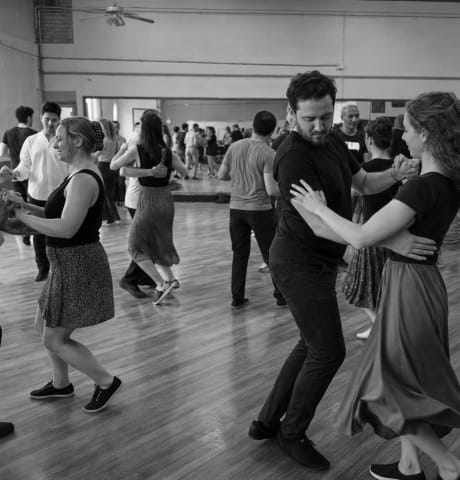 What kind of Mambo dancer are you? Take our music taste testFind out which historical era of Mambo best suits your musical preferences with our interactive quiz.
 Eddie Torres: How Mambo On 2 was inventedDiscover the fascinating story of Eddie Torres and how he forever shaped the modern New York Style with Mambo On 2.
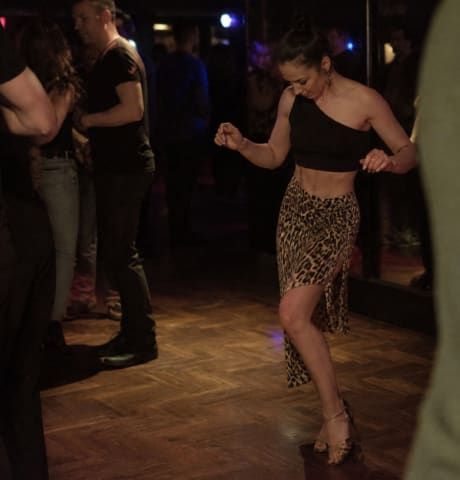 Mambo Boom in Europe: The Dance Wave of the 50sThe Mambo boom of the 1950s brought an unprecedented dance wave to Europe. Discover how the fiery rhythm revolutionized traditional dance schools and the hurdles it had to overcome.