
Find your dance partner for Mambo
Whether you love the classic roots of Mambo or want to try out modern partner dances: on udansa you will find like-minded people for your next dance class.


By Mary De LucaUpdated
Whether you love the classic roots of Mambo or want to try out modern partner dances: on udansa you will find like-minded people for your next dance class.
In the 1950s, Mambo shook up European dance floors. This historic dance wave shows how foreign rhythms can conquer continents and shift social boundaries in the process.
Dance trends in the field of partner dances spread fundamentally differently than viral phenomena on social media. While a modern solo move flickers across screens worldwide within a few hours, a true partner dance trend requires time, as it demands physical spaces, trained teachers, and direct contact between people. Anyone who wants to understand the roots of our dance culture today often looks at the history of Mambo. When Mambo reached European dance schools in the 1950s, worlds collided. Back then, distribution happened via printed sheet music, shellac records, and the first dance teacher congresses, which took months or even years.

The classic Mambo style that emerged directly from the Cuban big bands of the 1940s and 1950s. It is characterized by its orchestral power and the direct translation of horn sections into fast, rhythmic footwork.
The version of the dance softened in Europe, which was developed by dance instructors to integrate Mambo into the strict world dance program. In this process, the wild hip movements were reduced and the steps were standardized exactly to the beat.
The jazz-influenced variant, which arrived in Europe primarily through American military clubs. It combined the Afro-Cuban rhythm of Mambo with the improvised elements of swing and jazz, which particularly fascinated European youth.
The European music and dance landscape of the post-war period was strongly shaped by traditional ballroom dances. When the energetic Mambo wave washed across the Atlantic, it met with considerable skepticism in many conservative circles. The hip movements and rhythmic freedom were initially rejected by established dance teacher associations as improper. Nevertheless, the youth's urge for liberation and new impulses could not be stopped. The history of ballroom dances shows how much the rigid system was loosened by such influences. Step by step, the dance schools of the 1950s integrated Mambo into their program, albeit in a heavily tamed, Europeanized version that laid the foundation for later Latin American dances.
For the youth of the fifties, Mambo was not just a dance, but a release for the desire for freedom and internationality after the restrictive war years.
Correct
Wrong
The Mambo boom in Europe reached its peak in the mid-1950s. Starting from Cuba and New York, the wave spread through major European cities into dance schools and permanently changed the local music culture.
The Mambo history in Germany began with resistance, as traditional dance schools of the 1950s found the hip movements too daring. It was only through simplified step patterns and the enthusiasm of the youth that the dance became socially acceptable.
Mambo differed from European ballroom dances due to its rhythmic syncopation and Afro-Cuban body isolation. It demanded a completely new sense of body movement, which was previously unknown in traditional social dancing.
Experience the fascination of the rhythms that once revolutionized Europe, and learn the steps at a dance school in your city.
Couple danceLimbach-Oberfrohna · Germany
PaartanzkreisFriday · 18:15 · Oct 23
Limbach-Oberfrohna
BallroomMeißen · Germany
Tanzkreis | PROFESSIONALTuesday · 20:15 · Oct 27, 2026 - Jan 5, 2027
“Ein Haus für Vieles” - Saal Tanzkurse
Couple danceLimbach-Oberfrohna · Germany
Silberkurs für PaareSunday · 16:15 · Oct 25 - Nov 15
Limbach-Oberfrohna
 Mambo history: The fiery rhythm and its rootsDive into the fascinating history of Mambo: Learn how Afro-Cuban rhythms and New York big bands created one of the most exciting dance styles of all time.
 History of Ballroom Dance: From Salon to SportEmbark on a fascinating journey through time and discover how classic ballroom dances found their elegant form during industrialization and through English pioneers.Mambo history: The fiery rhythm and its rootsDive into the fascinating history of Mambo: Learn how Afro-Cuban rhythms and New York big bands created one of the most exciting dance styles of all time.
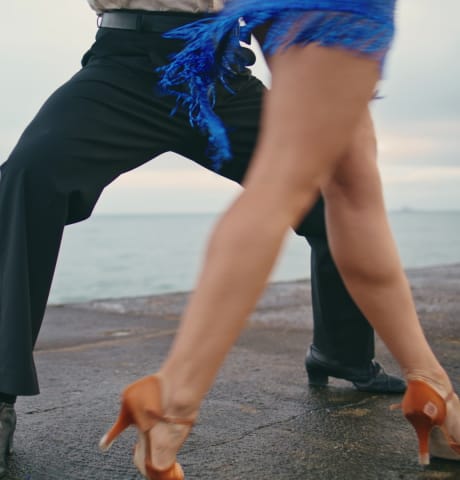 Afro-Cuban roots: The spiritual soul of MamboDive into the spiritual world of Mambo and discover how African drum rituals and the traditions of the Yoruba and Bantu shaped this dance.
 Mambo in Mexican Cinema: The Golden Era of RumberasDive into the golden age of Mexican cinema, where Mambo became world-famous thanks to the Rumberas and Pérez Prado.
 Classic Mambo Albums: Milestones in Music HistoryDive into the golden era of Mambo. We present the historical classic albums that defined the sound of an entire generation.
 Voice and Rhythm: The Role of Vocals in MamboDiscover the fascinating evolution of vocals in Mambo, from short rhythmic calls to the high art of the sonero's improvisation.
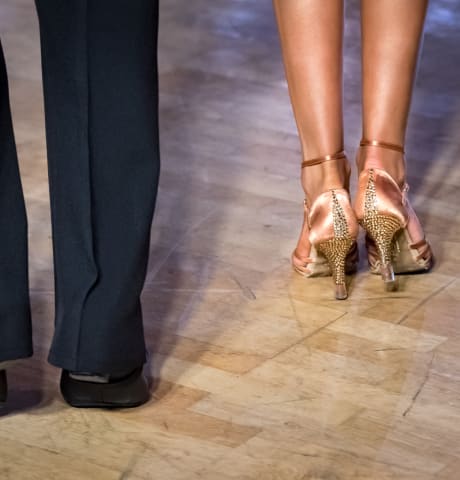 The origins of Mambo: How it all began in CubaThe origins of Mambo lie in 1930s Havana. Discover how the fusion of Danzón and Afro-Cuban rhythms changed the music world forever.
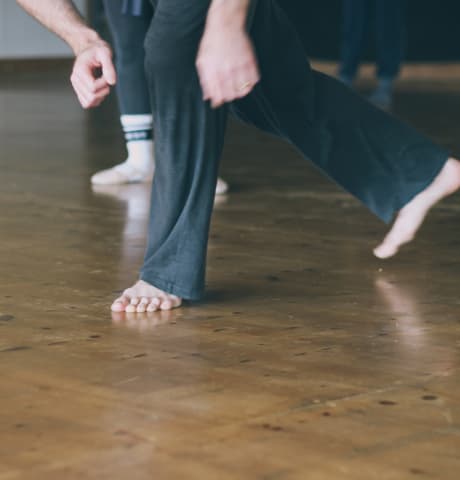 The Palladium Ballroom: Heartbeat of the Mambo EraThe Palladium Ballroom in New York was the epicenter of the Mambo era. Learn how this legendary club revolutionized the dance world and broke down barriers.