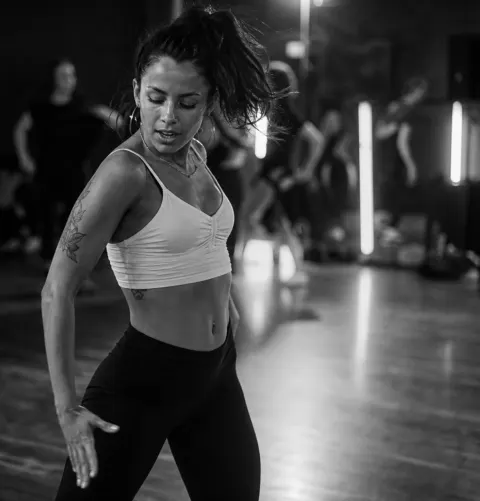
It is simply better to dance together
On udansa connect you can find like-minded people for your passion and exchange ideas with other dancers. Meet dance partners in your region who share your love for oriental rhythms.

By Mary De LucaUpdated
On udansa connect you can find like-minded people for your passion and exchange ideas with other dancers. Meet dance partners in your region who share your love for oriental rhythms.
The right choice of music determines whether your home practice ends in chaos or brings you into a real dance flow. With a cleverly built structure, you train technique, stamina, and expression equally effectively.
A structured workout at home stands or falls with the right musical accompaniment. Anyone who just lets any album play in the background is wasting valuable training time. The diversity of oriental dance demands targeted acoustic guidance that challenges your body while protecting it at the same time. A well-thought-out compilation leads you organically from gentle stretching exercises to demanding step combinations and finally to relaxation.
When creating your music selection, you should ensure that the different phases of your training flow into one another. Each phase requires its own unique dynamic and a suitable tempo. While you focus on slow, flowing movements during the warm-up, fast drum solos in the main part challenge you to perform precise accents. If you want to refine your technique in between, a targeted belly dance chest isolation, which you best practice to steady, medium-tempo rhythms, will help you. This way, you prevent yourself from overexerting yourself or losing your balance in the beat.
Select two to three slow, flowing songs to get started. The music should invite you to gently rotate your joints and warm up your muscles without any rush.
After that, add medium-tempo tracks with a clear beat to your list. Here, you practice isolated movements of the hips and ribcage, while the music provides you with a steady tempo.
Now add dynamic tracks that challenge you. Alternating between fast pop songs and traditional tracks keeps your concentration high and trains your stamina.
Place one or two high-energy drum solos in the final third of your playlist. Now, your body is warm enough for fast shimmies and explosive hip accents.
End the playlist with a very calm, slow song. The music helps your pulse to drop again, while you finish by stretching and taking deep breaths.
Like this
Not like this
Preparation
Arrival
While
For a balanced workout at home, a total length of 45 to 60 minutes is ideal. This timeframe offers enough space for a thorough warm-up, an intensive technique section, endurance training, and a relaxed cool-down.
Yes, a drum solo is excellent for the intensive main part of your training. The fast, percussive beats challenge your hip accents and shimmies and train your endurance to the maximum.
Use slow, flowing instrumental tracks with gentle arcs for the warm-up. Music with a dominant nay flute or oud is particularly well-suited to gently mobilize the body and warm up the joints.
 Belly Dance Music & Rhythms: Feel the soul of Raqs Sharqi
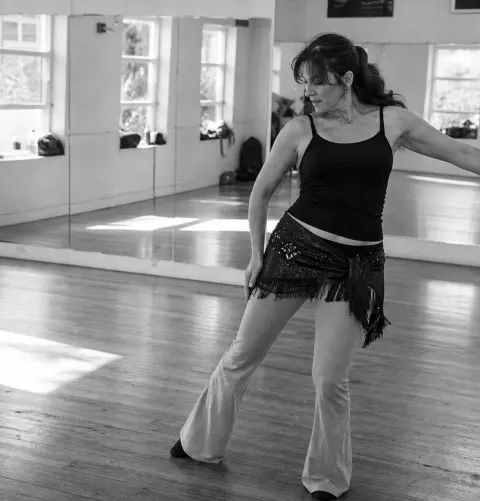 Maqsum rhythm in belly dance: beat and dance practice
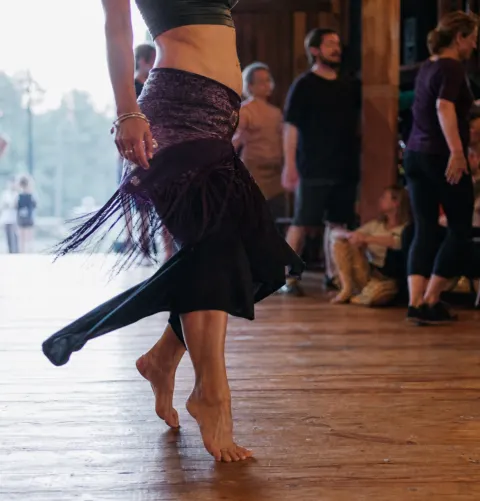 Learning the Malfuf rhythm: A guide to fast steps
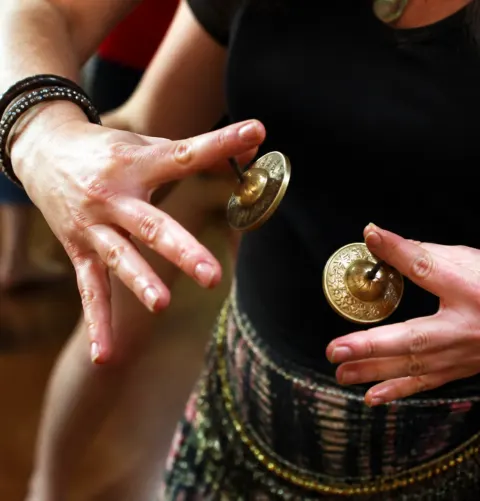 Playing zills in belly dance: A beginner's guide
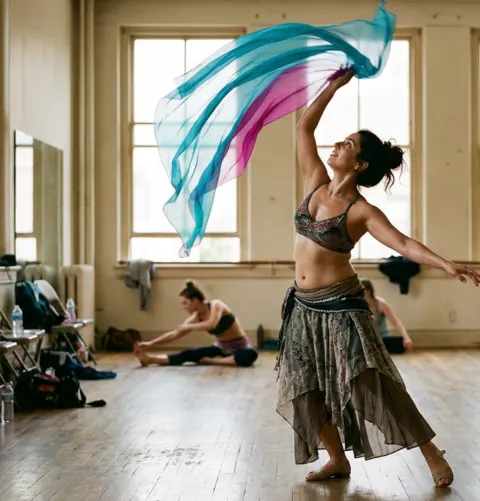 Veil dance in belly dance: Guide to elegant throws and movement
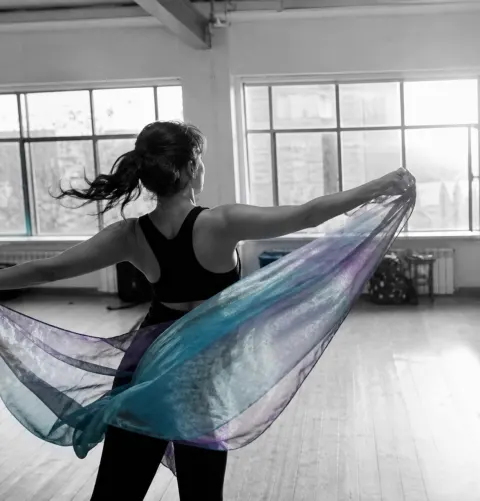 Choosing the right veil: Materials and flight characteristics
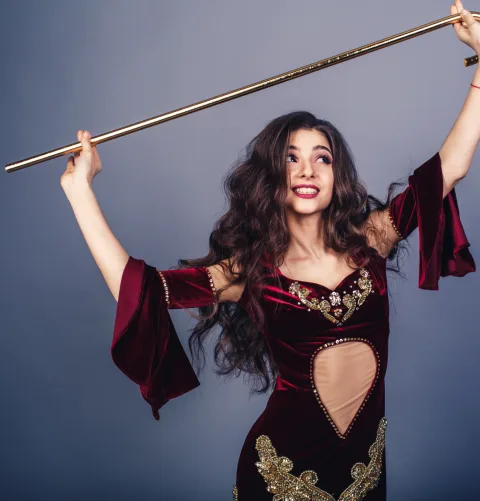 Saidi Cane Dance: Technique and Balance with the Assaya